Plain answer
Leash reactive dog training is trigger-intensity work at distance plus a rehearsed default response. Find the distance where your dog notices triggers without erupting. Install a response the dog offers instead of lunging, and the leash yields the instant it chooses right.
- The leash is a barrier. Barriers turn frustration into a pattern, which is why many dogs melt down on leash and play fine off it.
- Reactivity runs on four fuels: fear, frustration, over-arousal, and self-rewarding chemical cycles. The fuel changes the plan.
- The protocol: measure threshold distance, teach a default response at home, rehearse it sub-threshold, shrink distance one step at a time, work your leash timing, proof the five D's.
- Equipment is communication, not the cure. The right tool is conditioned for the dog and fitted right. It is never the plan.
If you are a Scottsdale or Cave Creek Pet Parent whose walk turns into a barking, lunging scene every time another dog appears, this one is for you. It covers why the leash changes your dog's behavior, the four fuels behind the outburst, the numbered protocol we use to rebuild the walk, honest equipment talk, when the walk is too much, and how to proof it for real. For the framework behind every term below, see our methodology.
Why does my dog lose it on leash but play fine off leash?
Your dog can't choose distance on a leash, so the leash becomes a barrier, and barriers turn frustration into a pattern.
Off leash, your dog controls the approach. It can arc wide, turn away, go say hello, or leave. Clip the leash on and those options vanish. The trigger gets closer and closer with no escape hatch, so the dog does the only thing that has ever worked: bark and lunge until the trigger passes. The trigger passes every time. The dog logs that as a win. Dogs work in patterns, and this one writes itself.
Run the test yourself. If your dog plays fine at daycare or in a yard but loses its mind at the end of a six-foot leash, the leash built that pattern. Fixing it is a training job, and in a Group Class at Partners, this is the setup: the distances are chosen for your dog, the trigger dogs are known quantities, and a trainer is reading both dogs before you ever have to.
What actually fuels the lunge?
A lunge runs on one of four fuels, and the fuel changes the plan.
Reactivity does not always mean fear. Partners reads every case on four fuels: fear, frustration, over-arousal, and self-rewarding chemical cycles. Same lunge on the outside, different engine on the inside. Read the fuel before you pick the fix.
| Fuel | What it looks like on the walk | What it means for the plan |
|---|---|---|
| Fear | Dog stiffens, tucks, barks while backing or lunging to create space. Trigger moves away, dog exhales. | Give space first. The default response has to be easier than flight. Progress is the dog choosing calm at closer distance, not the dog being flooded into tolerance. |
| Frustration | Friendly dog that wants to greet everything. Pulls toward dogs, vocal, wiggly, not stiff. | The greeting habit is the paycheck. The plan pays the dog for choosing you instead, at distance, before the greeting door closes. |
| Over-arousal | Fine at minute five, barking at minute twenty. Stacks triggers until the brain is full. | Arousal stacks: triggers that were tolerable early stop being tolerable late. Shorter exposures, bigger gaps between reps, recovery built into the walk. |
| Chemical cycle | The bark-lunge-retreat loop that rewards itself. Each outburst ends with a payoff: relief, the other dog leaving. | The chemistry is the loop. Reactive and aggressive dogs have been measured with significantly higher plasma cortisol and lower serum serotonin than non-aggressive dogs (PMC/NIH review, retrieved 2026-09-16). The plan starves the loop of reps while installing the replacement. |
Medical note: pain, thyroid, GI trouble, neurological issues, and medication effects can all drive behavior that looks like reactivity. The Merck Veterinary Manual is plain that behavioral diagnoses start with ruling out medical causes (Merck Veterinary Manual, retrieved 2026-09-16). We partner with your vet on this. No training article substitutes for veterinary care.
What is the walk-ready protocol?
Seven steps, in order. Each one installs the next.
This is the skeleton of how we rebuild a reactive walk. The idea underneath: lower the trigger's intensity with distance, install a default response the dog offers on autopilot, then proof it until the walk holds. One action per step.
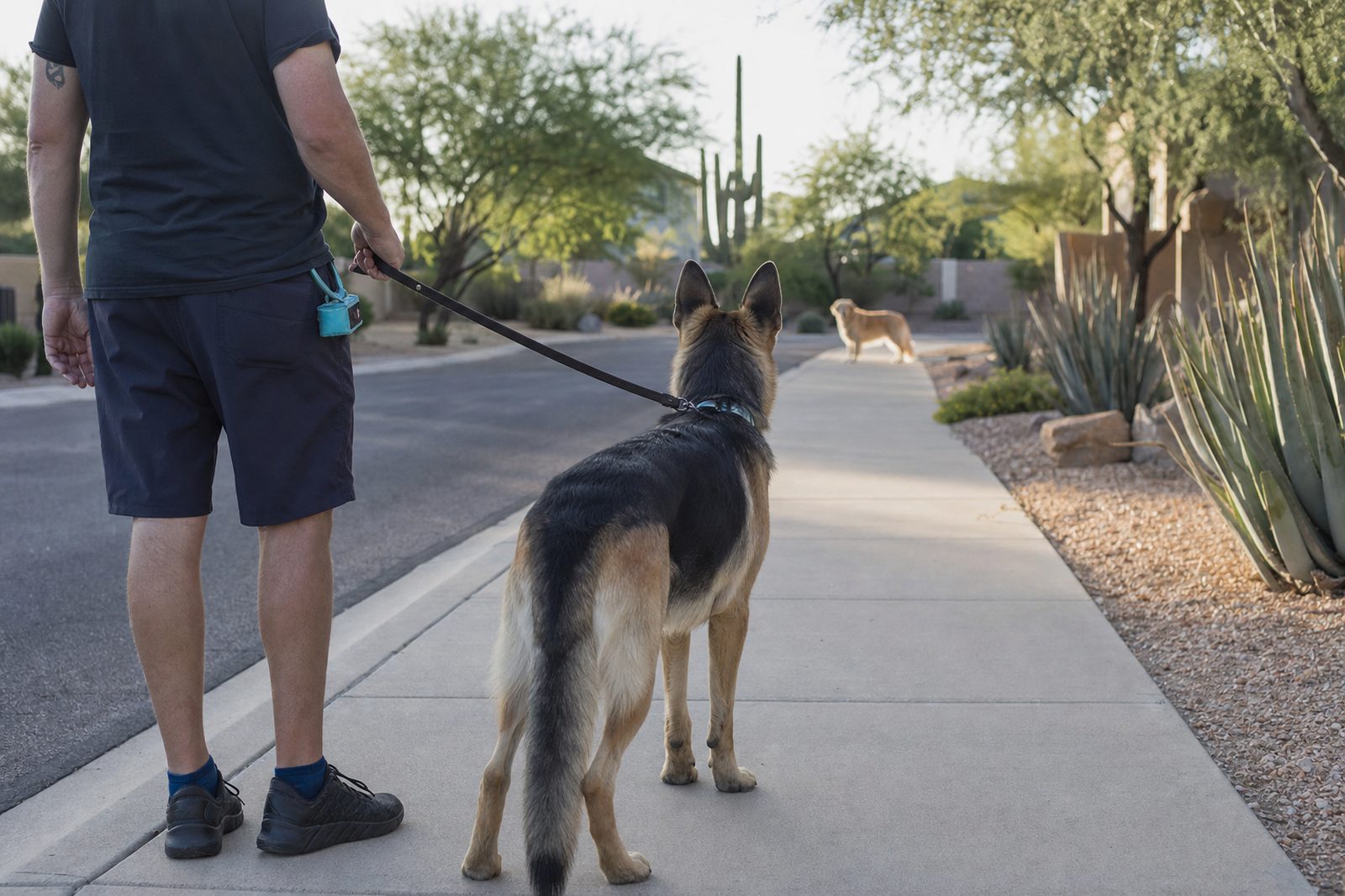
- Measure your threshold distance. Walk your usual route and note where your dog first notices a trigger but can still respond to you: ears up, eyes locked, but still able to take a treat or turn when asked. That line is the threshold. It might be 40 feet for one dog and 10 for another. The AKC's lunging guide names exactly those numbers as possibilities for different dogs (AKC, retrieved 2026-09-16). Below the line, your dog can learn. Above it, thinking stops and rehearsal starts. Everything in this protocol happens below the line.
- Teach the default response at home, with no triggers. Pick one behavior and make it automatic: a check-in (dog looks at you), a u-turn, or a move-to-heel. Mark it and pay it until the dog offers it on its own in the kitchen and the yard, where nothing is hard. The dog must understand the alternative before any correction is ever fair. No tool is introduced before the dog is conditioned to understand it.
- Rehearse sub-threshold: trigger visible, dog notices, dog offers the default. Set up at threshold distance with a helper dog or at a park where dogs pass at range. The sequence: the dog notices the trigger, the dog offers the default, you mark it, pay it, and walk a few steps away together. Keep sessions short. The Toronto Humane Society's leash-reactivity protocol runs these sessions at 15 minutes or less, stopping while the dog is still winning (Toronto Humane Society, retrieved 2026-09-16). Quitting while you are ahead is a training decision.
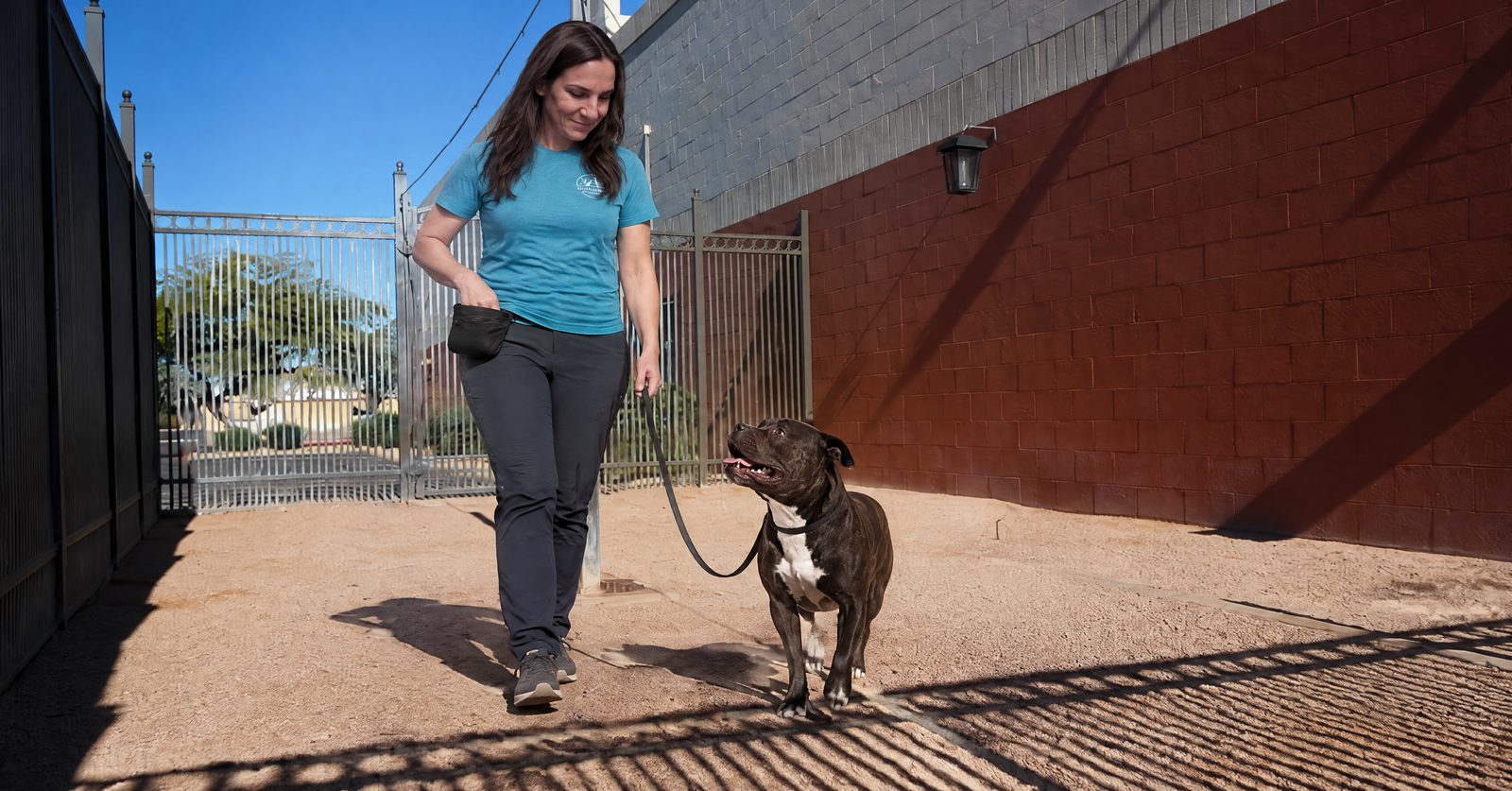
- Shrink the distance one step at a time. When the dog offers the default response at the current distance without thinking, move one step closer. Distance is one of the five D's, and you change one dial at a time. The dog that holds the default at 40 feet gets 35, then 30. If the default breaks, you moved too fast. Go back to the last distance that worked.
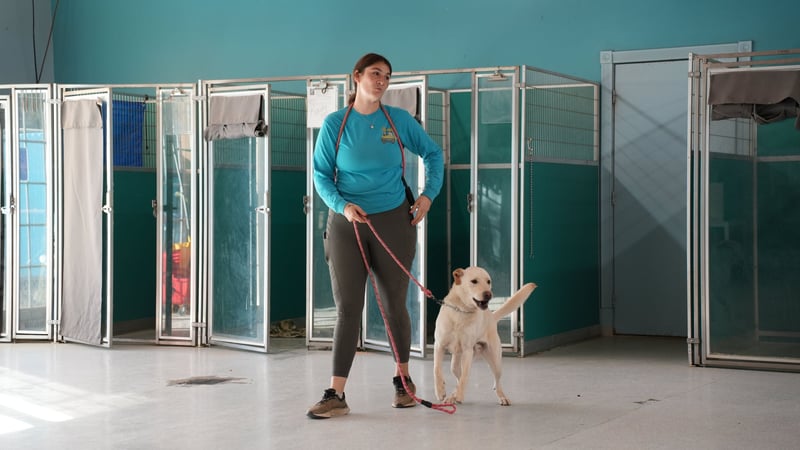
- Work your leash mechanics. Your hands are half the problem and half of the fix. A tight leash tells the dog something bad is about to happen, which loads the spring. Keep the leash short enough for safety and loose enough that the dog feels no constant pressure. Never reel the dog in like a fish. If the dog is stuck, create distance with your feet, not the leash.
- Time your -R: the leash yields the instant the dog chooses right. This is negative reinforcement done honestly.
When your dog spots the trigger and offers the default instead of lunging, the leash goes slack right then. The relief of the released line lands on the choice you wanted, which makes the choice more likely next time. Late timing teaches nothing. The release has to be instant.
- Maintain with written walk rules. The behavior you proofed in training dies on the first sloppy walk. Write the rules down: who walks the dog, what distance to keep, what to do when a surprise dog appears (arc wide or turn and go), when the walk ends. Maintenance has no finish line. Progression prevents regression.
Rehearsal is the teacher you did not hire. Every eruption practices the pattern, so count the reps and make sure the dog is practicing the right one.
What tool belongs on the walk?
The right tool is conditioned for this dog and fitted right. It is never the plan.
No collar or harness fixes a dog that has never been taught the alternative. Tools improve communication; they do not install behavior. The collar does not train your dog. You do, with a trainer beside you until you do not need one. That said, the walk goes better with the right hardware, chosen for this dog, conditioned before use:
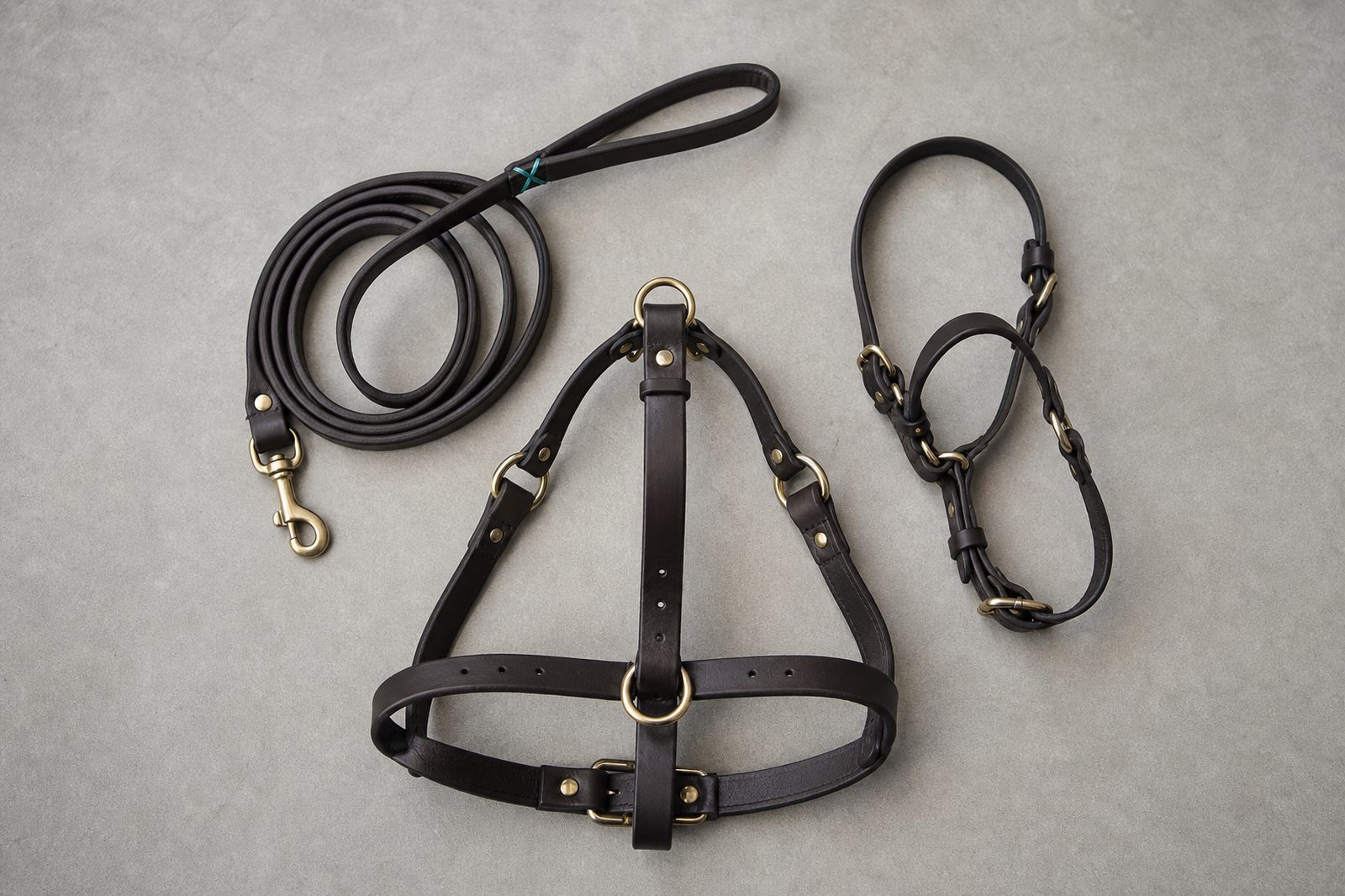
- Leash: six feet and sturdy, in good condition. Retractable leashes keep constant tension and teach the dog the line is always tight, which loads the spring before the trigger appears.
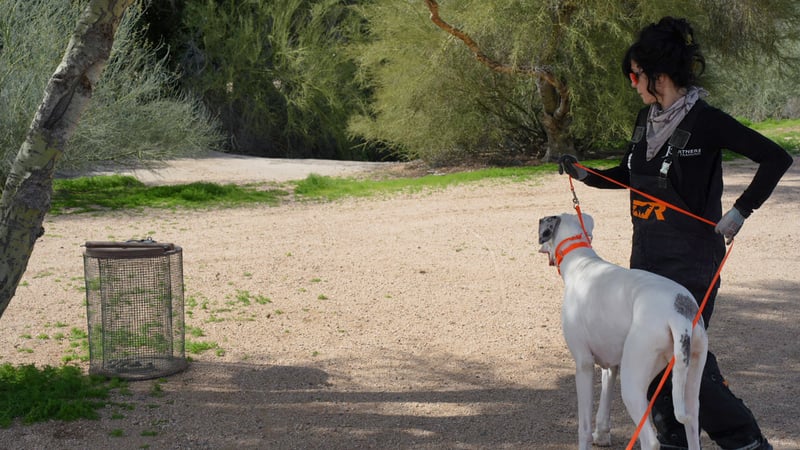
- Front-clip harness: the clip at the chest turns the dog's forward surge into a turn toward you. Shelter programs recommend front-clip harnesses as standard reactive-dog equipment because they give steering without neck pressure (Oakland Animal Services, retrieved 2026-09-16).
- Head halter: steering power for strong dogs, but it must be conditioned first. The dog wears it for treats and short happy sessions before it ever does walk duty. A dog that hates the halter has not been conditioned; the tool is not the problem, the preparation is.
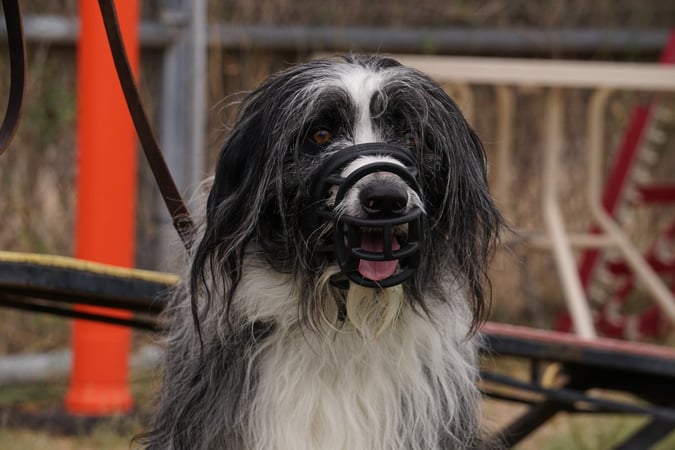
- Prong or e-collar: legitimate tools in the right hands, at the right time, on the right dog. Conditioned first, fitted properly, and used only after the dog understands the default response, at the lowest level the dog notices, like a tap on the shoulder. For the full harness discussion, see our harness guide.
The honest question is not "which tool fixes reactivity" but "which tool helps this dog understand me on the walk, today." We correct dogs at Partners. Correction is never the starting point, only after the alternative is understood, at the lowest perceptible level. A dog that knows the default response and blows through it anyway gets fair information. Think of it as the late-fee moment: the rule was taught, the consequence was known, so it lands once and quiet. A dog that was never taught gets teaching, not correction.
When is the walk too much?
When every walk ends in eruptions, the walk is rehearsal, and you are paying tuition to the wrong teacher.
There is a point where the neighborhood walk is not training. It is flooding: trigger after trigger, stacked on a dog that never gets back under threshold. If your dog can't make it around the block without erupting, the walk is not building anything. It is rehearsing the outburst, and dogs get good at whatever they rehearse.
That is when management comes first: the decision to stop practicing the problem. It looks like this:
- Walk at off-hours when the streets are empty. Early morning or late evening.
- Pick quiet routes: empty fields, wide sidewalks, trails with sightlines, not the dog-park-adjacent block at 6 p.m. (Our sibling article on why dog parks can make reactivity worse explains why the dog park is the wrong environment for this dog.)
- Cross the street before the trigger gets close. Create the distance the dog needs instead of testing the distance the dog doesn't have yet.
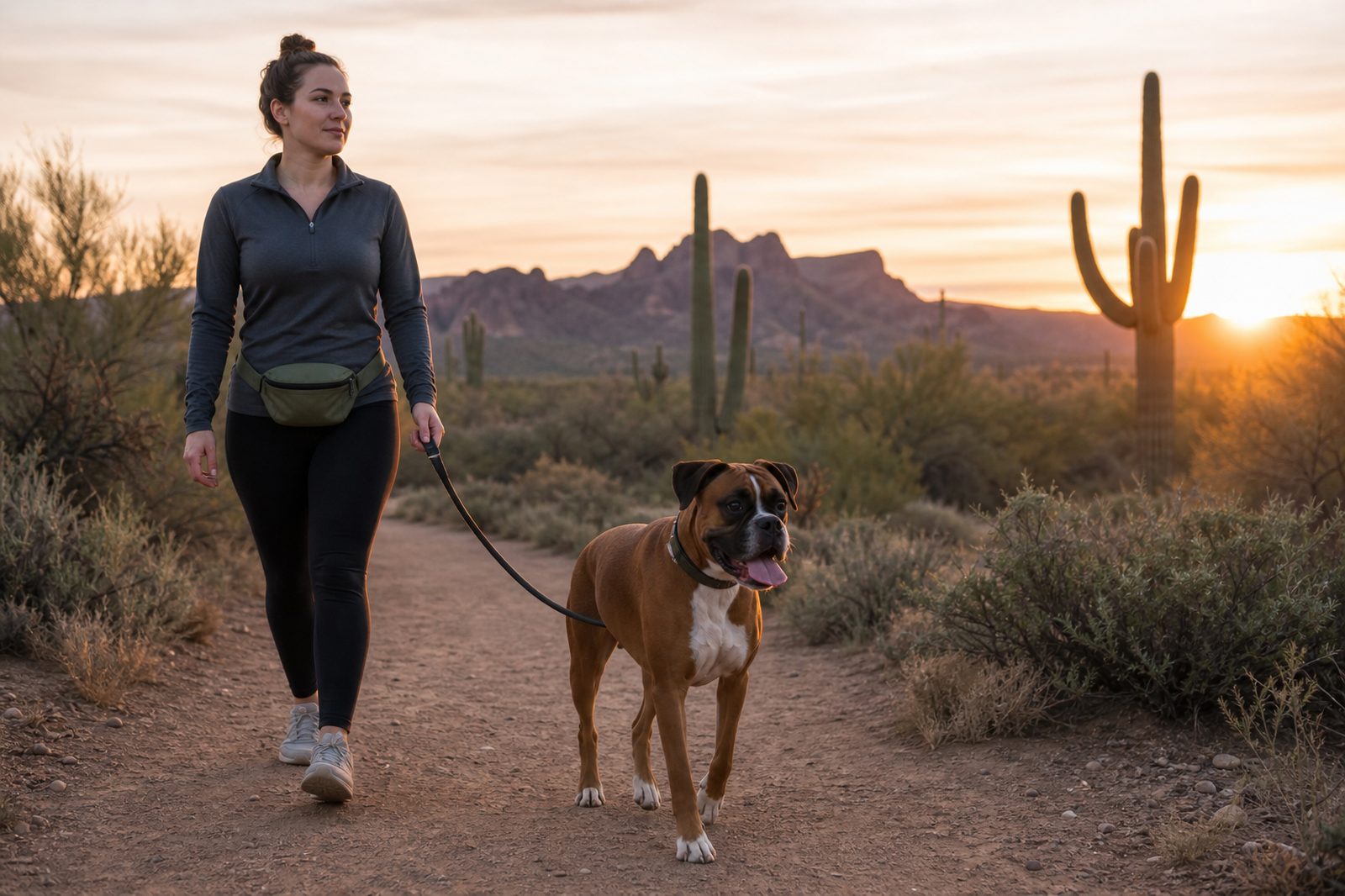
When management alone can't hold, that is exactly what Behavior Camp is for: immersion cases get their reps in controlled setups, all four phases tracked in the PD360, then the trained dog and the trained owner come home with written walk protocols. Some patterns are too stacked to fix from the end of a neighborhood leash.
Before the program
Book a PD360 Assessment
Your dog's walk needs controlled reps, not neighborhood ambushes. A senior trainer reads your dog across nine dimensions and matches the case to the right program and starting phase. Assessment before program, always.
How do you proof a calm walk?
Run the five D's like a ladder, one rung at a time.
Your dog passed protocol step 4 at 20 feet from a calm dog in a park. That is not a proofed walk. That is one rung. The ladder looks like this:
| Rung | What you add | The pass |
|---|---|---|
| 1. Distance | Trigger closer, step by step | Default response holds at sidewalk distance |
| 2. Distraction | Bicycles, joggers, kids, cats, skateboards | Each new distraction gets its own ladder, starting wide |
| 3. Duration | Longer walks with more triggers passing | Dog recovers between reps instead of stacking |
| 4. Direction | Triggers appearing from the side and behind | Default works when the trigger is not in front of you |
| 5. Difficulty | Surprise dogs around corners, narrow trails, another dog rounding a blind curve on the Cholla Trail | The u-turn and arc are automatic, not requested |
One D at a time. If you shrink distance and add bicycles on the same walk, you changed two dials and learned nothing. The dog that holds its default at rung 5 is a walk-ready dog.
Mistakes that make it worse
- Tightening the leash at the sight of a trigger. The tension telegraphs the eruption before it happens. Keep the leash loose until you need it.
- Training on the same walk that floods the dog. One eruption undoes ten good reps. Train in setups; manage the rest.
- Correcting a dog that never learned the alternative. Correcting an untaught dog rehearses panic, not obedience. Teach first, then fair information at the lowest perceptible level.
- Proofing by accident. Letting a surprise off-leash dog rush yours is not a proofing rep. It is a flood. Real proofing is planned, at a distance you chose.
- Skipping the medic check. Training a dog in pain is working the wrong problem. Rule out medic factors with your vet first or alongside the training.
By the numbers
Serving Phoenix Valley families since 1997.
Key takeaways
Key takeaways
- The leash is a barrier, and barriers turn frustration into a pattern. A dog that plays fine off leash and melts down on it has a pattern problem, not a temperament problem.
- Reactivity runs on four fuels: fear, frustration, over-arousal, and self-rewarding chemical cycles. Read the fuel before you pick the fix.
- The walk-ready protocol: measure threshold distance, teach a default response at home, rehearse sub-threshold, shrink distance one D at a time, time your -R, maintain with written walk rules.
- Tools are communication, never the plan. The right tool is conditioned, fitted, and purposeful; correction only enters after the alternative is understood, at the lowest perceptible level.
- When the walk keeps rehearsing the outburst, manage first. Cases that outgrow management need an immersion stay to run the full protocol.
- A calm walk is proofed on the five D's ladder: duration, distraction, distance, direction, difficulty. One dial at a time.
Frequently Asked Questions
What is the first step for fixing leash reactivity?
Book a PD360 Assessment. A senior trainer reads your dog across nine dimensions, identifies which fuel drives the reaction, and matches the case to the right program and starting phase. No plan is written before the dog is read. The assessment runs at our Scottsdale or Cave Creek campus.
Why does my dog react on leash but play fine off leash?
The leash is the difference. On leash your dog can't choose distance, so the leash becomes a barrier, and barrier frustration turns into a pattern. Many dogs that erupt at the end of a leash are sociable off leash, as Rover's guide observes. The problem is the pattern the leash built, not temperament. See our guide on reactive dog vs aggressive dog.
Can I correct my dog for lunging on leash?
Not before the dog understands the alternative. Correction is never the starting point: only after the default response is taught, at the lowest level the dog notices. A dog that knows the right response and blows through it gets fair information. A dog that was never taught gets teaching. Punishing an untaught dog rehearses panic, not calm.
Can I walk my reactive dog on Scottsdale or Cave Creek trails?
Carefully, only when the walk serves the dog. Pick wide trails with sightlines at off-hours, keep the dog below threshold from other trail users, and have your u-turn ready before you need it. Narrow trails with blind corners, coyotes, and off-leash dogs are proofing you didn't choose. When the environment can't be controlled, manage: choose the walk you can win.
How long does leash reactivity training take?
There is no fixed timeline, and anyone who gives you one is guessing. Progress follows the reps: consistent sub-threshold work, distance shrunk one step at a time, no flooding walks undoing the good ones. Progression prevents regression. Cases that need immersion instead of home reps move into a board-and-train stay, where the protocol runs in controlled setups.
Where to go from here
The walk is rebuilt the same way every behavior is rebuilt: read the fuel, lower the intensity, proof the ladder, track the reps. Your next step is the assessment. A senior trainer at either campus will read your dog and tell you honestly what it needs.
The right program
Match the program to the dog
Leash-reactivity cases that can work at home go through the PD360 Assessment and Private Lessons. Cases that need immersion go to Behavior Camp: 21 nights, all four phases tracked in the PD360, written walk protocols at handoff.
Scottsdale: 8642 E Shea Blvd, 85260. Cave Creek: 4640 E Forest Pleasant Pl, 85331. Serving the Phoenix Valley.