Plain answer
Training lowers the odds of the emergencies that generate the biggest dog vet bills. Proofed recall, leave it, settle, door manners, and storm protocols cut the risk of foreign-body surgery, fight wounds, and escape injuries. Training reduces risk. It never promises zero.
- The cost of dog vet bills 2026: lifetime dog care runs into the tens of thousands (Synchrony 2025 study); vet prices rose ~43% from 2021 to 2026.
- 85% of vet professionals say owners start declining recommended care once estimates climb into four figures (AAHA 2026).
- The most expensive emergencies: foreign-body surgery (mid four figures into the low five figures), wound treatment from fights (high hundreds into the low thousands), emergency surgery (low-to-mid four figures), overnight hospitalization (mid hundreds to mid four figures).
- Every one of those starts as a behavior. Prevention is installed behavior: a recall that holds, a leave it that works, a dog that settles on cue.
If you are a Scottsdale or Cave Creek Pet Parent wondering how a normal Tuesday turned into a four-figure vet bill, this article lays out what dog vet bills cost in 2026, where the money wall sits, and which emergencies training honestly prevents. The estimate on the counter is not a lecture. It is arithmetic. For the framework behind every method named below, see our methodology.
How much do dog vet bills cost in 2026?
The short version: routine care is a few hundred a year. The emergency is where a normal budget breaks.
The average household spent well over a thousand dollars on pets in 2025, not counting adoption or purchase, and the average household vet bill for a dog landed in the high hundreds (AVMA figures reported September 2026). That part is manageable for most families. The pain lives elsewhere.
Emergency medicine is where the math turns serious. An ER visit typically starts in the high hundreds before any treatment, overnight hospitalization runs from the mid hundreds to the mid four figures, and a cruciate ligament repair often lands in the mid four figures to the low five figures (AAHA 2026 figures). Line items stack fast: an exam fee in the low hundreds, X-rays in the low-to-mid hundreds, wound treatment in the high hundreds to low thousands, emergency surgery in the low-to-mid four figures, and ICU days in the mid hundreds to low four figures (2026 ranges compiled from CareCredit, Healthy Paws, and MetLife cost data).
The trend line is worse than the snapshot. Vet care prices climbed roughly 43% from January 2021 to January 2026 (Department of Labor data), the average insurance claim bill rose about 32% since 2020, and foreign-body ingestion costs are up around 45% in five years. Those numbers are not projections. They are claims that already cleared.
Training doesn't promise a dog that never gets hurt. It buys fewer of the emergencies you can actually control.
Where does the money wall actually sit?
The short version: lower than most Pet Parents expect, and the profession sees it every week.
New in the 2026 AAHA/Pawlicy Advisor industry survey was a direct question: at what estimate do clients start declining recommended care? The answer came back at four figures or less for 85% of respondents, and in the hundreds for nearly half (reported by dvm360). That is not an abstraction. That is the number your vet has in mind when they hand you the estimate.
The daily arithmetic backs it up. Veterinary teams adjusted recommended treatment plans an average of 5.1 times per week because of cost in 2026, and 86.1% of practices reported making those adjustments weekly. Respondents estimated that 13% of euthanasia decisions in their practices were driven by an owner's inability to pay, a figure nearly one in four respondents placed at 20% or higher.
The Synchrony 2025 Pet Lifetime of Care Study explains why so many families hit the wall. Caring for a dog now runs into the tens of thousands over 15 years, up 11.65% since 2022, while the average dog owner expects to spend in the high four figures. Nearly 8 in 10 underestimate the true lifetime cost, three in four have faced a surprise bill in the hundreds, and just 20% hold dedicated savings or insurance.
Read those numbers once more. Four out of five families are unprepared, and the wall sits in the low four figures. Almost every avoidable emergency lands above it.
Before the program
Match the program to the dog
Start with a PD360 Assessment: a senior trainer reads your dog across nine dimensions, screens medic factors with your vet, and matches the case to the right route. DaySchool for the dog that needs daily reps, or Behavior Camp's 21-night reset for dogs rehearsing dangerous patterns.
Can training lower the cost of dog vet bills?
The short version: yes, by lowering the odds of the emergencies behind the biggest bills. Risk reduction, never elimination.
Training cannot prevent illness or bad luck. Any trainer who promises a vet-bill-free dog is selling something. What training honestly does is install default responses that keep routine situations from turning into emergencies. A dog with a reliable recall does not chase the javelina into traffic. A dog with a proofed leave it does not swallow the sock. A dog that settles on cue does not bodyslam the coffee table and crack a tooth. None of those outcomes were guaranteed before training either. The odds are better now.
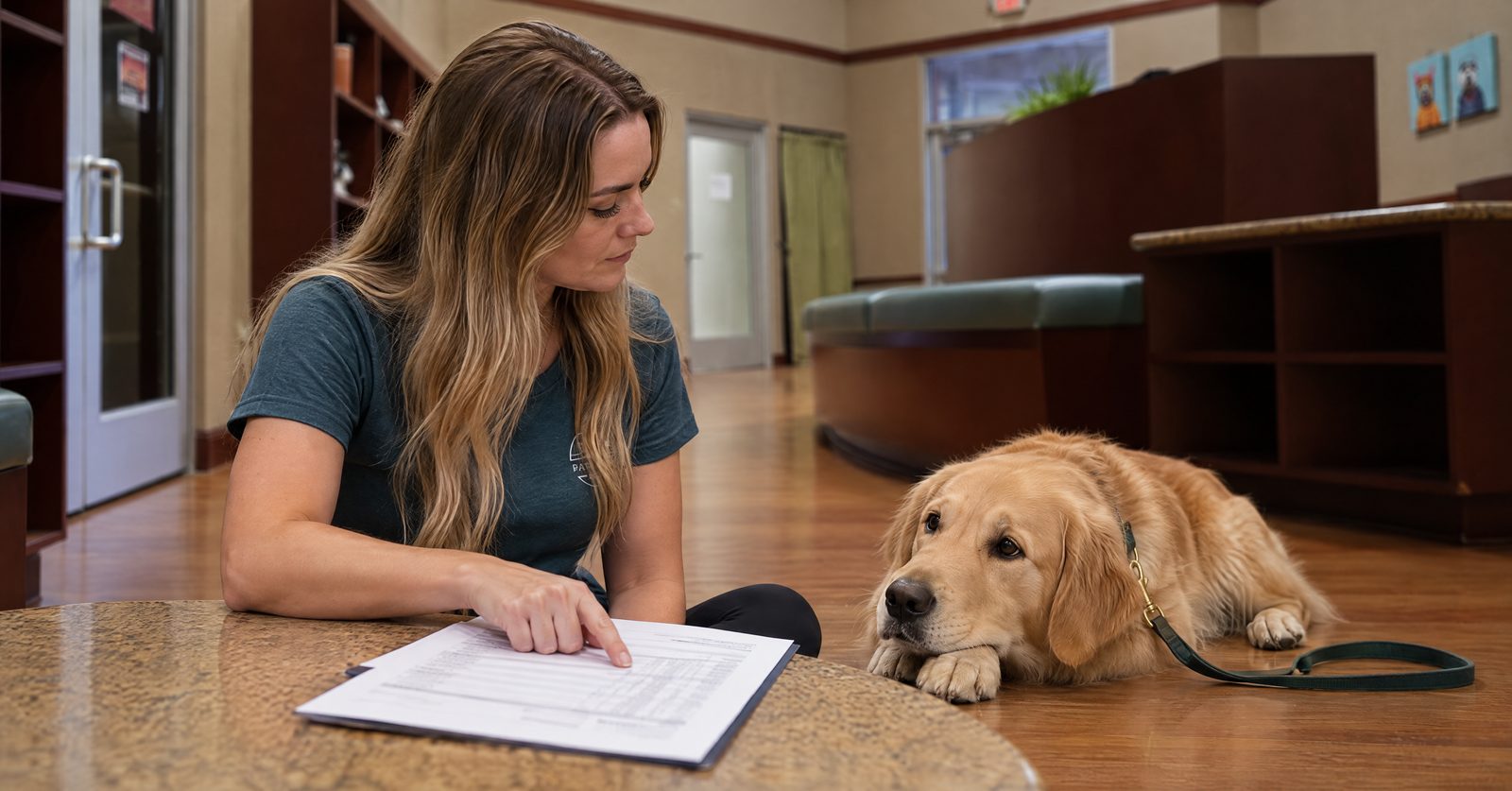
The assessment side matters as much as the training side. A PD360 Assessment reads your dog across nine dimensions before any plan is written, and part of that read is screening for medic factors with your vet: pain, thyroid trouble, GI issues, neurological problems, medication effects. The Merck Veterinary Manual is plain that medical causes of behavior problems get ruled out first, with pain a leading risk factor. A dog that suddenly guards the couch because its hips hurt is a medical case wearing a training costume. We partner with your vet on this. No training article substitutes for veterinary care.
Some families come to us right after the ER bill. Most of them say the same thing: the dog had been rehearsing the behavior for months, and they did not know what they were looking at. The assessment is the trained eye on the pattern before the pattern gets expensive.
What does prevention training look like day to day?
The short version: five skills, proofed in the real world.
A recall that holds. The dog that bolts after a rabbit across a Cave Creek wash is the dog most likely to end up in emergency surgery. Recall is a trained, proofed behavior, not a personality trait. We run it through all four phases: Teach, Reinforce, Proof against the five D's (duration, distraction, distance, direction, difficulty), Maintain. For the full protocol, see our reliable recall guide.
A leave it that works. Foreign-body surgery runs from the mid four figures into the low five figures (Healthy Paws claims data). The sock, the chicken bone on the trail: all of them are preventable at the moment the dog decides. A proofed leave-it is a bouncer at the door of the dog's mouth: it stops trouble before it gets inside. Our desert leave-it protocol builds it against real distractions.
Settle on place. The dog that cannot settle invents its own entertainment: counter-surfed medications, chewed cords, panicked bolting through a screen door. A dog that holds a place cue stays out of the danger zone while you cook and while guests arrive.
Door and threshold manners. Door-dashing is one of the most common ways a contained dog becomes a lost or injured dog. The behavior is simple to install and catastrophic to skip. Our door-dashing boundary protocol covers it step by step.
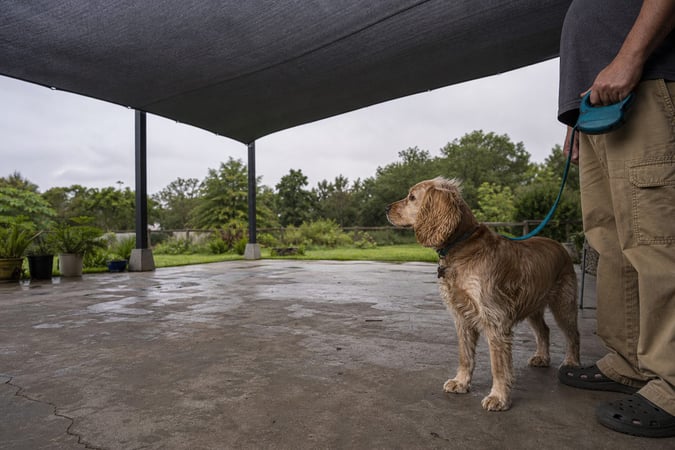
Storm protocols. Monsoon season turns anxious dogs into escape artists: panic chewing through a crate, fence climbing, bolting through an open door. Desensitization and management run together, and the plan has to start before the season does. Our monsoon desensitization plan and monsoon walk safety guide lay out the full approach.
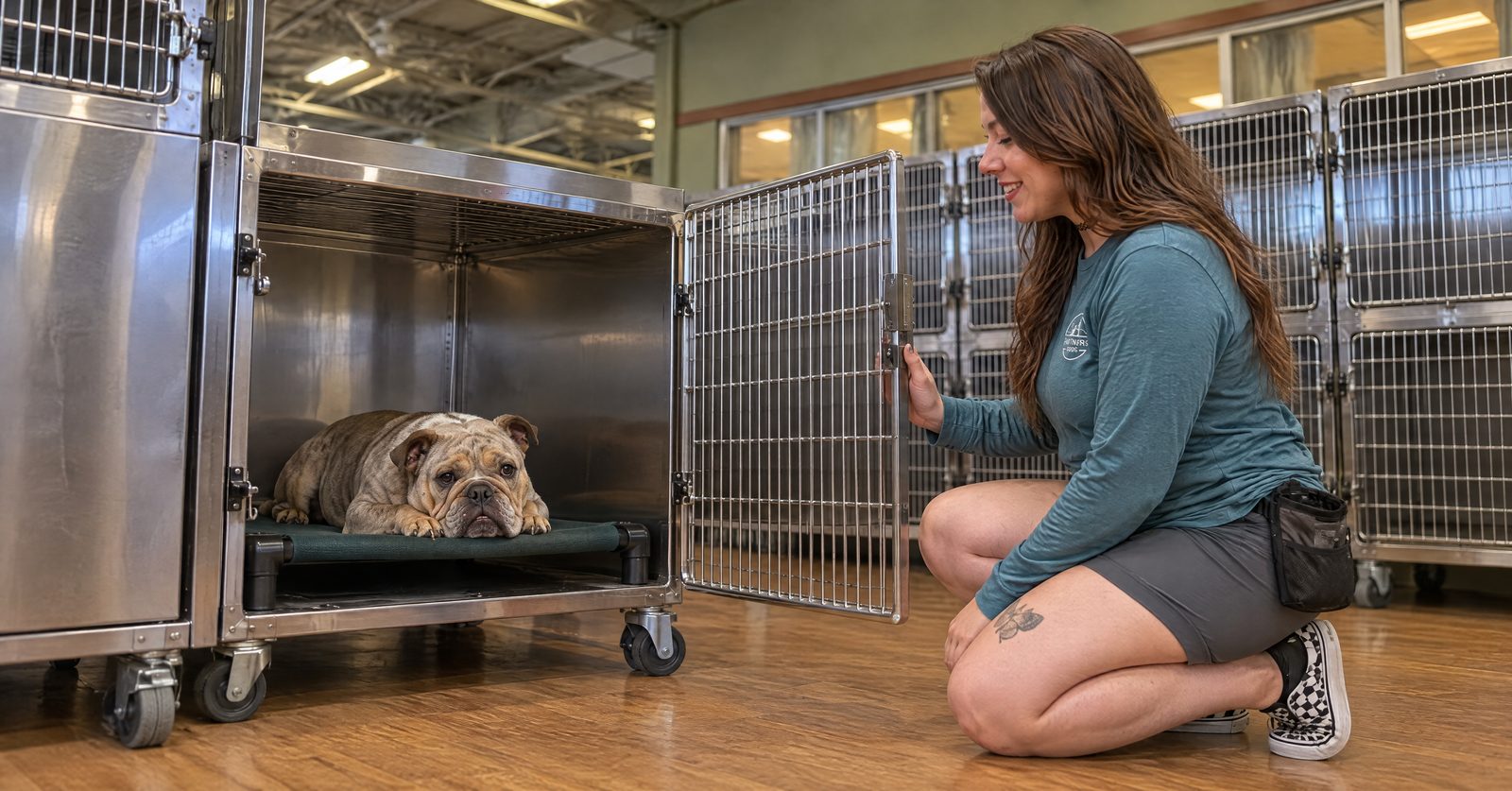
Positive reinforcement is the primary method and the base of every program we run. Fair, minimal, well-timed correction is also legitimate and necessary, never the starting point: only after the alternative is understood, at the lowest level the dog notices. Prevention sometimes means stopping a dog mid-decision, and a method that cannot stop a dog cannot prevent anything.
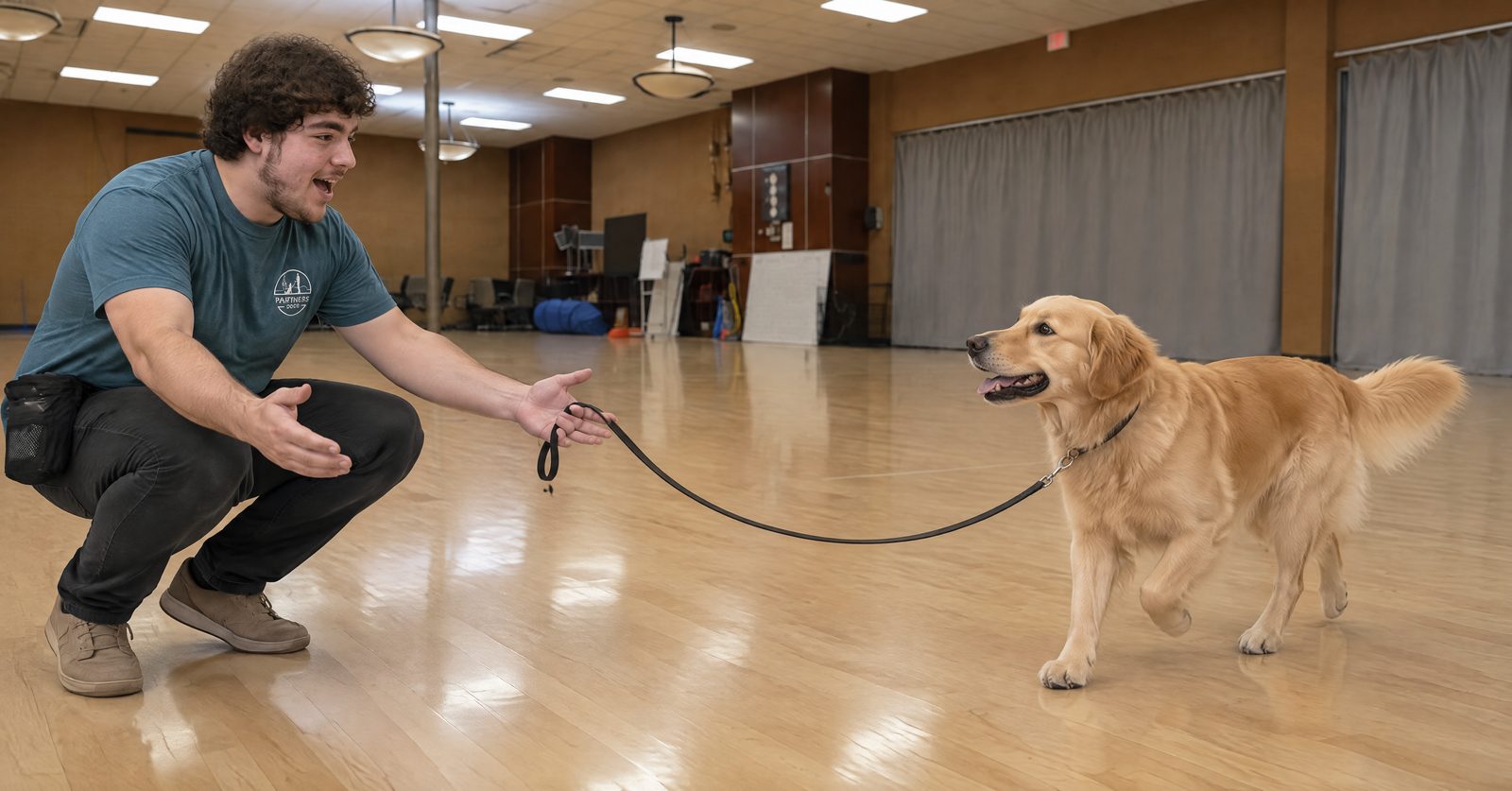
Does pet insurance cover behavior-related vet bills?
The short version: accident-and-illness policies cover accidents and illness. They do not sell you prevention.
For accident-and-illness coverage, the most common type, average premiums run in the high hundreds a year for dogs (North American Pet Health Insurance Association 2026 report, via AAHA). Most policies reimburse 70% to 100% of covered costs after the deductible. That math works for the accident you cannot foresee.
It does not work as a strategy. Insurance pays after the emergency. Training works before it. One reimburses the foreign-body surgery, the other teaches the leave it that avoids it. If your budget only stretches to one preventive measure this year, pick the one that changes the dog's behavior. The assessment is where the prevention plan starts: a senior trainer reads the dog, screens the medic factors with your vet, and tells you which patterns are rehearsing toward the next bill.
Why do some dogs keep landing at the ER?
The short version: emergencies are usually the end of a chain the dog has rehearsed before.
Every behavior runs a chain: trigger, chemical release, response, outcome. A dog that counter-surfs once gets a chemical reward and a sandwich. The next time the trigger appears, the chemical release arrives before the dog does. Dogs work in patterns. The dog that keeps landing at the ER is not unlucky. It is rehearsed.
This is where reactivity work doubles as prevention. A dog that explodes at other dogs on leash is one snapped leash away from a fight, and wound treatment runs from the high hundreds into the low thousands before complications. That reactivity runs on one of four fuels: fear, frustration, over-arousal, or a self-rewarding chemical loop, and each one gets a different plan. Our dog parks and reactivity guide covers the management side, and the reactive dog training guide covers the full behavior-change framework.
Breed is a hypothesis, not a verdict. A terrier rehearses prey-drive patterns differently than a herding dog rehearses chase, and the plan reads the dog in front of us. What does not change is the principle: find the chain, lower the trigger's intensity, install a response worth offering, keep the outcome consistent. Prevention is a pattern you build. That is the omni-technical approach in one line: do what works best for that dog, on that day, for that behavior, and track it.
By the numbers
Average insurance claim bills ran in the high hundreds in 2025, up 32% since 2020 (Healthy Paws claims data).
The emergencies training prevents

| Emergency | Typical 2026 cost | What training installs (risk reduction, never zero risk) |
|---|---|---|
| Foreign-body surgery (swallowed objects) | Mid four figures to low five figures (Healthy Paws claims data) | Proofed leave it interrupts the swallow decision |
| Fight wounds | High hundreds to low four figures, wound treatment (MetLife cost data) | Leash skills, reactivity management, no off-leash greetings |
| Emergency surgery after bolting (e.g., hit by car) | Low-to-mid four figures (Healthy Paws / MetLife cost data) | Proofed recall shortens the chase; door manners stop the dash |
| Overnight hospitalization | Mid hundreds to mid four figures (AAHA 2026) | Settle on place and crate training reduce home accidents and panic injuries |
| Cruciate ligament repair | Mid four figures to low five figures (AAHA 2026) | Recall and impulse control cut the high-speed off-leash sprints that end in torn ligaments |
Mistakes that make it worse
- Assuming the good behavior will hold. The dog recalled fine at eight months and nobody proofed it since. Unproofed behaviors expire right when you need them.
- Training only the trick, never the default. A sit that works for a cookie in the kitchen is Teach, not prevention. It does not count until it survives real distraction at real distance.
- Skipping the vet check on a new problem. A sudden behavior change is a medic factor until proven otherwise. Training a hurting dog is working the wrong problem.
- Waiting for the first emergency. A four-figure surgery bill is the expensive way to discover the dog has no leave it.
- Expecting the vet to solve a training problem. A dog that keeps ending up at the ER needs a behavior plan, not just a treatment plan.
Key takeaways
Key takeaways
- Vet care rose ~43% from 2021 to 2026, and 85% of vet professionals say owners begin declining care once estimates climb into four figures (AAHA 2026).
- A dog's lifetime care runs into the tens of thousands, yet only 20% of owners hold dedicated savings or insurance (Synchrony 2025).
- Training lowers the odds of the emergencies behind the biggest bills. It reduces risk. It never promises zero.
- Prevention is installed behavior: a recall that holds, a leave it that works, a dog that settles on cue, doors the dog respects, a storm plan started before the season.
- The PD360 Assessment reads your dog across nine dimensions and screens for medic factors with your vet, catching the patterns that become emergencies.
- Do the prevention math before the emergency math. The assessment happens before the ER bill, not after it.
Frequently Asked Questions
How much does an emergency vet visit cost in 2026?
An ER visit typically starts in the high hundreds before any treatment. Add an exam fee in the low hundreds, X-rays in the low-to-mid hundreds, wound treatment in the high hundreds to low thousands, emergency surgery in the low-to-mid four figures, and hospitalization in the mid hundreds to mid four figures per night (AAHA and 2026 industry cost data). Most estimates land above the four-figure point where owners start declining care.
Can training really lower my vet bills?
Training lowers the odds of the emergencies behind the biggest bills. A proofed recall and a working leave it stop the bolting and swallowing behind most ER visits. No honest trainer promises zero emergencies. The promise is fewer of the ones you can control.
What is the first step if I want prevention training for my dog?
Book a PD360 Assessment. A senior trainer reads your dog across nine dimensions, screens for medic factors with your vet, and builds a prevention plan matched to the dog. The patterns that become emergencies are usually visible long before the ER visit.
My dog already ran up a big vet bill. Is training too late now?
No. The assessment reads what happened and why, then installs the behavior that prevents the repeat. The dog that swallowed a sock needs a proofed leave it. The dog that started a fight needs reactivity work and management. The second emergency is the one training is built to stop.
What should I do if my dog has a medical emergency right now?
Call your regular vet or the nearest emergency animal hospital immediately. For bite situations, our rattlesnake bite guide covers first steps for that specific emergency. Training articles never substitute for veterinary care.
Where to go from here
The math is simple and it is not kind: costs are rising, the wall sits in the low four figures, and most families are unprepared. The moves that change it are a vet relationship, honest financial planning, and a dog whose default responses keep it out of the ER.
The right program
Match the program to the dog
Start with a PD360 Assessment: a senior trainer reads your dog across nine dimensions, screens medic factors with your vet, and matches the case to the right route. DaySchool for the dog that needs daily reps, or Behavior Camp's 21-night reset for dogs rehearsing dangerous patterns.
Scottsdale: 8642 E Shea Blvd, 85260. Cave Creek: 4640 E Forest Pleasant Pl, 85331. Serving the Phoenix Valley.