Quick answer
"Leave it" is a conditioned default: your dog sees something, checks in with you, and gets paid. Condition it in a quiet room first, proof it against bobcats, Gila monsters, toads, and scorpions across the five D's, and maintain it with reps on every walk. The default does the teaching; the shout is the backup you will rarely need.
- A screamed "leave it" mid-chase almost never works. The dog's chemical reaction is already running, and the cue was never rehearsed at that intensity.
- Condition the default with no triggers present: sight of something -> check-in -> reward. The stimulus predicts the check-in, and the check-in predicts the payoff.
- Proof across duration, distraction, distance, direction, and difficulty. A bobcat at 20 yards at dusk is Proof. A treat on the kitchen floor is Teach.
- Management (leash, sightlines, timing) is not punishment. It buys the reps the default needs.
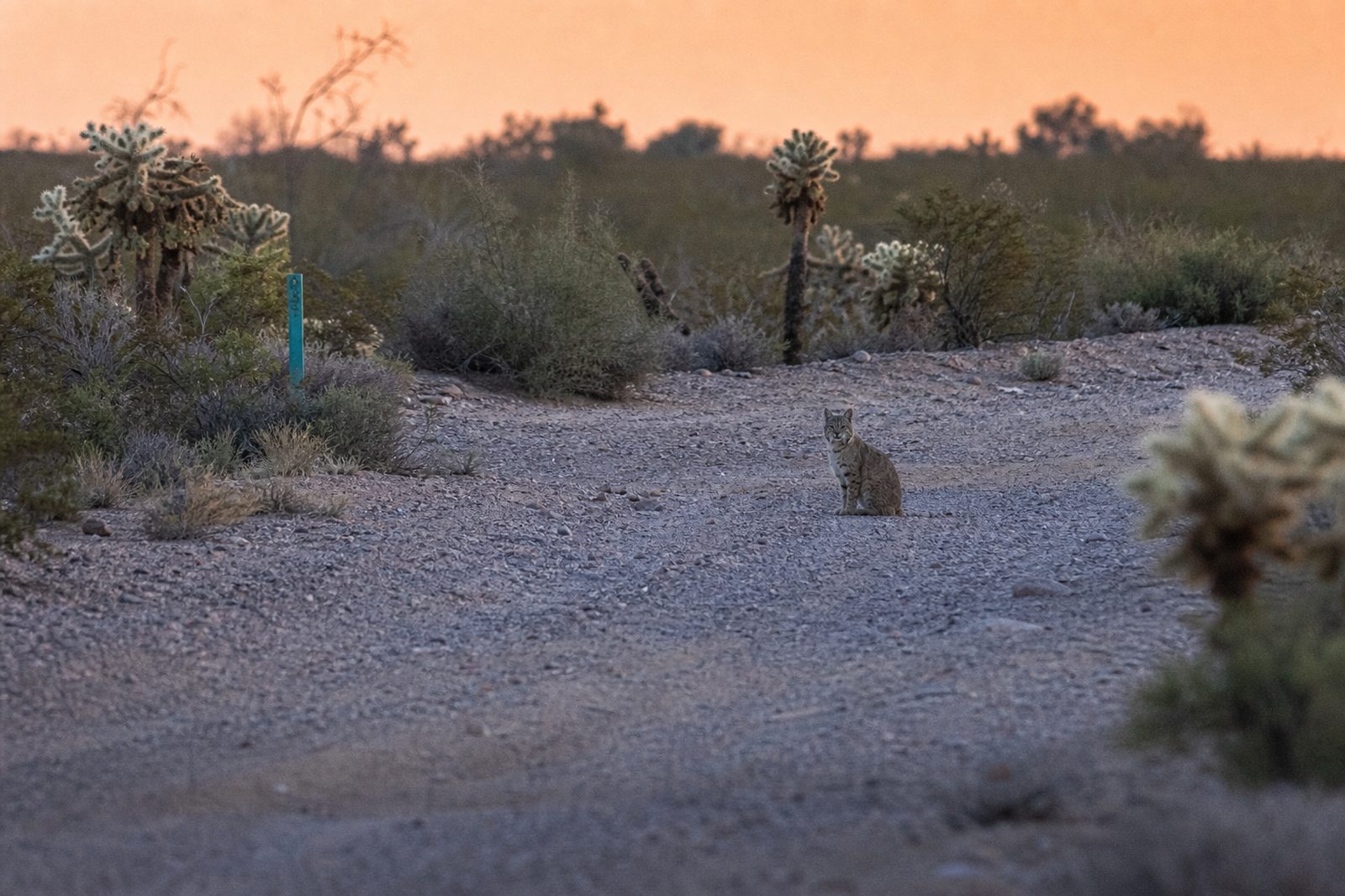
Your dog freezes on a Cave Creek trail. Twenty yards ahead, a bobcat sits in the wash, watching. Or the nose drops to something orange and black moving slow through the gravel: a Gila monster. This guide shows how to condition a default "leave it" that fires before you have to shout, the desert hazards you proof it against, and the management that keeps your dog safe while the reps pile up. For the full method behind every term below, see our methodology.
Why does a screamed “leave it” almost never work?
The short version: the dog never rehearsed the cue at that intensity, and its body is already running the reaction.
Picture the behavior chain: trigger > chemical release > response > outcome. The sight of the bobcat is the trigger. The chemistry moves before the dog does, and a rehearsed chase pattern gets faster each time the dog wins it. The cue was rehearsed on boring treats in your kitchen. The desert presented it at full intensity with no warning. Shouting the cue there is like slamming the brakes on ice. The slide started before your foot moved. Those are different behaviors, not one behavior done louder.
A dog with no default invents one. The desert does not grade on a curve.
In a Group Class at Partners, a trainer sets this up the same way: the dog sees the trigger, the trained default is the check-in, and you learn to pay it at exactly the right moment. Mentor and student, figuring it out together.
The fix is to flip the order. Condition the default with no triggers present, then proof it against the real thing at distance. The dog learns: notice something -> check in with my person -> get paid. When the trigger fires, the response that is already installed fires first.
What does the desert put in front of your dog?
The short version: know the cast before you proof against it. Every claim below is sourced; unverified folklore was cut.
The proofing targets in this protocol are the animals your dog will actually meet in a Scottsdale or Cave Creek yard, wash, or trail.
| Animal | When and where | What your dog does | Why it matters |
|---|---|---|---|
| Bobcat | Dawn and dusk, brushy yards, washes, trail edges. Common throughout Arizona at all elevations. | Locks on, stalks, gives chase. | A 12 to 30 pound predator that jumps 12 feet and eats small pets. It rarely attacks people. Keep small pets indoors or on leash; never feed wildlife. |
| Gila monster | Spring and early summer mornings, desert scrub and rocky yards. Moves slowly. | Sniffs it, noses it, mouths it. | Venomous; a bite is a serious, painful medical emergency. It cannot strike: a bite happens only when a body part goes near its mouth. Protected by Arizona law. |
| Bark scorpion | Night. Patios, pool areas, garages, block walls. Active after dark. | Paws at it, snaps at it. | The only North American scorpion dangerous to people. Arizona poison centers take about 20,000 scorpion-sting calls a year. A nose sting on a small dog warrants an emergency vet call. |
| Sonoran desert toad | Monsoon season nights, near water and wet ground. | Mouths it or carries it. | Its toxins can kill a full-grown dog that mouths it. Signs: heavy drooling, unsteady gait, irregular heartbeat. Flush the mouth with water and get to a vet. See our Sonoran Desert Toad Season guide. |
Rattlesnakes get their own treatment, because rattlesnake avoidance runs on a different conditioned program: an avoidance response taught to the scent and sound, not this leave-it default. See our rattlesnake avoidance guide for that protocol. Everything else in the table above is this protocol’s job.
How do you teach the default with no triggers present?
The short version: in a quiet room, teach the dog that turning away from something interesting pays better than investigating it.
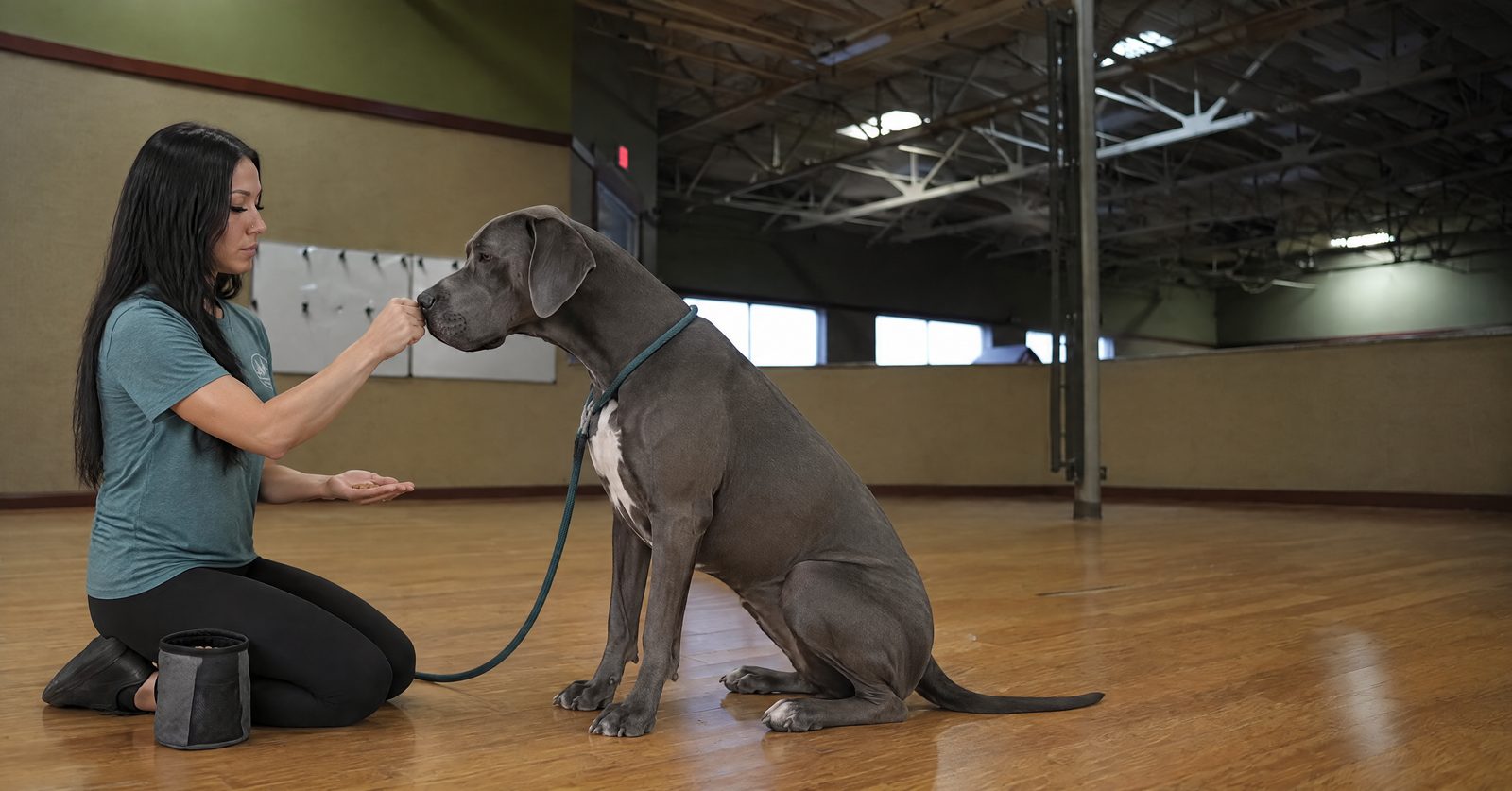
Work indoors. Two kinds of treats: one ordinary (the bait), one the dog would trade its birthday for (the paycheck). Short sessions, three to five minutes, one or two a day.
- Set the closed fist. Treat in your fist. Show it to the dog. Say nothing. Wait.
- Mark the turn-away. The dog sniffs, nudges, maybe licks. The instant it pulls back, mark (“yes”) and open your other hand with the paycheck. The bait never gets paid out.
- Repeat until the turn-away is instant. Ten to twenty reps. The dog learns that ignoring the bait predicts the better treat.
- Add the cue after the behavior exists. Say “leave it” as the dog disengages, then mark and pay. The word gets attached to a behavior the dog already understands. Never the reverse.
- Set bait on the floor. Drop the ordinary treat a few feet away, on leash. When the dog orients and checks back with you instead of diving, mark and pay from your hand. The check-in is the product.
- Stretch the check-in. Pay for longer holds. You are building the muscle of choosing you over the object.
Correction never enters at this phase. There is nothing to correct: the dog is learning what to do, and it only knows the default when it offers it without being asked. Fair correction becomes an option later, only after the alternative is understood, at the lowest level the dog notices, like a tap on the shoulder.
Your first step
Book a PD360 Assessment
The in-person evaluation where a senior trainer reads your dog across nine dimensions, names the pattern behind the behavior, and tells you honestly what comes next.
How do you reinforce the default inside your house?
The short version: pay the default until it is the dog’s habit, then start turning the dials one at a time.
Reinforce is the most skipped phase in dog training. The dog does it twice, the owner declares victory, and the behavior collapses the first time it matters. Pay the default until the dog offers it freely, in boring rooms, with boring items.
Work the five D’s in order, one dial at a time.
- Duration. Hold the check-in ten seconds. Then thirty. Then through you walking to the kitchen and back.
- Distraction. Practice with the TV on, the kids moving, the other dog watching.
- Distance. Bait across the room, then the hallway. The dog stays with you at fifteen feet.
- Direction. Walk past bait instead of toward it. Leave the room and re-enter.
- Difficulty. Upgrade the bait: cheese, the favorite toy. The paycheck has to beat the bait every time.
One rule per session: only one D moves. If the dog breaks, back up to where it was winning.
How do you proof the default in desert scenarios at distance?
The short version: take the default outside, far from the trigger first, and close the distance slowly.
Proof starts in your yard at the quietest hour of the day. Place safe decoys: a stuffed toy lizard on the patio, a rubber scorpion on the block wall at night. The dog sees it, checks in, gets paid.
- The yard at dusk. Dusk is bobcat hours. Work short leashed sessions at the fence line. If the dog spots a real bobcat and holds the default, pay it like the proofing session money cannot buy.
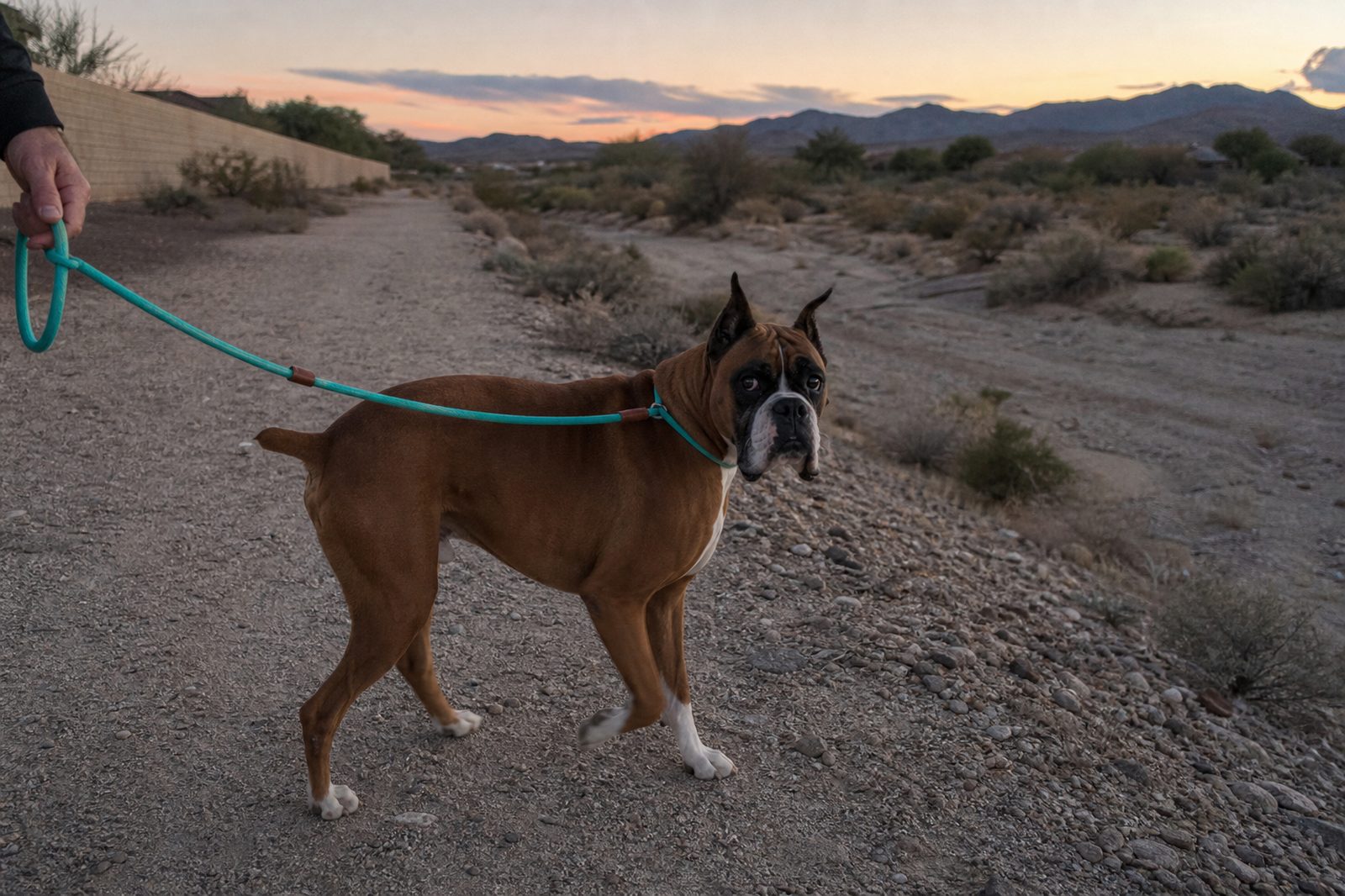
- The wash at the trailhead. Start 50 yards out. Walk parallel to the wash, not into it. Reward every offered check-in. Close distance over sessions, never within one.
- The patio at night. Bark scorpions are active after dark. A leashed sweep of the patio with the default loaded turns the dog into a partner, not a liability sniffing the block wall.
Manage while you proof. A leash is not punishment. Timing walks away from dusk and dawn is not punishment. Clearing brush and keeping sightlines open is not punishment. Management buys the reps the default needs. A dog off leash in a brushy wash at dusk is not "free"; it is practicing the pattern you are trying to replace.
Some dogs arrive with drive so hot that the default cannot hold against a live animal at any distance. For those, a conditioned redirect cue breaks the fixation: a minimal collar cue, conditioned first and run at the lowest level the dog notices, timed by you at the moment of the stare, see our guide to the tap-on-the-shoulder redirect cue. The tool never replaces the human in the loop. The cue buys the moment the default needs to win.
How do you maintain the default so it stays sharp?
The short version: maintenance stays light, and it has no finish line.
Once the default holds in the yard and on the trail, you stop running sessions and start running drills folded into real life. Every walk gets two or three surprise reps: drop a treat from your pocket, say nothing, pay the check-in when the dog offers it. Every patio evening gets a short check-in sweep. Progression prevents regression.
Watch for the tell that maintenance is slipping: the dog sees something and hesitates, choosing between the item and you. The paycheck stopped beating the bait. Bump the rewards back up for a week and run short sessions again. The fix is almost always reinforcement, not correction.
If your dog’s pattern is genuine fixation or reactivity toward animals, it belongs in a behavior case, not a maintenance drill. Reactive dogs rehearse their chemical loops every time they blow up at a trigger, which is why we route those cases through a PD360 Assessment first. For the framework behind reactive dogs, see the reactive dog training guide.
Mistakes that make it worse
- Repeating the cue like a chant. "Leave it, leave it, LEAVE IT" teaches the dog the cue is background noise. Say it once. If the dog cannot do it, it was too close or too aroused. Manage the situation, then train the gap.
- Paying with the bait. If the dog gets the treat it was told to leave, the dog learns to investigate first and comply later. The reward always comes from your hand, never from the item.
- Skipping straight to real animals. Proofing against a real bobcat up close before the default holds at home is how the default dies. Earn every distance.
- Banning the yard after a sighting. The dog never practices the default where it is needed most. Use a leash and supervision instead of locking the dog out.
Route by fit
Desert-Proof the Default
Foundation Camp runs all four phases on your dog’s actual weak points: the leave-it default, recall, and place. You get the reps logged and the written protocols to maintain them.
Key takeaways
Key takeaways
- “Leave it” is a conditioned default: the dog sees something, checks in with you, and gets paid.
- Condition it with no triggers present first. Add the cue only after the behavior exists.
- Proof across the five D’s: duration, distraction, distance, direction, difficulty.
- Know the cast: bobcats hunt small pets at dawn and dusk (AZGFD); Gila monsters are venomous and protected by Arizona law (NPS); bark scorpions are the only dangerous North American scorpion (UArizona); desert toads can kill a dog that mouths them (Arizona-Sonora Desert Museum).
- Management (leash, sightlines, timing) is not punishment. It buys the reps the default needs.
- Maintenance has no finish line: fold two or three surprise reps into every walk.
Frequently Asked Questions
What is the first step if my dog chases wildlife in the desert?
Book a PD360 Assessment at Scottsdale or Cave Creek. A senior trainer reads your dog across nine dimensions, names the pattern (curiosity, prey drive, reactivity), and routes you to Foundation Camp, the redirect-cue protocol, or a behavior case. The assessment comes before the plan.
How long does it take to teach a reliable desert leave it?
The quiet-room default takes a couple of weeks of short sessions. Proofing takes months, because it has to cover the five D’s against real animals at real distances. Any trainer promising a reliable desert leave it in a weekend is selling you the screamed version.
Can I just say “leave it” louder when my dog goes after a bobcat?
No. Volume does not change the dog’s state. At the moment of fixation, the dog’s body is running a reaction the cue was never rehearsed against. Say it once in a normal voice. If the dog cannot do it, leave with the leash and put the reps in at the distance where the dog can win.
What do I do if my dog mouths a Sonoran desert toad?
Act fast. Flush the mouth with large amounts of water (the Arizona-Sonora Desert Museum advises hosing from back to front), then get to your vet or an emergency clinic immediately. There is no home remedy and no specific antidote; the dog needs professional care. This article never substitutes for your vet.
Is rattlesnake-avoidance training the same as this protocol?
No. Rattlesnake avoidance teaches a conditioned avoidance response to the scent and sound of a rattlesnake through a separate program. This protocol conditions a general default (see something, check in with you) for everything else: bobcats, Gila monsters, toads, and scorpions. Many desert dogs need both.
Where to go from here
The desert does not care how good your dog is in the kitchen. What counts is the default the dog offers when something real moves at dusk. Condition it quiet, proof it at distance, maintain it on every walk, and manage while the reps pile up. If the pattern is bigger than curiosity, get the assessment before the plan: a senior trainer names whether it is prey drive, arousal, or a proofing gap, and the handoff coaching makes the redirect cue yours, not just the dog’s.
Scottsdale: 8642 E Shea Blvd, 85260. Cave Creek: 4640 E Forest Pleasant Pl, 85331. Serving the Phoenix Valley.