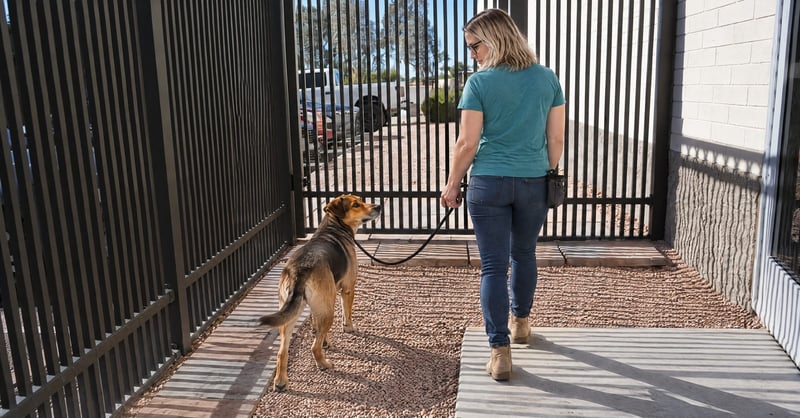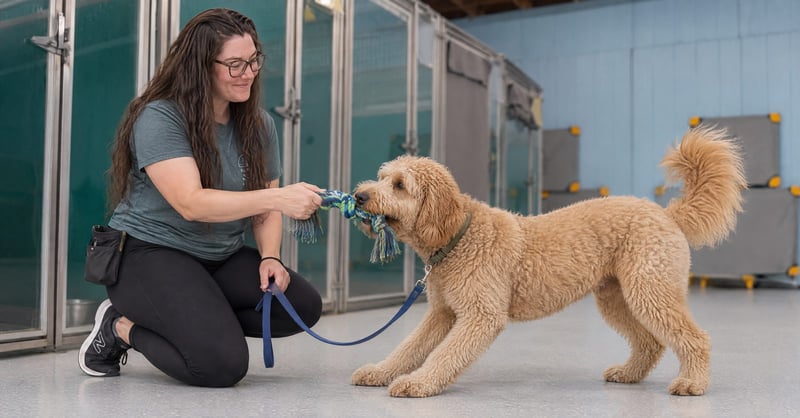
Private lessons work for busy families because you set the time and place instead of building your week around a fixed class. A single session runs about an hour on the Scottsdale or Cave Creek campus, or longer at home, and most families pair that cadence with a few DaySchool days each week so the reps keep happening between sessions.
What does a private lesson actually look like when you have thirty minutes between school pickup and dinner? This guide walks through what a private dog training session covers, how often a packed household should book one, and how private lessons pair with DaySchool days when a single weekly hour is not enough to move the needle. If you are still deciding between one-on-one instruction and a weekly class, read Private Lessons vs Group Classes for Your Dog first; this piece assumes you already lean toward private lessons and want to make the cadence work.
What Does a Private Lesson Cover?
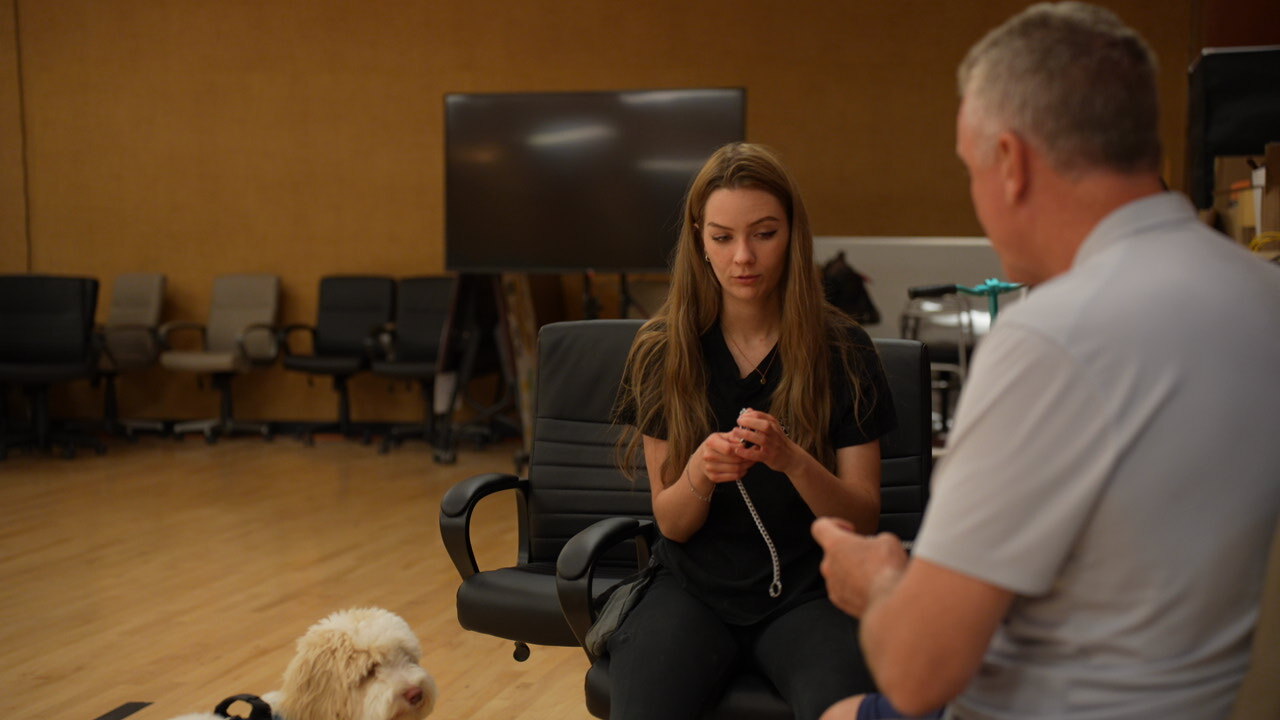
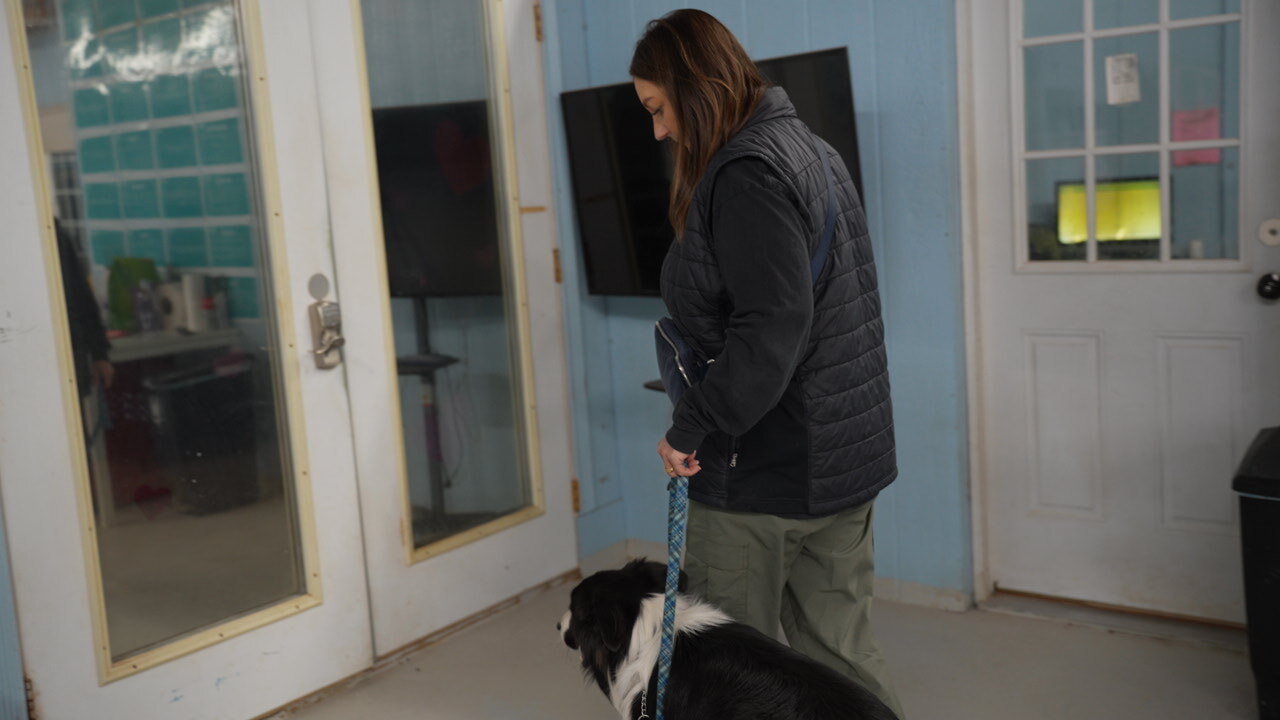
A private lesson at Partners Dogs is one trainer, working with your dog and your family, on the specific behaviors slowing your household down. A session might work on:
- Obedience basics
- Door manners
- Leash handling
- One targeted problem, like counter-surfing
Whatever your dog needs most that week is what the session works on.
The session builds around your dog's own environment, not a generic curriculum. A trainer working a door-bolting problem wants to see your front door and your actual foot traffic, not a training room lobby that looks nothing like Tuesday afternoon at your house. That is the trade-off private lessons make on purpose: less built-in group exposure, more direct time on the exact problem you called about.
“Private training with Caroline was a game changer for our family.”
Every Private Lessons session ends with homework: two or three specific things to practice before the next visit. The lesson teaches the mechanics; the days in between are where the behavior sets.
How Often Should a Busy Family Book a Lesson?
There is no single right cadence, but most families settle into a rhythm inside their first two or three sessions. A new puppy working through basics might see a trainer weekly for a stretch. A single stubborn habit in an otherwise well-mannered adult dog might only need a session every other week, with practice carrying the middle stretch.
Weekly beats occasional for building a new skill, but consistency between sessions matters more than the exact interval. A family that practices five minutes twice a day between biweekly lessons often outpaces a family booking weekly sessions but skipping the homework. Your trainer adjusts the schedule as your dog progresses, tightening the interval around a hard problem and stretching it out once a behavior holds.
Tell your trainer up front what your week looks like: work hours, school pickup, evenings that are already spoken for. A cadence built around your calendar sticks. One built around an ideal week does not.
Should Lessons Happen on Campus or at Home?
Both formats work, and the right one depends on where the problem shows up. In-Home Dog Training vs Facility Training in Scottsdale covers this tradeoff in full; here is the short version for a busy household choosing a lesson format.
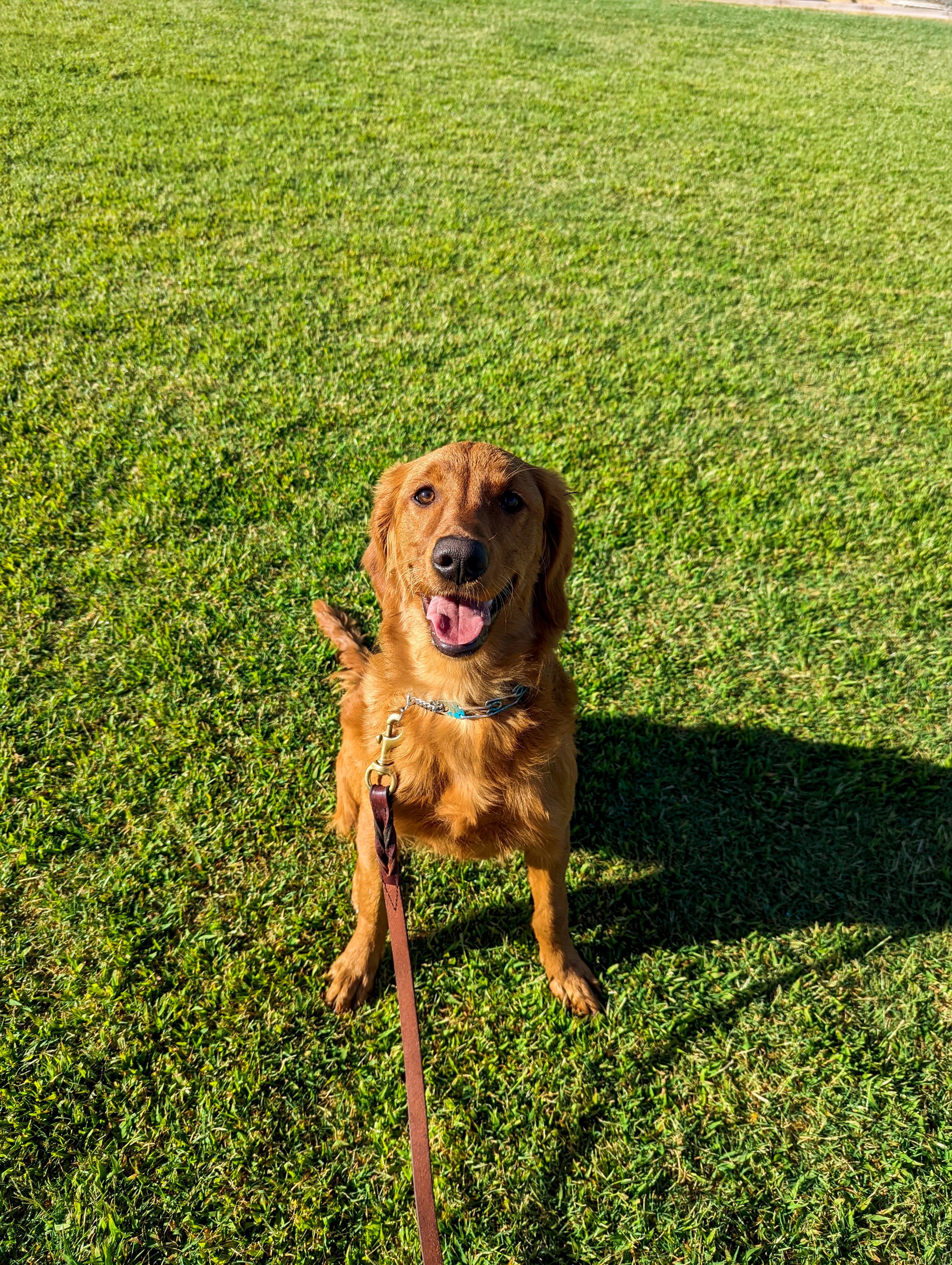
Match the location to the behavior, not to convenience alone. Home problems train best at home:
- Guest greetings
- Counter-surfing
- Door bolting
Campus space suits a different kind of practice: loose-leash walking around distraction, recall with other dogs present, or building focus around new people.
Many families run a mix: a campus session to build the skill, then a home visit to prove it holds where it matters most.
How Do Private Lessons Combine With DaySchool Days?
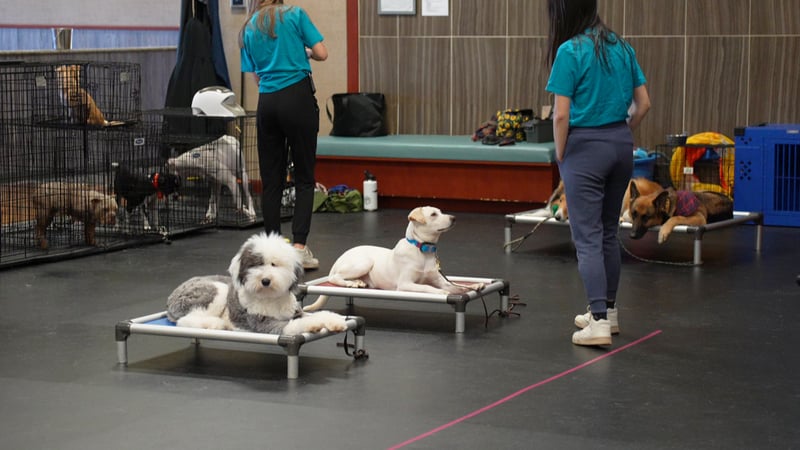
A weekly private lesson gives your dog focused coaching once. A DaySchool day gives your dog a full day inside a structured, trainer-led environment with other dogs in training around them, absorbing the same routines by repetition and exposure. Families juggling two jobs and a full activity calendar often pair the two: a private lesson sets or refines the plan, and DaySchool days supply the volume of reps a single weekly hour cannot.
Density is the whole point of the combination. Because thousands of dogs move through our Scottsdale and Cave Creek campuses every year, a dog spending even one or two DaySchool days a week works, rests, and gets redirected inside an environment built for training all day. That is different from the single hour a private lesson runs: active coaching plus passive immersion working together, not a replacement for either.
DaySchool runs on the same eight grade levels a private lesson draws from, so nothing your dog learns in one setting sits idle in the other.
How Do You Know a Lesson Plan Is Working?
Ask your trainer this directly: how will I know if the sessions are working before we are six weeks in? A vague answer is a warning sign. A specific one, tied to a written record, is what you want.
Partners Dogs tracks every dog's progress through the PD360 Pet Progress Tracking System, so a lesson plan is measured, not estimated. Your trainer scores where your dog stands, notes what changed after each session, and adjusts the plan based on that record instead of a general sense that things seem better. If a private lesson cadence is not moving the needle after a few sessions, the record shows it early enough to change course.
This is also where a PD360 Assessment earns its place before a lesson plan starts: it gives your trainer baseline PD360 scores to measure every session against.
Fit training into the week
Get a Plan Built Around Your Calendar
A PD360 Assessment gives your trainer a starting point, then you build the lesson-and-DaySchool mix around the week in front of you.
Private Lessons or Group Classes First?
This decision depends on your dog, and it deserves more room than one section here. Private Lessons vs Group Classes for Your Dog, linked above, walks through the either/or in full: when the built-in socialization of a class outweighs the focused attention of a private session, and when it does not.
The short version for a busy household: private lessons win when the calendar cannot commit to a fixed weekly time slot, and Group Classes win when your dog mainly needs practice around distraction rather than a specific problem solved. Plenty of families end up doing both across different stretches of their dog's training.
What Happens in Your First Private Lesson?
The first session sets the baseline: your trainer meets your dog, asks about your household's routines, and watches how your dog responds to basic handling before building the plan. What to Cover in Your First Private Lesson breaks that first visit down in full, including what to bring and what questions to expect.
Come with your actual schedule in hand, not a hoped-for one. The most useful thing you can hand your trainer on day one is a clear picture of when your family can practice, so the plan gets built around the week you have rather than the week you wish you had.
Who Teaches the Lesson?
Every lesson is taught by a trainer working under Partners Dogs University standards, which require at least 1,000 supervised hours before Instructor eligibility.
Your dog is not limited to one trainer's read on a problem. Private lessons, DaySchool, and camps all draw from the same team of trainers. Your dog often works with more than one of them across their training, so more than one set of eyes catches a pattern a single trainer might miss.
“Chase came to do a private lesson today. He pointed out so many Small things I can change that are going to make a big difference.”
What Shapes Private Lesson Pricing?
Private lesson rates vary by format: in-school sessions at the Scottsdale or Cave Creek campus, in-home visits, online coaching, and weekly lesson memberships all carry different numbers. Current rates are on the pricing page, which stays current as rates change. A trainer can also help you weigh a weekly private lesson against adding a DaySchool day or two, so the mix fits your goals and your household budget.
Key takeaways
- A private lesson at Partners Dogs runs about an hour on the Scottsdale or Cave Creek campus, or closer to ninety minutes for an in-home visit.
- Every private lesson is taught by a trainer working under Partners Dogs University standards, which require at least 1,000 supervised hours before Instructor eligibility.
- Private lessons and DaySchool days both follow the same grade-level curriculum and the same PD360 Pet Progress Tracking System record.
- Most busy families start with one or two DaySchool days a week alongside a weekly private lesson, then adjust based on how a specific behavior is holding.
- A PD360 Assessment gives your trainer baseline scores to measure every private lesson session against.
Frequently Asked Questions
How long does a typical private lesson run?
A private lesson at Partners Dogs usually runs about an hour on the Scottsdale or Cave Creek campus. In-home sessions run longer, closer to ninety minutes, since travel time and getting settled into your space are part of the visit.
Can private lessons happen in the evening or on weekends?
Yes. Private lessons are booked around your calendar rather than a fixed class time, so you pick the day and time instead of building your week around a set class. Early and Saturday slots fill fastest, so ask your trainer what is open at the Scottsdale or Cave Creek campus.
Do both parents need to attend every private lesson?
No, though it helps when everyone who handles the dog attends at least a few sessions. A trainer can teach one parent the mechanics of a cue, but the whole household needs to use the same words and the same follow-through for a new behavior to hold at home.
How many DaySchool days should we add alongside weekly private lessons?
Most busy families start with one or two DaySchool days a week alongside a private lesson, then adjust based on how quickly a specific behavior is holding. A trainer can help set that starting mix during your first session.
Does switching between private lessons and DaySchool days confuse a dog?
No. Private lessons and DaySchool days both follow the same grade-level curriculum and the same PD360 Pet Progress Tracking System record, so a dog is reinforcing the same skills either way. The format changes; the training plan does not.
Ready when you are
Book Your First Private Lesson
Bring your dog's biggest sticking point and your actual weekly schedule. Your trainer builds the cadence from there, whether that means weekly sessions, DaySchool days between them, or both.