Board and train improves everyday obedience because the behaviors are built inside a structured, immersive stay and then handed off to your family with the exact cues, timing, and handling trainers used. Foundation Camp at our Scottsdale and Cave Creek campuses pairs active training sessions with continuous passive exposure so a command holds up in real life: at the threshold, during greetings, and on a walk. What keeps it in place afterward is the handoff lesson, consistent practice during the first 30 days home, and ongoing DaySchool or DayCamp days.
Same Tuesday evening, two different dogs: one crashes through the front door, jumps on your friend at the top of the driveway, and drags you down the block. The other waits at the threshold until released, sits for the hello, and walks calmly enough that you notice the sunset instead of your shoulder. Foundation Camp at our Scottsdale and Cave Creek campuses is how a dog moves from the first version to the second, and the rest of this guide walks through exactly how that transfer holds up once your dog is back home.
/Programs/Transform%20Camp/Safer%20home%20(1).jpeg?width=1200&name=Safer-home-1.jpeg)
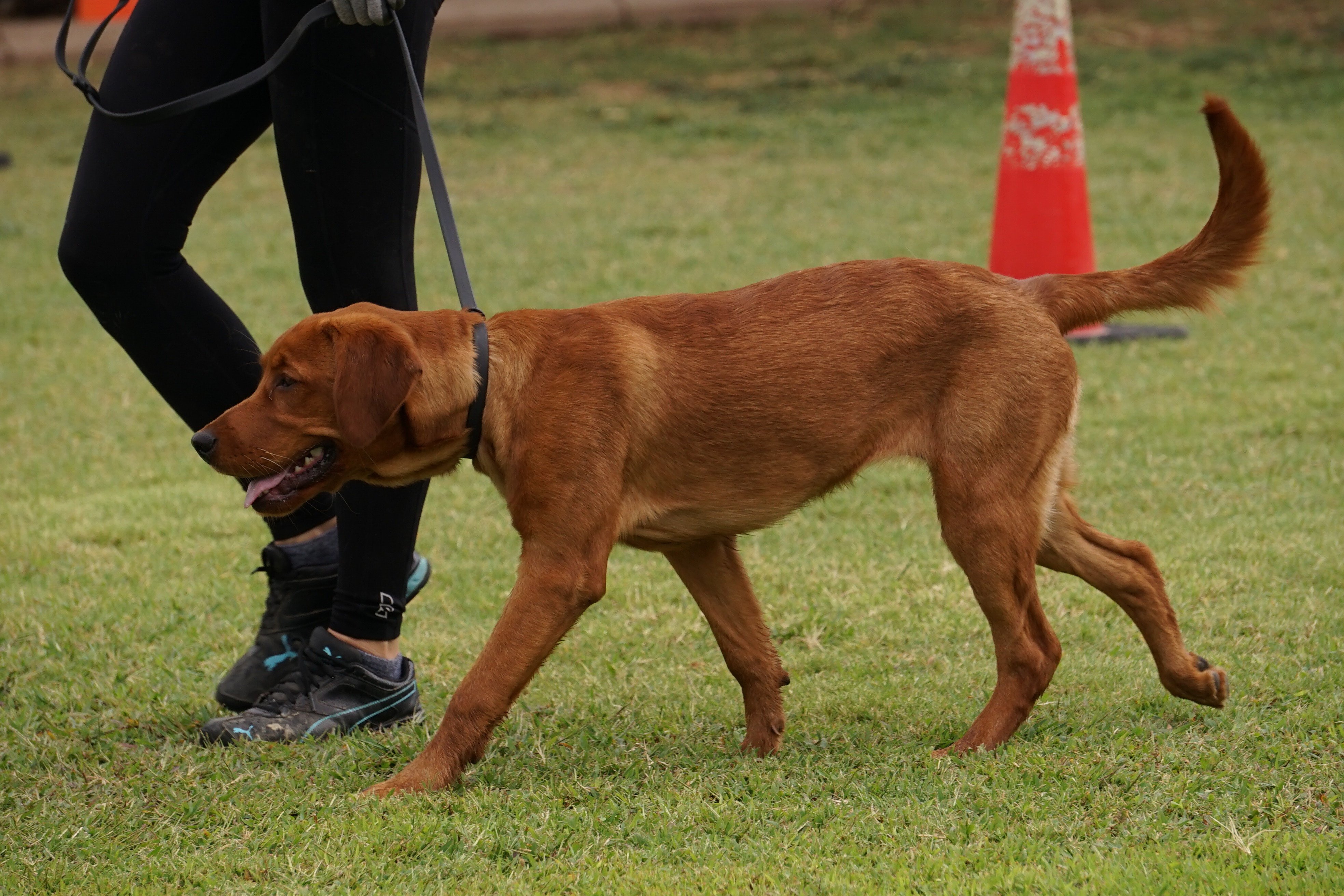
What Changes During Foundation Camp
Foundation Camp is a 14-night stay at our Scottsdale or Cave Creek campus, and the days inside it are not one long class. Training moves through four stages: Teaching a behavior for the first time, Reinforcing it until it is reliable on cue, Proofing it against distraction, and Maintenance once it holds. That order is what separates a dog that "knows" sit from a dog that will hold a sit at a busy front door.
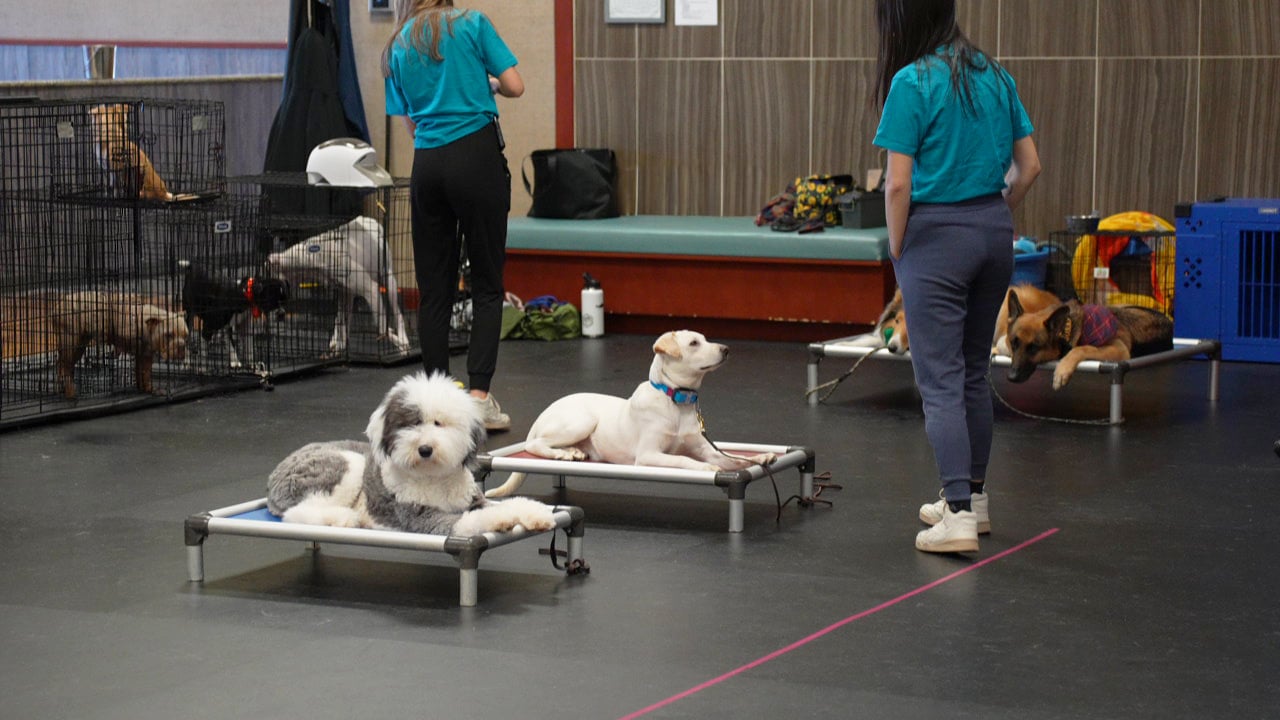
The stay works because it pairs active, focused training sessions with something a single home cannot replicate: a continuously immersive environment. Between formal sessions, your dog is rewarded, guided, and modeled by other dogs already in training. That is when desensitization and conditioning keep building, even when no one is running a formal drill. Behaviors get built through a steady mix of structured sessions and constant immersion. Partners has worked with 70,000+ dogs since 1997, and that volume across two campuses is part of why the environment itself does training work alongside the trainer standing in front of your dog.
Want the full day-by-day picture of a 14-night stay? See what 14 nights at Foundation Camp look like. Still deciding whether Group Classes or a boarded stay should come first for your dog? That decision gets its own guide. If cost and length are what you are trying to pin down first, the full cost and timeline breakdown is here.
How Threshold Manners Hold Up at the Front Door
Door dashing is one of the most common asks families bring to camp, and it is also one of the clearest examples of how the four stages work together. Trainers first teach your dog to wait at a threshold, whether that is the front door, the car door, or a crate. Once the wait is reliable, they reinforce it on cue. Then they proof it against live distractions: a knock, a delivery truck, another dog walking past outside. The payoff shows up the moment a screen door swings open onto a busy Scottsdale street: a dog that already knows to wait keeps everyone safe, with no scramble and no chase.
A threshold wait only counts as trained once it survives a doorbell your dog was not expecting. That is the version that comes home. It is a dog that has already practiced waiting through the exact kind of surprise a Scottsdale front door produces on an ordinary Tuesday, and holds the wait the first time you ask.
How Greetings Stay Calm With People Your Dog Has Not Met
A dog that greets politely with one trainer in one room has not proven much yet. During camp, your dog practices the same sit-to-greet pattern with different handlers and in different rooms, at different times of day. The behavior is not tied to one person's voice or one specific doorway. This same practice covers jumping: trainers reward four paws on the floor the moment the greeting starts, right as the door opens or a guest steps up the driveway. Your dog learns that calm earns attention.
Politeness that only shows up for one trainer is not trained yet, it is a party trick. A guest walking through your Cave Creek or Scottsdale front door is a stranger to your dog in a way no camp handler ever was, which is exactly why practicing the pattern with several different people during the stay matters more than one polished demo for one visitor.
How Walks Start to Feel Like Walks Again
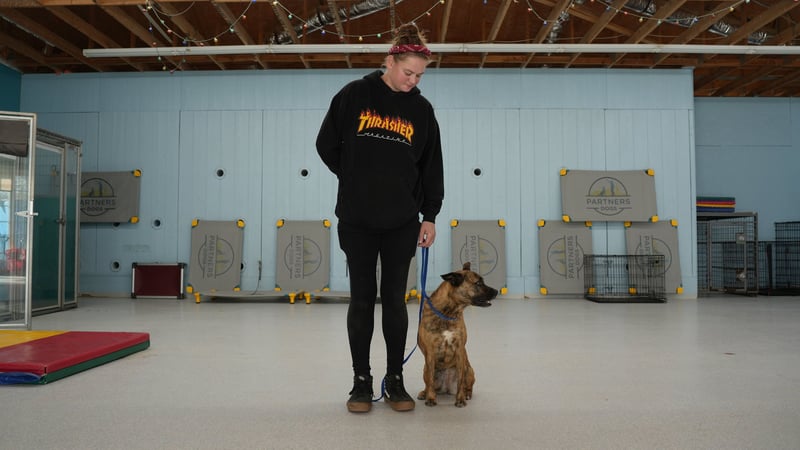
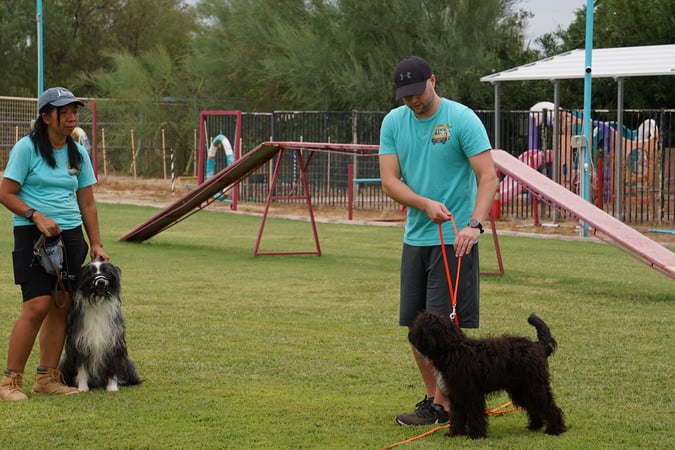
Leash pressure and pulling get proofed the same way as everything else: teach the position, reinforce it on cue, then proof it against true motivation. That list of motivation is specific: a jackrabbit crossing a Cave Creek wash, another dog across the street, a jogger closing fast on a Scottsdale sidewalk. Trainers proof it in the same kind of places your dog will be walked, neighborhood sidewalks and a store parking lot among them, so the skill is already familiar the first time your dog is off the property, out in the world.
A loose leash in a quiet training field means little until it holds on a walk your dog wants to pull toward something. Once that holds, walks change shape: they stop being a tug-of-war and start being the kind of daily reset a Scottsdale or Cave Creek evening is supposed to be, dog and owner moving together at the same pace.
For more on building a full daily routine once your dog is home, see how other Arizona families structure everyday obedience practice.
How Your Dog Learns to Settle While You Cook or Work
Place and down-stay work through the same four stages, and this is the skill most families notice fastest once they are home. A dog that can hold a place command through meal prep, a video call, or a knock at the door has moved past a training-room skill and into something proofed against your house's specific distractions. A place command that holds through a video call will hold through a delivery knock or a toddler running through the kitchen, the two moments most families need it for.
This is also where the PD360 Pet Progress Tracking System earns its keep. Trainers log where your dog stands against the grade-level curriculum throughout the stay, so pickup day comes with a documented grade-level record of what is proofed and what still needs work. Grade-level tracking turns "he's doing well" into a specific list of what is proofed and what still needs practice. That list is exactly what your family works from during the first 30 days home.
Start with a plan
Want a Clear Read on What Your Dog Needs First?
A PD360 Assessment gives you a trainer's read on your dog in person, before you commit to a program length.
When Everyday Obedience Needs More Than Foundation Camp
Foundation Camp is built for general obedience and manners: thresholds, greetings, walks, and settle. Some issues go deeper than that. When fear, aggression, or serious reactivity is the underlying problem, a longer stay built specifically for behavior work is the better fit. That is what Behavior Camp is for: aggression toward people or other dogs, serious fear, or reactivity that general training has not resolved. For a dog with a bite history or a true crisis-level pattern, Transform Camp steps up further, with the same 12 to 16 week framing and senior-trainer handling for the more severe cases.
Matching the program to the actual problem matters more than matching it to a program name you have heard of. A PD360 Assessment is where that match gets made, with a trainer meeting your dog in person before anyone commits to a length of stay or a specific camp.
The Handoff: Turning Camp Skills Into Family Skills
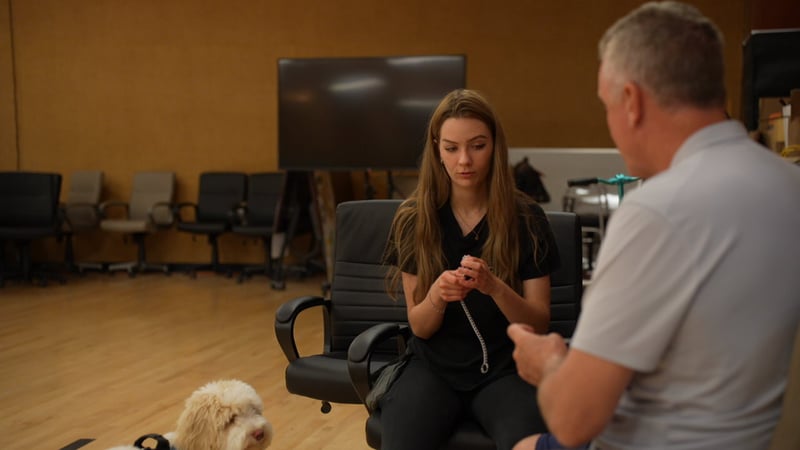
None of the above holds if the transfer from trainer to family happens by accident. Before pickup, your family gets hands-on time with a trainer: you watch your dog perform the cues it learned, then you practice handling those same cues yourself, with a trainer coaching your timing as well as your dog's.
Training a dog during a stay also means training the family who lives with that dog. This is also why more than one trainer typically works with your dog during camp: your dog learns to respond to the cue itself, the way your household runs, with everyone from parents to guests giving the same direction.
Programs that skip this step hand you a well-trained dog and no instructions. Ours does not. A trainer walks your family through your dog's specific plan before you leave the property. Owner education is planned as part of the stay from the first day, with real time set aside for it.
The First 30 Days Home
The 30 days after pickup are when new behaviors either become habits or start to fade. Use the same words and hand signals your trainer used during the handoff lesson, in the same order, so your dog recognizes the exact command it already knows.
Start easy and build up. Ask for the threshold wait, the place command, and the leash position at home first. Hold each one there for several days before testing it somewhere new: a park, a friend's driveway, the group class floor.
A command that only works inside the house it was practiced in simply needs one more proofing step in a new place. Short, frequent practice beats one long weekend session. Fold it into things you are already doing: a sit before the food bowl, a place command during a phone call, a loose-leash lap around the block.
Keeping It: DaySchool and DayCamp as Maintenance
Foundation Camp builds the behaviors. What keeps them sharp long after the first 30 days is an ongoing maintenance rhythm. DaySchool gives your dog regular days of structured training and enrichment alongside daily life, while DayCamp keeps the focus on behavior-focused sessions for dogs who need that structure most days.
A trained dog needs upkeep, the same way any skill does. This is where staying with your family for the life of your dog comes in: the relationship continues well past graduation, and DaySchool or DayCamp days give you a place to keep reinforcing what camp built, with a trainer's eyes on your dog at every session.
Families who keep a light, regular rhythm are the ones who come back a year later and say the training still holds, whether that means one DaySchool day a week or a monthly DayCamp tune-up. Families who stop cold after pickup day tend to see behaviors fade within a few months, because nothing kept them sharp once camp ended.
Frequently Asked Questions
How soon after Foundation Camp should I start asking for the same commands at home?
Start the same day you get home. Use the exact words and hand signals your trainer showed you during the handoff lesson, and ask for them in your own house and yard before testing them anywhere new. Waiting even a few days to start makes the transfer harder.
What happens during the family handoff lesson before pickup?
A trainer walks your family through the specific cues, timing, and handling your dog learned, then has you practice each one while they are still there to coach you as you go. That is the point where responsibility for keeping the training alive shifts from the trainer to you.
Does working with several different trainers during camp confuse my dog?
No. Dogs generalize better when more than one trainer works the same cues with them, because the behavior gets tied to the command itself. That is closer to how your household works anyway, with parents, kids, and guests all expecting the same response.
Do I need to recreate the training environment at home for commands to work?
You do not need to recreate a training field at home. That is the point of the proofing stage: trainers deliberately practice commands against everyday distractions during the stay so the behavior holds up in new places, including the one it was first taught in. Your job at home is consistency: ask for the same cue the same way, in your house and beyond it.
Does DayCamp or DaySchool count as practice, or do I still need to train at home myself?
Both, but they work alongside your own daily practice. DaySchool and DayCamp give your dog structured sessions with a trainer on a regular schedule, which keeps skills sharp between visits home. The habits that hold longest are the ones your family also asks for daily, at home, on top of what gets practiced during a scheduled day.
Ready for the transfer to start
See What 14 Nights Can Change at Home
Foundation Camp builds the behaviors and the handoff that makes them stick. If your dog needs more than general obedience, Behavior Camp adds the boarded stay plus follow-up coaching for deeper behavior work.