Straight from the floor
Four seasons shape the Arizona dog calendar: rattlesnakes active spring through fall, a summer heat stretch pushing walks to dawn or dusk, a monsoon window from mid-June through September, and a fall-into-winter stretch when snowbirds arrive and holiday boarding books up fast.
Check these four boxes and an Arizona dog year stops feeling like a string of surprises: snake season, heat, monsoon, and the fall travel rush.
What does an Arizona dog year look like, season by season?
Four overlapping windows, not four neat months, shape most of the risk a desert dog faces: rattlesnakes active from spring through fall, and heat building through summer with monsoon stacked on top.
- Spring (roughly March-May): rattlesnakes waking up, the first triple-digit days, yards needing a wildlife check.
- Summer (roughly June-September): peak heat, hot pavement, monsoon storms layered on top.
- Fall (roughly October-November): a second, shorter rattlesnake window, plus the first snowbirds and holiday bookings.
- Winter (roughly December-February): the mildest training weather of the year, plus a holiday boarding rush.
| Season | Main risk | Read the full guide |
|---|---|---|
| Spring | Snakes waking up, yards unchecked | Rattlesnake avoidance: when to book |
| Summer | Heat, hot pavement, monsoon | Calming a dog during monsoon storms |
| Fall | Second snake window, early snowbirds | Rattlesnake season safety |
| Winter | Holiday boarding rush, house guests | Long-term boarding for snowbirds |
Which campus is the better fit for board-and-train, Scottsdale or Cave Creek?
Both campuses run the identical curriculum at the same 1:10 ratio, so the honest answer is whichever side of town is the shorter drive. North Scottsdale and Paradise Valley families usually land at Scottsdale; Carefree and Anthem families lean toward the founding campus. Either way, a PD360 Assessment maps which programs a dog needs.
When does rattlesnake season start, and how should you get ahead of it?
Snakes come out of brumation with the first warm days, earlier than most owners expect, and stay active into a second fall window. By the time one turns up on a trail, the training should already be done.
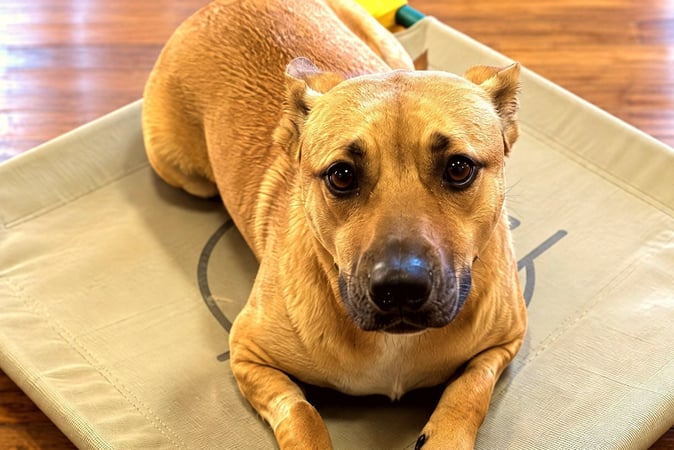
Take Callie, a Pitbull mix at Foundation Camp, whose prey drive toward rabbits got flagged as a rattlesnake risk, so avoidance work joined recall and leash work in her stay.
"We have 2 dogs who were trained by Partners for Snake Avoidance. It was done quickly and with no discomfort to our pups. I highly recommend Partners for Snake Avoidance training."
Paul K., Cave Creek
Book before the season starts rather than during it; the full booking guide covers timing by age.
How do you keep a dog safe through summer heat and monsoon storms?
Heat and monsoon are separate problems sharing the same months. Heat is a timing-and-surfaces fix: walks move to dawn or dusk. Monsoon is a noise fix, since a storm can unsettle a dog that shrugs off fireworks.
Both point toward moving exercise indoors from June through September, at home or during a climate-controlled stay. The storm fear is a trainable noise phobia, covered in the indoor calming guide.
Book the assessment day
Get a season-by-season plan built around your dog
A PD360 Assessment gives a straight read on where a dog stands, and which items on this calendar matter most.
What changes once fall arrives, snowbirds return, and the holidays hit?
The easiest months to train in Arizona are also the busiest months to book boarding. Once the extreme heat breaks in October, outdoor work gets easier, suiting a new or newly adopted dog better than spring. Snowbirds and traveling families arrive at the same time, so holiday boarding and long-term boarding need earlier notice.
Holidays also mean house guests and a front door opening more than usual, so door-manner work in fall beats fixing it last minute.
Get specific help
Not sure which program fits which season
Every family's calendar looks different, and the intake team can walk through which programs actually apply before anything gets booked.
Key takeaways
- Rattlesnakes are active in two windows: spring through summer, then again in fall.
- Heat calls for a timing fix; monsoon calls for a noise fix.
- Fall and winter give the easiest training weather, right when boarding fills up fastest.
- Scottsdale and Cave Creek run the same curriculum at a 1:10 ratio, so campus choice comes down to drive time.
- A refresher, a class, or a boarding slot all go better booked ahead of the season.
Frequently Asked Questions
How far ahead should a family book board-and-train for the holiday rush?
Weeks ahead. The stretch that makes training easiest also fills boarding fastest, and holiday travelers get caught most often.
Does a puppy follow this same calendar, or does age change the timing?
More than the calendar. The yard still needs checking before snake season, with avoidance work added once a puppy is old enough for the program.
Does this four-season calendar still apply to a dog that never leaves the backyard?
Yes. Rattlesnakes, javelina, and scorpions reach fenced yards here, so a backyard-only dog faces the same heat and monsoon months.
What's the one item on this calendar most first-time Arizona dog owners forget?
Booking ahead of the season instead of during it, whether a snake refresher, a boarding slot, or a group class.
Do winter visitors and snowbirds need to follow this same calendar too?
Even more. A dog raised in an Arizona winter has never met a monsoon storm, and new arrivals need boarding worked out earliest.
See where your dog stands today
Put next year's calendar on the schedule now
Foundation Camp is the starting point for most families here. Current rates are on the pricing page.
Keep reading