Cutting to it
Yes, we board reactive dogs, including many driving in from across the Valley (Mesa, Chandler, Gilbert, and beyond). What matters is what changes behind the front desk once your dog checks in: how the dog moves through the building, how potty breaks are handled, who holds the leash, and whether your dog gets walked into an open pack to see how it goes. Ask those questions before you book anywhere, ours included.
Most families never get asked these questions before they book, only after something goes sideways at pickup. Ask them of us, or of anyone else, before your dog's next stay:
- How does a reactive dog move through the building without crossing another dog at a door or in a hallway?
- Are potty breaks staggered, or does turnout happen in a batch?
- Does one handler stay with your dog for the whole visit, or does that rotate by shift?
- Is a reactive dog ever walked into an open play group to see how it goes?
- Is a quiet in-home sitter the better call for this dog?
Will Partners Dogs board a reactive dog from Mesa, Chandler, or Gilbert?
Distance from Scottsdale or Cave Creek has never been the screening question, behavior is. Families drive in from across the Valley (Mesa, Chandler, Gilbert, and beyond) for boarding and camps because one trip covers the whole stay, unlike a weekly training appointment that turns a 45-minute drive into a standing commitment. The intake conversation for a reactive dog is the same one we would have with a family five minutes down the road: what triggers the reaction, how the dog signals escalation, and whether there has been contact with a person or another dog. Across 70,000+ dogs since December 1997, a dog with a bite already on record shows up on that intake list often enough to be routine, not the exception a first phone call might expect.
What the conversation decides is which version of the stay that dog needs.
What makes boarding safe for a reactive dog?
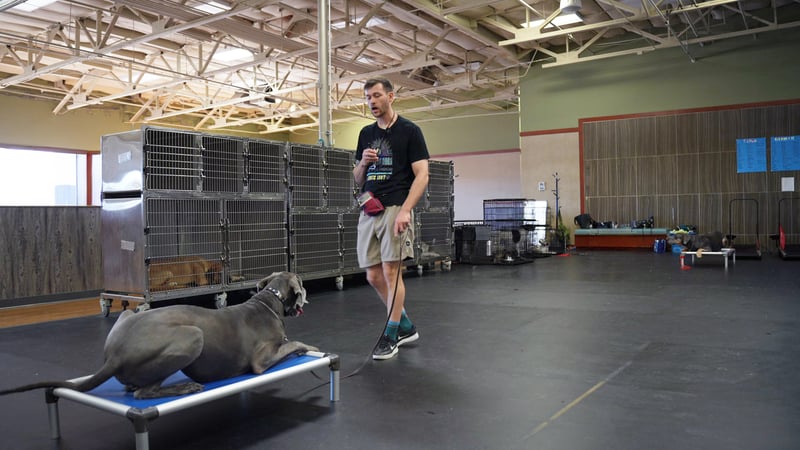
Safety here is a floor plan decision, made before your dog ever shows what he is like on a leash. A handler stretched thin across a stacked turnout window is not who you want holding a reactive dog's leash. For a reactive dog specifically, an attentive handler is the difference between catching early tension in the shoulders and interrupting the pattern before it fires, and only noticing after the reaction already happened. Every one of our 50+ trainers works the floor before working independently with a reactive dog, not on day one.
Safe boarding for a reactive dog in Mesa, Scottsdale, or anywhere else in the Valley comes down to three checks: is the trigger known before the stay starts, is the environment built so the trigger rarely fires by accident, and is the person holding the leash trained for what happens if it does. A facility that answers "we will keep an eye on her" and stops there is skipping the first two.
What do we do differently the moment a reactive dog checks in?
What we do differently depends on the dog in front of us. A reactive dog's file gets built at intake, before he is ever on the floor: known triggers, how the dog signals escalation, and whether there has been contact with a person or another dog. That file decides how the day gets structured for that specific dog.
The five questions above are worth asking any facility, ours included, before you book: how the dog moves through the building, how potty breaks are handled, who holds the leash and for how long, whether a reactive dog gets placed in an open play group to test the waters, and whether a sitter would serve this dog better. A facility that cannot answer specifically, or that answers with "we will keep an eye on her," is telling you the stay rides on hope instead of a plan.
What that plan looks like for your dog gets worked out in the intake conversation, before drop-off, not on the fly once he is already checked in.
Reserve before the rush
Get the baseline read before you book the stay
A PD360 Assessment gives your dog's triggers and thresholds a name before boarding season fills up, so the intake conversation starts from specific information instead of a guess at the gate.
Is Behavior Camp the better move, or is boarding enough?
Boarding manages a week. Behavior Camp changes what the dog does with the next ten years of weeks. If your dog's reactivity is mild, situational, and already responding to management at home, a well-run boarding stay may be all this trip needs. If the reactivity is escalating or has already produced contact with a person or another dog, boarding alone will not fix that pattern, because boarding was never designed to.
That is the sorting question a PD360 Assessment answers before either program gets booked: is this a management case or a modification case. Behavior Camp exists for stranger reactivity, leash reactivity, and the anxiety that sits underneath both, with structured exposure paced by a trainer instead of left to chance in a hallway. Flyer's Behavior Camp story is here.
When does a quiet in-home sitter beat boarding for a reactive dog?
Sometimes it does, and the answer says so instead of selling around it. A dog whose reactivity is tied to one specific setting (other dogs at a fence line, strangers approaching too fast, movement it cannot control) and who has never spent a night away from its own house may do better staying in the environment where none of that gets triggered at all. A familiar bed, a familiar yard, and one person coming in twice a day removes a variable a facility can never fully remove: new space.
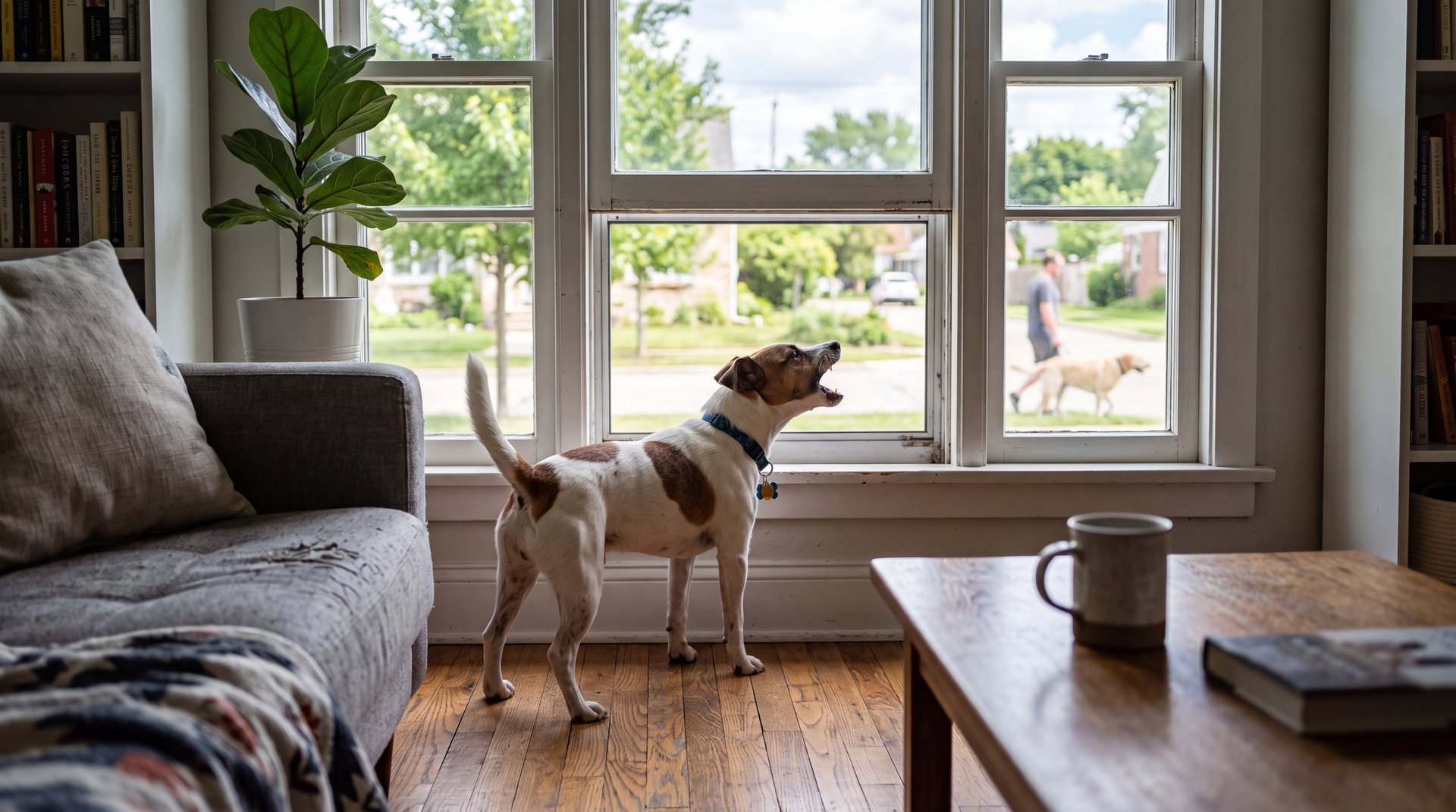
Where that logic breaks down is the assumption that home is automatically calmer for every reactive dog. A sitter model means one person, no backup if that person gets sick, and no bench of trained staff if something outside the plan happens mid-visit. It also assumes the trigger really is the environment and nothing else, which is not always true. Plenty of dogs react the same way at home and at a kennel because the trigger (the doorbell, the leash going on, a stranger's hand reaching too fast) travels with them regardless of address. The dogs who do better with a sitter are the ones where the setting really is the whole story.
How does a reactive dog's boarding stay end?
Pickup includes a handoff, more than a leash. The team walks you through what happened during the stay: which triggers came up, how your dog responded, what worked in the moment, and what to keep doing at home. That is different from a kennel report that only confirms meals and bathroom breaks got done.
For dogs whose stay surfaces something bigger, escalating reactivity or contact already made, that handoff conversation is also where a PD360 Assessment or a Behavior Camp placement gets discussed as the next step. For everyone else, the goal is simpler: your dog goes home from boarding no more stressed than the week required, with a clearer read on his triggers than at drop-off. If leash reactivity specifically is part of that picture, our leash reactivity behavior page breaks down what that looks like outside of a boarding week.
Key takeaways
- Ask any boarding facility, ours included, how a reactive dog moves through the building, how potty breaks are handled, who holds the leash, and whether dogs get placed in an open play group to test the waters.
- A reactive dog's file gets built at intake, before drop-off, so the day gets planned around that specific dog instead of guessed at on the fly.
- A PD360 Assessment sorts a management-level boarding stay from a structured Behavior Camp placement before either one gets booked.
- A dog whose reactivity is tied to one setting, and who has never spent a night away from home, may do better with a quiet in-home sitter.
- Pickup includes a handler handoff on triggers and responses, more than a report confirming meals and bathroom breaks got done.
Frequently Asked Questions
Does a reactive dog get extra attention from staff during a boarding stay?
Yes. The trigger and threshold notes from your dog's intake conversation travel with him for the whole stay, so whoever is handling him already knows what to watch for instead of starting from scratch.
Could my reactive dog run into another reactive dog during the stay?
It is a fair question to ask any facility, including ours, before you book. Ask specifically how dogs are routed through hallways, doors, and turnout: knowing the routing in advance tells you the answer before drop-off, not after.
Does my dog need a PD360 Assessment before a first boarding stay if he is reactive?
It is not required for boarding, but it helps. A PD360 Assessment gives the intake conversation a documented starting point on triggers and thresholds instead of building that picture from scratch at check-in.
What is the earliest I should book a reactive dog's boarding stay from Mesa or Chandler?
As soon as your travel dates are set. Reactive dogs need the same lead time as any other boarding reservation, and booking early gives the team room to have the intake conversation and plan the stay around your dog's specific triggers before drop-off day.
Will a reactive dog still get real exercise if group play is not an option?
Yes. Exercise comes from one-on-one time with a handler, leash work, and enrichment rather than open play, so the dog is still moving and working without the arousal that group settings can add.
Ask before you commit
See the boarding routine for yourself
The five questions above are the ones worth asking before you book, about us or anyone else. Ask us anything before you decide.
"Before I brought my dog in, they made sure there were no other dogs and people (other than staff)."
Miki P., Scottsdale
Keep reading