Ask this first
Three things decide whether boarding a senior dog is fair: whether medication can be given on a fixed schedule, how much stiffness or mobility loss limits where the dog can safely move, and how badly a change in routine unsettles that particular dog. For a frail senior with mobility limits and a settled home life, an in-home sitter is sometimes the better answer, and it is worth ruling that out before you book a kennel stay at all.
A trip you cannot move and a twelve-year-old dog with stiff hips and a pill bottle on the counter do not sit well together. This guide covers what changes about boarding a senior dog, the questions worth asking any kennel, including ours in Scottsdale and Cave Creek, and the cases where an in-home sitter is the better call than any suite.
Boarding a Senior Dog: What Changes at Twelve, Not Two
A young, healthy dog adapts to a new room in a few hours. An older dog often needs longer, and that adjustment period is exactly what a good boarding plan should account for. A two-year-old dog with full mobility and no medication schedule can slot into almost any boarding setup with minimal fuss. A twelve-year-old dog is a different booking altogether, even at the same facility on the same night.
Age on its own is not the deciding factor. What matters is what has changed about daily life: a fixed medication schedule, hips or joints that limit jumping and stairs, hearing or eyesight that has faded enough that a strange room feels disorienting, and a home routine settled over years rather than months. A senior dog with none of those limits often boards as easily as a younger one. A middle-aged dog carrying two or three of them needs the same careful planning a facility would give a twelve-year-old.
Medication, Mobility, and Routines That Travel Badly
A written medication schedule matters more than almost anything else on a senior dog's intake form. List every medication, the exact times it is given, whether it goes with food, and who normally administers it at home. A kennel cannot follow a schedule it was never given in writing, and a verbal note at drop-off is not the same as a signed sheet that stays with the dog.
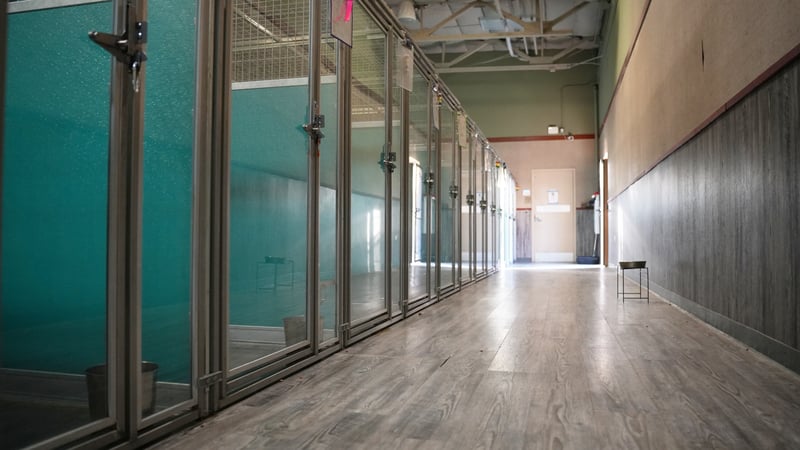
Mobility changes the physical setup, not just the paperwork. A dog with arthritis or hip dysplasia needs a ground-level space or a ramp, non-slip footing, and bathroom breaks spaced closer together than a younger dog would need. Ask specifically whether the suite your dog will use has stairs, a raised entry, or slick tile, since none of that shows up in a facility's marketing photos.
"Both dogs have medical conditions and take multiple medications, so finding a place that truly pays attention to detail was important."
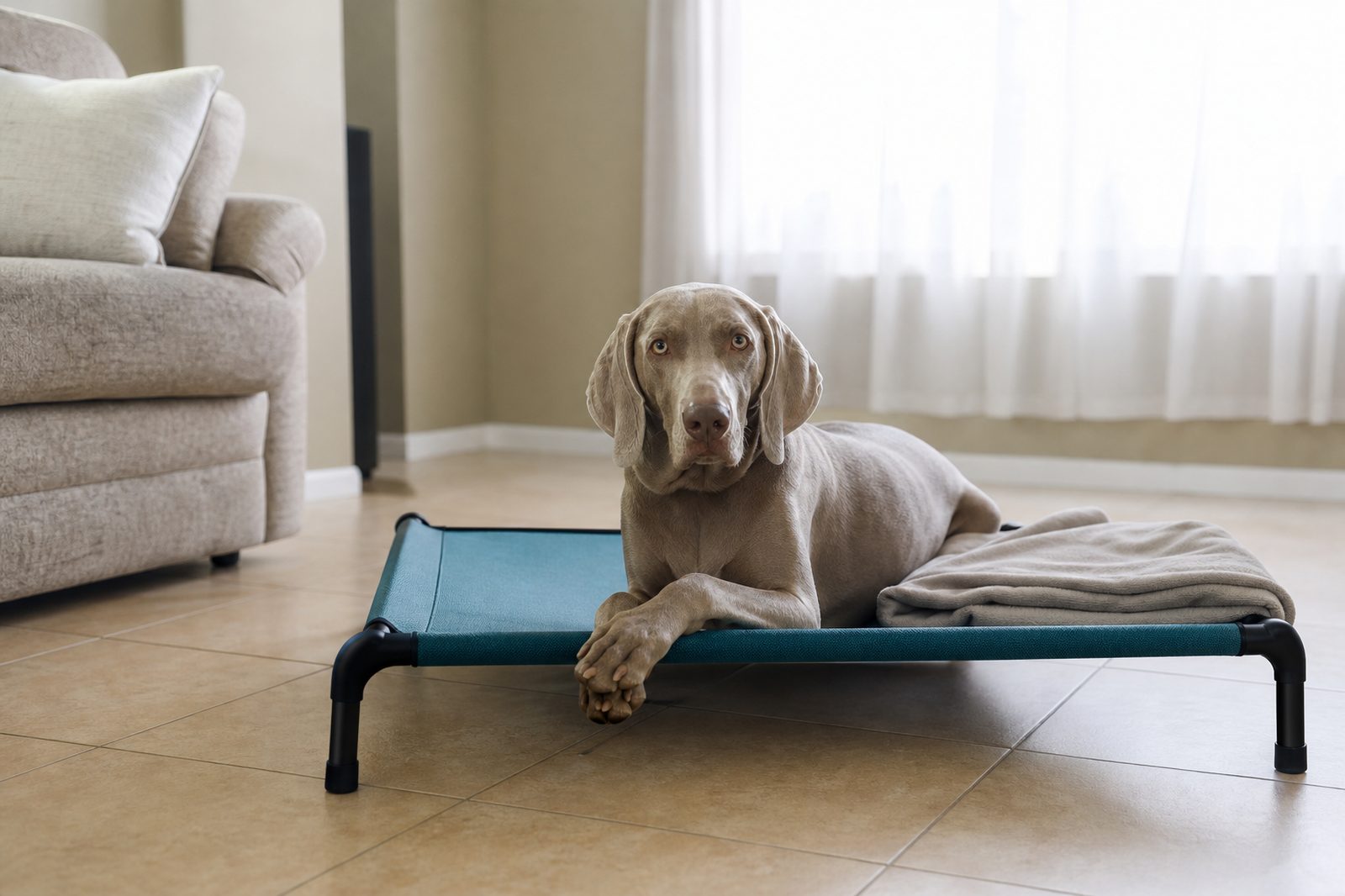
Routine is the part owners underestimate. A dog who has eaten at 6 a.m. and 6 p.m. for a decade, slept on the same dog bed, or worn the same yard path every day often depends on that pattern to manage anxiety or cognitive decline. For dogs whose stress escalates with any change in routine, our general anxiety guidance covers day-to-day management that applies before and after a boarding stay, not only at home.
Questions Worth Asking Any Kennel About Senior Care
A good checklist works on any facility you are considering, not just one. Ask these questions before you book anywhere, including here:
- Does the facility publish its rates online, or does pricing only come up after a phone call?
- How far is the kennel from your regular veterinarian, in case of an after-hours emergency?
- Will the same one or two staff members handle your dog's medication and routine each day, or does it rotate?
- Is there a written log of medication doses, meals, and bathroom breaks you can see at pickup?
- Can you tour the specific run or suite your dog will use, not just the lobby and play yard?
- What is the group size or staff-to-dog ratio during the hours your dog will be there?
None of these questions favor one kind of facility over another. A small, simple kennel can answer all six well. A large, well-marketed one can fail several of them. The point of the list is to make a facility answer in specifics rather than reassurances, wherever you end up booking.
Before you decide
Talk Through Your Dog's Routine Before You Book
Bring the medication schedule, the mobility notes, and the questions above to a conversation instead of a booking form.
When an In-Home Sitter Is the Better Answer
For a frail senior dog with mobility limits and a settled home routine, an in-home sitter is often the better choice, not a fallback. A dog who struggles to get up from a hard floor, startles at unfamiliar sounds, or has never spent a night anywhere but its own bed does not need to be convinced that a new place is fine. It needs its own bed, its own yard, and its own smell to stay in charge of how the day feels.
A sitter who comes to the house keeps the parts of a routine a kennel cannot fully replicate: the same water bowl in the same spot, the same three steps down to the yard, and no new dogs to navigate around at fifteen. This is the tradeoff a facility, ours included, does not always say out loud: boarding is built around a group of dogs sharing a schedule, and a dog whose whole nervous system runs on sameness can do better without the group.
Boarding tends to make more sense once a dog still travels reasonably well, has boarded before without lasting stress, or needs a level of medical or behavioral supervision a sitter visiting a few times a day cannot provide. This decision is rarely all or nothing: some families board twice a year for the hardest trips and use a sitter for everything shorter.
What a Quiet Suite and a Slower Schedule Actually Look Like
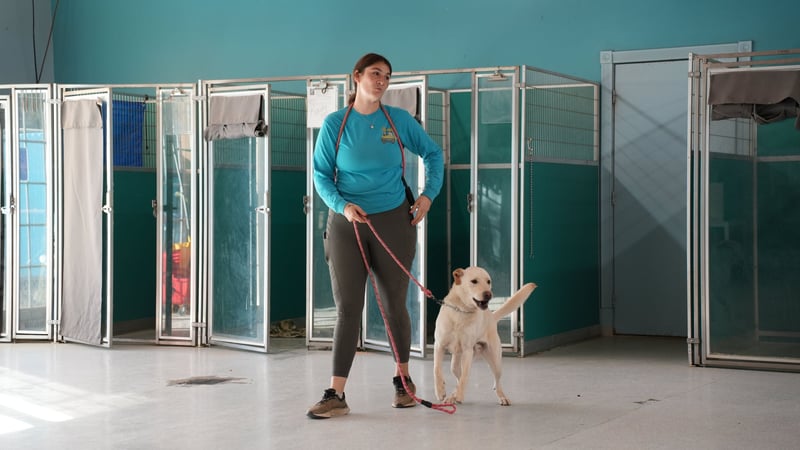
A slower schedule means fewer transitions in a day, not less care. For a senior dog, that can mean a private or semi-private space away from the loudest part of the kennel run, bathroom breaks on a tighter interval than a standard rotation, and a handler assigned across the stay instead of whoever is on shift.
Ask what changes beyond the room. A bigger cage with a bed in it is not a senior program on its own. Look for medication logged by time, not just checked off for the day, and mobility notes passed between shifts so a limp or a missed meal gets caught on day one instead of day four.
"I have complete confidence my dogs are handled with care and the trainers are familiar with my dogs so they know of any potential triggers."
That kind of continuity, the same people learning a specific dog's triggers and habits over repeat stays, is what a slower schedule is for. It rarely shows up as a line item on a rate sheet, so it is worth asking about directly rather than assuming it comes standard.
The 48 Hours After a Senior Dog Comes Home
Expect a tired dog before you expect a settled one. Most senior dogs sleep more than usual for the first evening home, eat a little less at the first meal back, and take a day or two to return to their normal bathroom schedule. None of that is cause for alarm on its own.
Watch instead for anything that looks like a step backward rather than simple tiredness: new stiffness that was not there before the stay, disorientation that lasts past the first evening, or a medication schedule that seems to have slipped. A dog that seems noticeably different for more than a day or two is worth a conversation with your veterinarian.
If something about the stay itself does not sit right: a missed dose, a suite louder than described, a handoff that felt rushed, schedule a call and walk through it with the facility directly.
Frequently Asked Questions
Can a boarding kennel give my senior dog's medication on schedule?
Most kennels can follow a written schedule if you provide clear instructions from your veterinarian, including exact times and whether a dose goes with food. Ask how doses are logged and who is responsible for giving them, since a change in staff during a stay can break a routine your dog depends on.
Is boarding safe for a dog with arthritis or limited mobility?
It can be, but the setup matters more than the general question. A dog with stiff hips needs a ground-level or ramp-accessible space, non-slip flooring, and bathroom breaks spaced closer together than a younger dog would need. Ask to see the specific space your dog would use before you decide, not just the lobby.
How do I know if my dog is too old to board at all?
There is no single age cutoff. What matters is how much a change in environment unsettles your dog, whether medication and mobility needs can be met away from home, and whether an in-home routine would serve your dog better than any kennel.
What is the difference between a standard run and a quiet suite?
A quiet suite is typically set apart from the busiest part of the kennel, with less foot traffic and barking nearby, and a schedule built around one dog rather than a fixed group timetable. Ask any facility what specifically changes for a senior dog beyond the room itself.
Should I hire an in-home pet sitter instead of boarding?
For a frail senior dog with a settled home routine and mobility limits, an in-home sitter who keeps the dog on its own bed and its own schedule is often the better answer. Boarding tends to fit better once a dog still travels well, has boarded before without lasting stress, or needs supervision beyond what a sitter visiting a few times a day can provide.
What should I watch for in the first 48 hours after my senior dog comes home from boarding?
Expect a tired, sleepier dog and a slightly smaller appetite for the first evening, both of which are normal. Watch for new stiffness, disorientation that lasts past the first evening, or a medication schedule that seems to have slipped, and call your veterinarian if any of it continues past a day or two.
Ready when you are
Book a Quieter Stay for an Older Dog
See the senior-friendly suite setup and a slower daily schedule built around your dog's routine, not a fixed group timetable.
Keep reading