
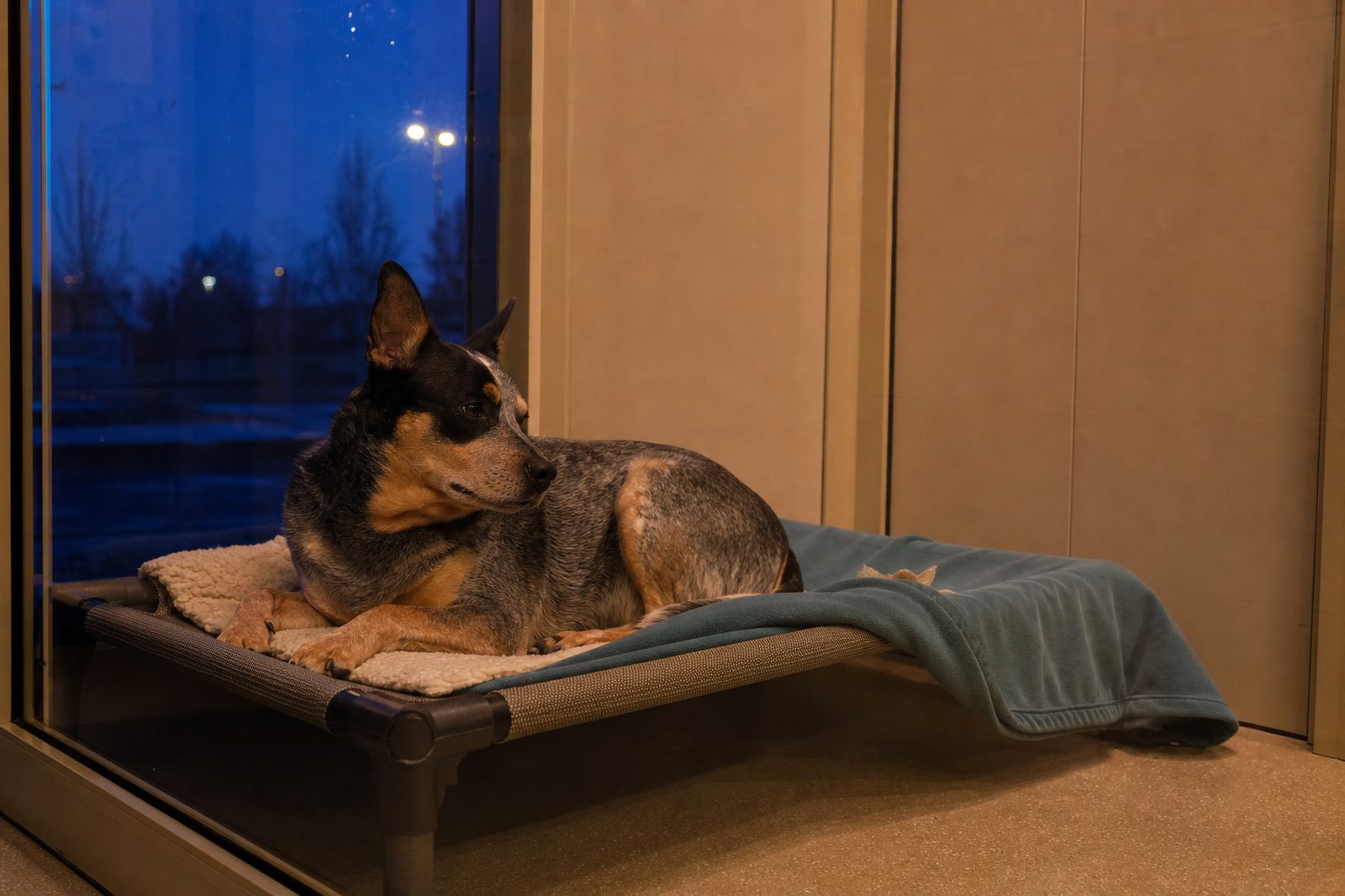
Luxury dog boarding is safe for an anxious dog in Phoenix when three things are true: a facility built for low-density suites instead of open kennels, staff trained to read stress signals rather than just supervise headcount, and a routine that includes real enrichment, not just a yard and a bowl. Use the checklist below on any facility tour before you book, and ask what happens on a dog's worst day, not just its best one. A dog that comes home from boarding worn out is usually processing an unfamiliar environment, not running laps, and that distinction changes what to look for first.
An anxious traveler's worry usually is not about the drive or the flight. It is the image of a kennel: a concrete run, a stranger holding the leash, a dog that does not understand why the car left without them. That fear is reasonable, and it is also fixable with the right questions asked before you book, not after. This guide walks through what separates a boarding facility built for anxious, reactive, or senior dogs from one that just has nicer signage in Phoenix.
Why Does a Dog Come Home "Tired" From Boarding?
A dog that sleeps for a day after boarding is usually recovering from mental processing, not physical exercise. New scents, new dogs, and new staff all take cognitive work to sort through. So do a different water bowl and a schedule the dog cannot predict. That processing can wear a dog out faster than a long walk does. This is a useful reframe because it changes what "good" boarding looks like. A facility that just burns off energy with open play all day is not necessarily doing an anxious dog any favors; it may be adding more unpredictable input to a dog that is already working overtime to cope.
What helps is the opposite of chaos: fewer unfamiliar variables per hour, not more of them. Predictable meal times, a consistent handler where possible, and quiet rest periods between activity all reduce the total load a dog has to process in a day. That is the frame to carry into every question below.
What Should You Look For on a Phoenix Boarding Tour?
Ask to see the whole facility, not a lobby and a brochure. The American Kennel Club's own boarding guidance puts it plainly: if a kennel will not let you see meal prep, play areas, and where dogs sleep, that is a reason to look elsewhere. A short tour tells you more than any review can.
Bring this list to any Phoenix facility you are considering, luxury-branded or not:
- Can you see the actual sleeping area, not just a photo of one?
- Are dogs grouped for play by temperament and energy, or just by arrival time?
- Does staff take written notes on your dog's specific triggers before the stay starts, or just a vaccination form?
- Is there a quiet space separate from group play for a dog that needs a break?
- What happens, specifically, if your dog will not eat or is pacing on day one?
- Do you get any update during a multi-night stay, or only a call if something goes wrong?
A facility that answers all six without hesitation is doing more than boarding dogs; it is managing them individually. That is the real dividing line, and it has nothing to do with how nice the suites look in photos.
Tour it before you book
Walk the floor your dog will stay on
Partners Dogs boarding suites at the Scottsdale and Cave Creek campuses are open to a tour before you commit to a stay, so you can ask every question on the checklist above in person.
What Does a Trainer-Run Floor Mean?
The staff-to-dog ratio and staff training level matter more than square footage or how new the building is. A large open-play kennel can look luxurious and still run on a model where a handful of attendants supervise dozens of dogs at once, with training measured in days rather than years. That is not a knock on those facilities; for an easygoing, well-socialized dog, high-volume supervised play can be a perfectly fine option. It is a different fit for a dog that is already carrying stress into the stay.
At Partners Dogs boarding, the people on the floor are trainers, not attendants watching a room, and the boarding floor never goes past one team member for every 15 dogs, and only around the holidays. That distinction is our own practice, not a claim about the industry at large, and it is worth asking any facility to state plainly: who is on the floor with your dog, and what is their training?
What Enrichment Lowers Stress During a Stay?
Licking and foraging tasks give an anxious dog's brain something structured to do instead of scanning for threats. A frozen lick mat, a stuffed toy, or a scent-work search pattern gives a dog a job with a clear beginning and end, and that structure is calming in a way that open play is not. A 2023 study in the journal Animals (Dare & Strasser) on kenneled shelter dogs found that scent- and licking-based enrichment measurably lowered stress behaviors during the acute stress of morning kennel cleaning, which lines up with what trainers see on the floor every day: a dog working a lick mat settles faster than a dog just sitting in a run.
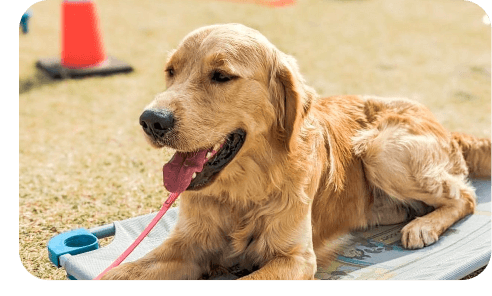
Predictable routines do the same work on a longer timeline. Knowing that breakfast happens at the same time, walks happen on the same schedule, and rest happens in the same quiet space gives an anxious dog fewer unknowns to manage across a multi-night stay.
Does Phoenix Heat Change What "Safe" Boarding Means?
Phoenix routinely spends weeks each summer well above 110 degrees, and that is not just a walking-schedule problem, it is a boarding-facility problem too. Outdoor play windows have to shift to early morning, indoor space has to be genuinely climate controlled rather than just shaded, and pavement has to be checked before a dog's paws touch it at all. An anxious dog that is also physically uncomfortable from heat has less capacity to cope with everything else on this list, so climate control is not a luxury amenity in a Phoenix boarding facility, it is a baseline safety requirement.
Ask any facility how play schedules change in July and August specifically. A vague answer is itself an answer.
Should Your Dog Be Assessed Before a Boarding Stay?
A short temperament read before the first night lets staff plan around your dog's actual triggers from hour one, instead of learning them on the fly. Ask whether a facility evaluates a dog's stress signals and history before boarding, not just its vaccination record. Partners Dogs uses a PD360 Assessment to build that baseline for training clients, and the same principle applies to boarding: a facility that already knows your dog's default response to being startled, cornered, or crowded can plan a stay around it instead of reacting after the fact.
When Is Boarding the Wrong Call for an Anxious Dog?
Here is the honest exception. A dog with severe separation anxiety who has never spent a night away from its owner may not be ready for a full multi-night stay at any facility, luxury or otherwise. The AKC's own boarding guidance recommends a single trial night before committing to a longer stay, precisely because it lets you see how a dog actually handles the environment instead of assuming, and a shorter first stay is often the more responsible starting point than a full week booked cold. A facility that pushes every dog straight into a long stay without acknowledging that is optimizing for its calendar, not your dog.
If your dog falls into this category, ask about a short trial stay first, or start with a program built around DayCamp, a structured day program that lets a dog build comfort with the environment and staff before an overnight stay is on the table.
Build a baseline first
Give staff your dog's actual triggers, not a blank intake form
A short assessment gives staff your dog's real history to plan around, and it is the same starting point Partners Dogs uses for every behavior program.
What About Senior Dogs or Dogs With a Reactivity History?
Senior dogs boarding for the first time carry their own list of questions, medication schedules, mobility limits, and how a facility handles a dog that needs a slower pace of play; see our senior and special-needs boarding page for what to ask before booking an older dog's stay. Dogs with a history of general anxiety deserve the same specific planning, not a one-size-fits-all group-play slot.
Two Partners Dogs families put this in their own words.
"They love going to Partners and it gives us peace of mind knowing they are very well taken care of and stimulated while they are there."
Patty M., Scottsdale
"If we were to kennel him anywhere else, he would be relegated to spending the entire time completely away from people and other dogs. At Partners, they work hard to socialize him."
Brittainy W., Cave Creek
Neither quote is a guarantee for every dog, but both describe exactly the kind of individualized planning this guide has been pointing at. Partners Dogs holds a 4.8-star rating across more than 2,000 reviews, and stories like these are part of why.
Key takeaways
- Partners Dogs boarding puts trainers, not attendants, on the floor, and the floor never goes past one team member for every 15 dogs, and only around the holidays.
- Predictable meal times, consistent handlers, and quiet rest periods reduce the total sensory load an anxious dog has to process during a stay.
- A frozen lick mat, stuffed toy, or scent-work search gives an anxious dog a structured task instead of scanning for threats.
- Phoenix summer heat above 110 degrees makes genuine climate control a baseline safety requirement for boarding, not a luxury amenity.
- A PD360 Assessment lets staff plan a stay around a dog's actual triggers before the first night, rather than reacting after the fact.
Frequently Asked Questions
Is luxury boarding better for an anxious dog, or just nicer for the owner?
Nicer finishes alone do not help an anxious dog. What helps is what those finishes usually come with at a well-run facility: lower-density suites instead of stacked kennel runs, real climate control, and staff trained to notice stress early. Ask about staffing and structure specifically, do not assume a nice lobby means a calmer stay.
How can staff tell if a dog is stressed during a boarding stay?
Trained staff watch for a specific set of signals: pacing, excessive panting unrelated to heat, and refusing food. They also watch for unsettled whining or barking and withdrawal from group activity. A trainer-run floor is watching for these signals throughout the day, not just noting whether a dog ate its dinner.
Does a dog with a reactivity history need a different boarding setup than an anxious dog?
Often, yes. A reactive dog may need to be kept out of open group play entirely and given one-on-one structured time instead, while an anxious-but-social dog may do fine in a smaller, well-matched group. This is exactly why a pre-stay conversation about your dog's specific behavior, not a generic intake form, matters more for these dogs than for an easygoing dog.
Should I visit a Phoenix boarding facility before my dog's first stay?
Yes, and a facility that discourages a tour or only shows part of the building is worth reconsidering. Seeing the actual suites, play areas, and meal prep space in person tells you far more than a website gallery, and it lets you ask the staff your specific questions face to face.
What is the difference between a boarding suite and a standard kennel run?
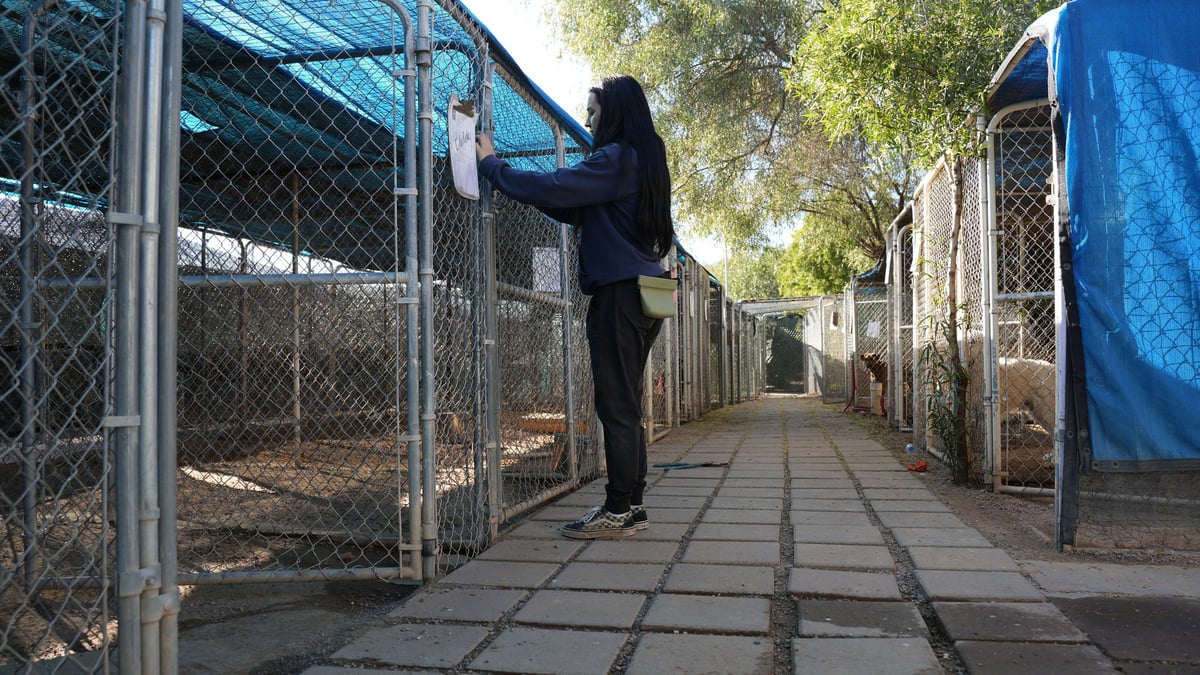
A standard kennel run is typically an open-concrete space in a row of identical runs, sized for volume. A boarding suite is a lower-density, individually built space, often glass-fronted rather than barred, designed to reduce the sensory load of being surrounded by barking on every side. The difference matters most for a dog that is already anxious about noise or crowding.
What is the best dog boarding option in Phoenix, Scottsdale, or Cave Creek for an anxious dog?
The best fit is a facility that runs trainer-led floors rather than high-volume open play, evident at Partners Dogs' Scottsdale and Cave Creek campuses through a boarding floor staffed to no more than one team member for every 15 dogs (and that only around the holidays), individual suites, and a pre-stay PD360 Assessment of your dog's triggers. Whether you are searching from Phoenix, Scottsdale, or Cave Creek, the same trainer-run standard should apply regardless of which campus is closer to home.
Your dog's next stay
Book a boarding stay built around your dog's actual needs
See suites, staffing, and enrichment for yourself, or start with a shorter DayCamp visit if your dog is new to time away from home.
/Programs/Boarding/Top%20of%20Page.jpeg?width=800&height=450&name=Top%20of%20Page.jpeg)
/Programs/Foundation%20Camp/Training%20%26%20Demos.jpeg?width=800&height=450&name=Training%20%26%20Demos.jpeg)