Scent work for anxious dogs works as a calming tool because sniffing and searching are self-directed activities, not the kind of open play and new-face stimulation that spikes a nervous dog's arousal in an unfamiliar place. A trainer-run boarding facility can build short scent-based searches into the quiet windows of a boarding day, giving an anxious dog a job that matches how its brain already prefers to process a strange environment. That is how boarding works at Partners Dogs in Scottsdale and Cave Creek for anxious dogs, including families driving in from North Phoenix and Paradise Valley.
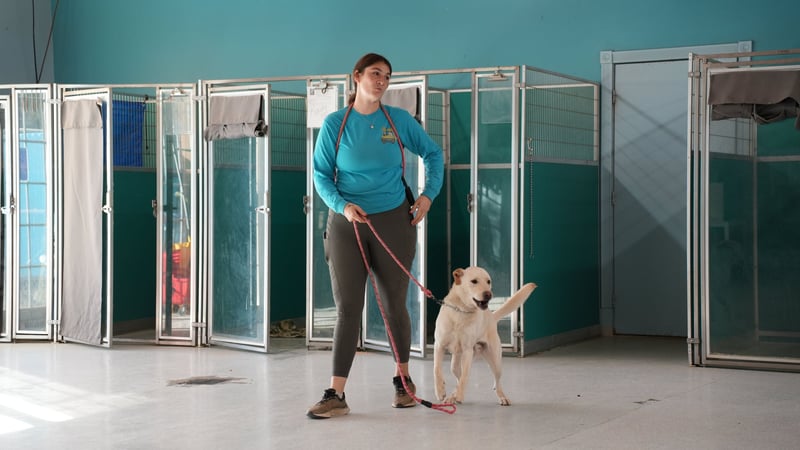
Most anxious dogs arrive at boarding the same way. The car slows into the parking lot and the pacing starts before the door even opens, panting, a tight circle on the leash, ears pinned at every new sound. It is a hard moment for the dog and a harder one for the pet parent standing there wondering if they made the right call. What happens in the first hour after that drop-off, more than almost anything else, decides whether the rest of the stay goes smoothly.
Why Does Sniffing Calm an Anxious Dog?
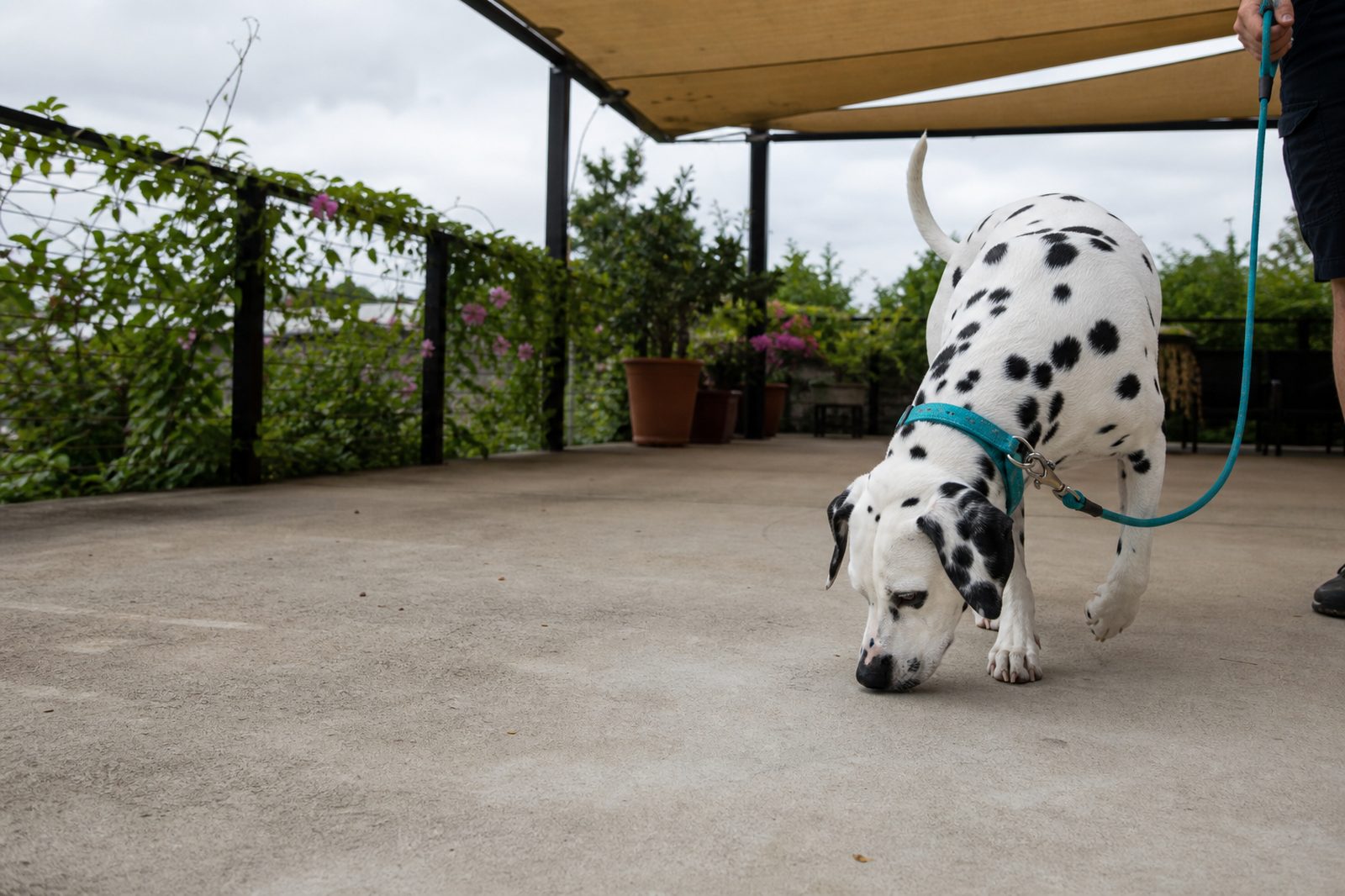
Sniffing is self-directed, and self-directed activity settles a nervous dog faster than activity that is imposed on it. Open play, a crowded new room, and a parade of unfamiliar faces are all externally driven; the dog is reacting to things happening to it. A scent search is the opposite: the dog chooses where to put its nose, how long to linger, and when to move on.
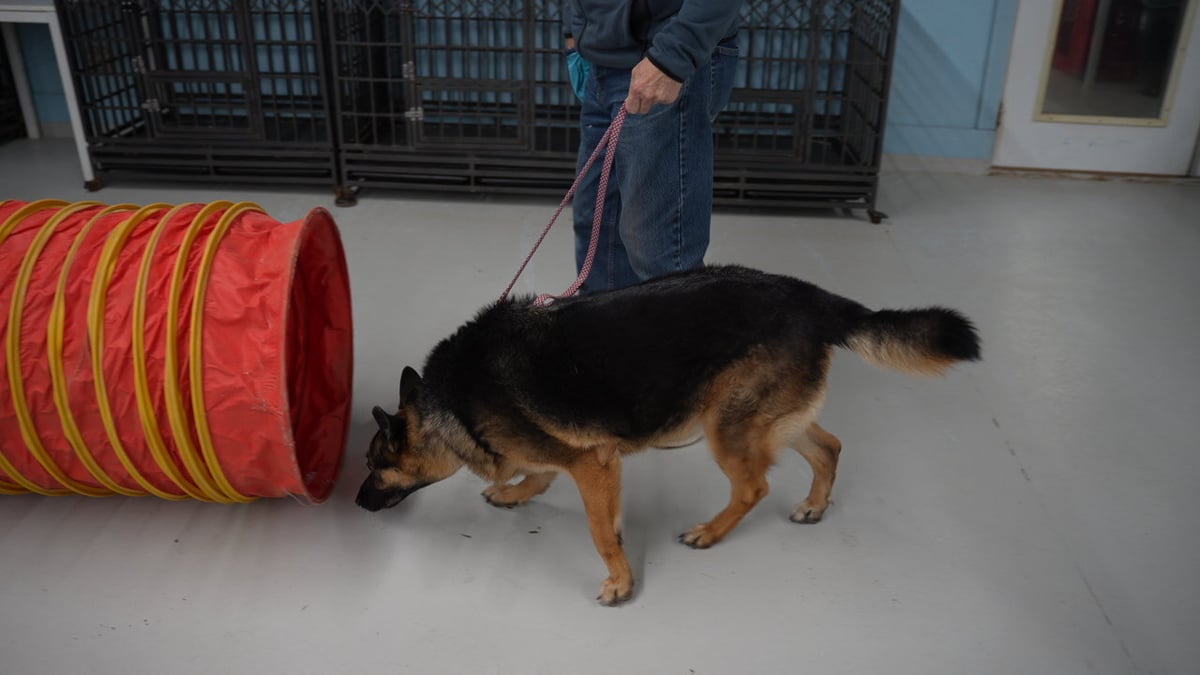
The American Kennel Club's public guidance on scent games notes that they keep a dog mentally stimulated and let it channel its natural drive to sniff, which is a different kind of tired than the physical kind fetch or off-leash running produces. That distinction is the useful part: not a magic trick, just a mentally demanding task that tends to end in rest rather than more stimulation.
Many trainers describe sniffing as a lower-arousal activity than open running or a game of chase, which is why some boarding programs use it to bridge the gap between an active block and a rest period rather than asking an anxious dog to go straight from stimulation to stillness.
Is This the Same as Competitive Scent Work?
No, and a boarding facility should never claim otherwise. Competitive scent work (AKC Scent Work trials and NACSW's version of the sport) is a specific, structured hobby with its own equipment, training progression, and judged standard. Most boarding dogs are not doing that, and a family should be skeptical of any facility that implies a weekend guest is training for a trial.
What a trainer-run boarding day can offer is much smaller and, for an anxious dog, arguably more useful: everyday scent-based enrichment folded into the schedule. That might be a snuffle mat, a scattered handful of kibble in a contained yard patch, or a short find-it game between structured blocks, built as a calming tool rather than a sport. If you want the specifics for your own dog's triggers before you book, schedule a call with a trainer and ask what a day looks like for a dog with your dog's history.
Where Does Scent-Based Enrichment Fit Into a Boarding Day?
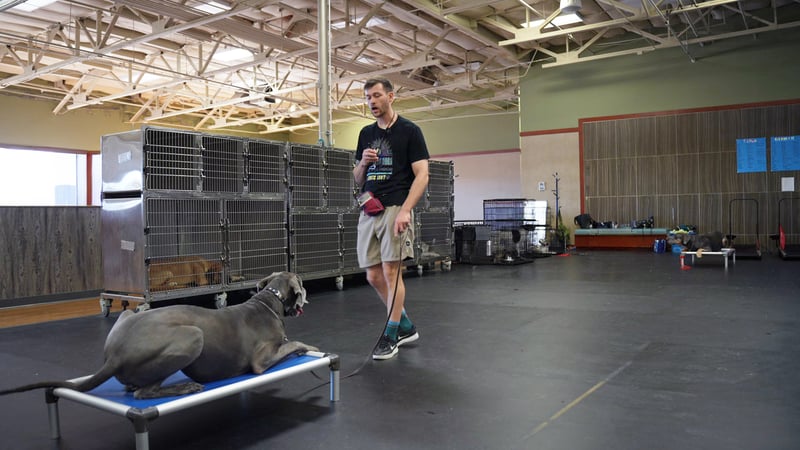
The best moments for scent-based enrichment are the transitions, not the activity blocks themselves. A trainer-run boarding day has natural seams where a dog moves from one state to another, and those seams are where an anxious dog needs the most help settling.
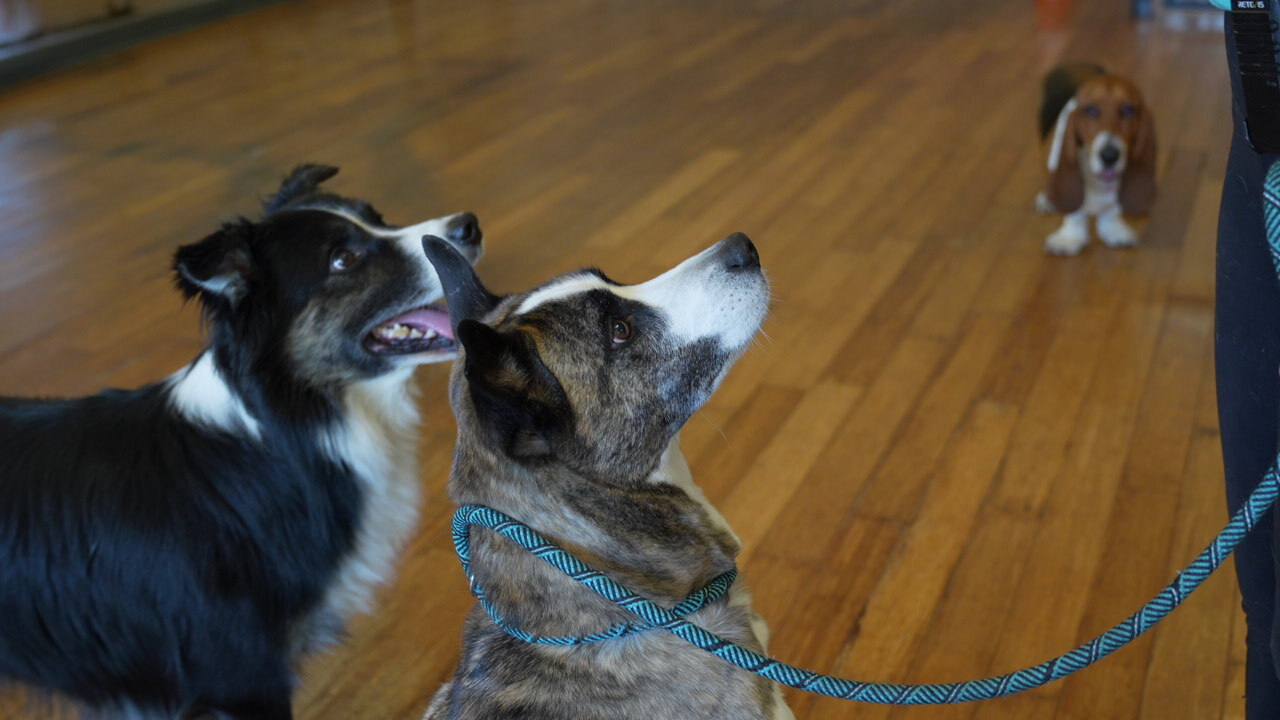
- Arrival and settling window. Right after check-in, before any group activity, a slower dog gets a quiet space and a low-key scent task: kibble scattered in grass or a snuffle mat, rather than being walked straight into an active group.
- Between structured activity blocks. Instead of stacking play sessions back to back, a short search game acts as a decompression step between a training block and free time, giving the dog a job that brings its energy down instead of letting arousal carry over.
- Wind-down before overnight rest. In the evening, a scent station or a slow scatter search replaces high-energy play as the last activity of the day, so the dog's last experience before bed is calm and self-paced rather than stimulating.
None of this requires a named proprietary program. It requires trainers on the floor who read a dog's arousal level and choose the right tool for the moment, which is the actual job description at a trainer-run facility rather than an attendant-staffed one.
Take a look around
Walk the Suites Before You Book
See where the quiet windows and rest areas are before your dog's first stay.
What Does Scent-Based Enrichment Look Like?
It looks smaller and quieter than most pet parents expect, which is the point. A snuffle mat with breakfast worked into the folds instead of a bowl. A handful of treats tossed into a shaded grass patch for a slow, low-pressure search. A cardboard box or two with treats hidden inside during a rest period, something a dog can work on alone without needing a person to keep the energy up. None of it looks dramatic from the outside, and that is exactly why it works as a calming tool: the dog is not performing for anyone, it is just working a problem at its own pace.
Families who have boarded a visibly nervous dog with us describe the same pattern.
"Our dog Lulu was very unsocialized prior to boarding with partners. Upon returning from our trip she was so very calm and happy and smelled great from her bath at Partners!"
Tawnya L., Cave Creek
"He came home with better manners and over all was just a calmer more reasonable pup."
Katie C., Cave Creek
That shift, arriving wound up and going home settled, is the outcome a good boarding day is built around, and structured rest paired with low-key enrichment like scent work is one of the tools that gets a dog there.
Ready to book
Talk Through Your Dog's Specific Anxiety First
Tell a trainer what sets your dog off before drop-off day, not after.
When Is Scent Work Not Needed?
A calm, well-socialized dog does not need scent-based enrichment to settle, and a standard suite with daily exercise is enough. If your dog has no history of anxiety and settles easily in a new space, a boarding stay with scent-based enrichment is solving a problem that dog does not have. This piece is written for the dog that paces at the car, will not eat the first day, or has already shown a facility it struggles away from home. For that dog, the structure and enrichment built into a trainer-run boarding day matter in a way they simply do not for a dog that never had trouble to begin with.
When Does Anxiety Need More Than Enrichment?
Scent-based enrichment eases a stressful day, it does not treat an underlying anxiety disorder. A dog that paces, pants, refuses food, or shows clear distress for the whole length of a stay (not just the first hour) needs more than a snuffle mat. That is a conversation for a dedicated look at what is driving the anxiety, which is what a general anxiety evaluation is for, separate from the boarding stay itself. Enrichment is a good tool for a normal, expected first-day nervousness. It is not a substitute for addressing a dog that cannot settle at all, at home or anywhere else.
Frequently Asked Questions
Does my dog need scent-work training before boarding for this to help?
No. The scent-based enrichment used during a boarding stay does not require any prior training or a taught skill. Scattering treats in grass or working a snuffle mat is instinctive; every dog already knows how to sniff and search, so there is no prerequisite class to take first.
Will scent-based enrichment tire out a high-energy dog the same way exercise does?
It works differently rather than as a direct substitute. Exercise burns physical energy through movement; a scent search is mentally demanding rather than physically demanding, which is why it is used as a calming complement to play and structured training, not a replacement for a dog's daily activity.
Can scent-based enrichment make an anxious dog worse instead of better?
Done well, no, because the dog controls the pace and can disengage at any time, unlike being placed directly into open group play. That said, timing matters. A dog in acute distress right at drop-off needs quiet and space before any activity, enrichment included; a trainer reads that moment rather than defaulting to the same routine for every dog.
Is scent-based enrichment included in a standard boarding stay, or is it an add-on?
It is worked into the structure of the boarding day itself rather than sold as a separate line item, since it is a tool trainers use to manage transitions and rest periods, not a standalone service. For current boarding details and how a stay is structured, see the boarding program page.
How is this different from just giving my dog a puzzle toy at home before boarding?
A puzzle toy at home is a good practice for the same underlying idea, giving a dog a self-directed task instead of idle waiting. The difference at a boarding facility is timing and supervision: a trainer chooses the moment, watches how the dog responds, and adjusts, rather than the dog working a toy alone on a schedule set in advance.
If enrichment is not enough
Find Out What's Driving the Anxiety
A PD360 Assessment scopes what is driving the anxiety before you book anything, and structured DayCamp days can build on it if your dog needs more than a single stay.