In short
Coyotes and dogs share the same neighborhoods in Scottsdale and Cave Creek, and a 6-foot fence does not guarantee your dog is safe. Arizona Game & Fish says coyotes are skilled jumpers, small dogs are at real risk, and a leash plus a trained recall are your best protection.
- A 6-foot fence is not necessarily coyote-proof. Coyotes are skilled jumpers (Arizona Game & Fish). Coyote-proof means 8 feet, or 6 feet with a roller top.
- There is no verified "25-pound rule." No wildlife agency publishes a weight cutoff. Small dogs are at risk, and Arizona coyotes themselves weigh 20 to 30 pounds.
- Coyotes run dawn and dusk; den defense peaks March through May. Leashes are required on McDowell Sonoran Preserve and Spur Cross trails.
- If a coyote approaches: do not run, pick up a small dog, get loud, move toward people. Skip the retractable leash.
- Management (fencing, leashes, attractant removal) plus a proofed recall and a calm default around wildlife is the full plan.
Coyotes live in your Scottsdale or Cave Creek neighborhood right now. Not out in the desert. In the neighborhood. The Arizona Game and Fish Department says coyotes are common in suburban areas across Arizona, and it is not uncommon to see one in a backyard, on a golf course, or on a neighborhood street. Coyote safety is not a trail problem here. It is a Tuesday-morning-in-your-own-yard problem.
Can a coyote jump your fence? What Arizona Game and Fish says
The short version: yes. A 6-foot fence is not necessarily good protection, because coyotes are skilled jumpers.
That is the verified version of the claim, straight from the state wildlife agency's Living with Coyotes page. Keep the fence. Do not trust the fence alone.
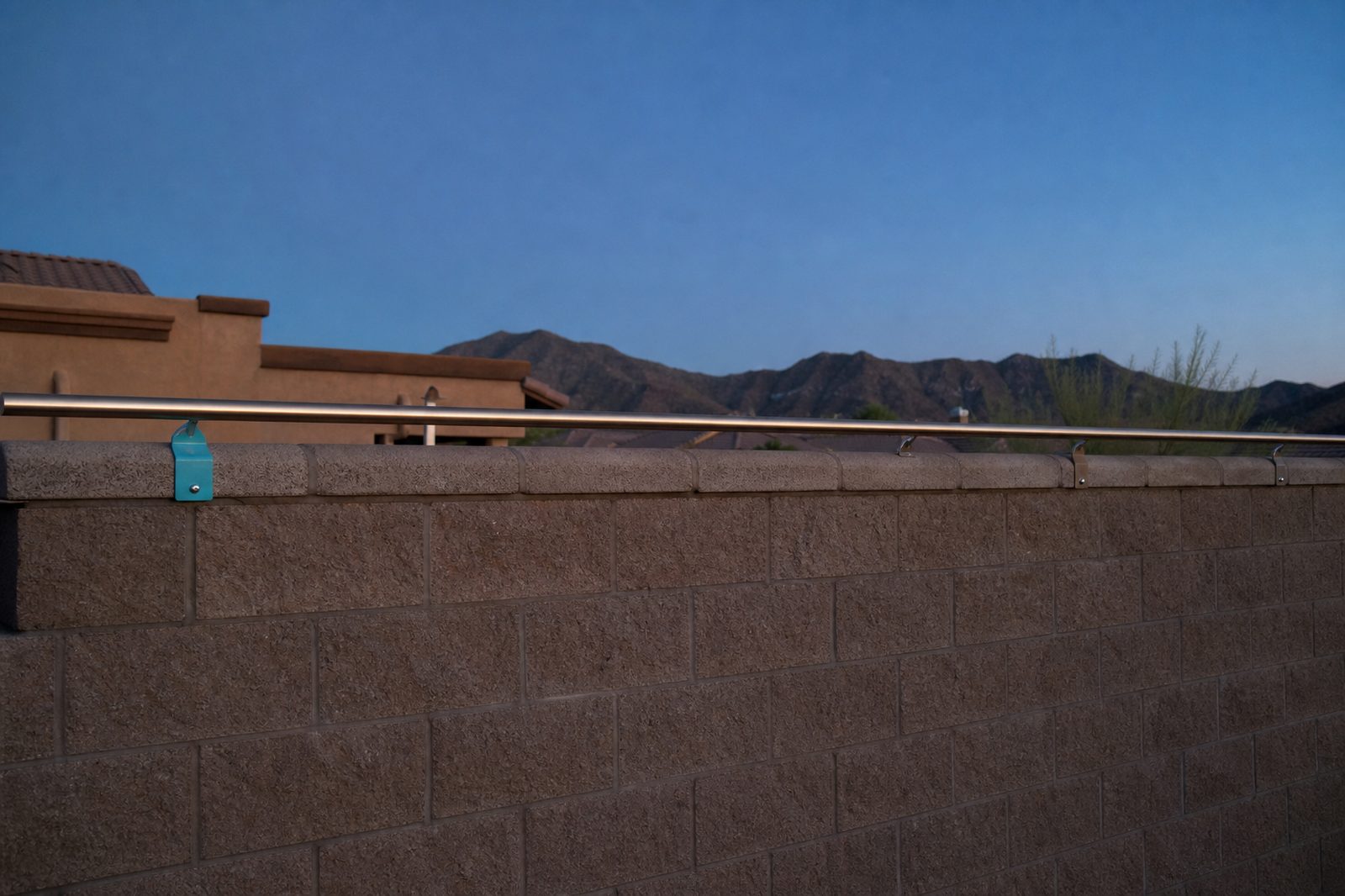
The coyote-proof standard, per the Humane Society of the United States: an 8-foot fence, or a 6-foot fence with a roller device on top. A coyote roller is a spinning bar on the fence top. When a coyote hooks its front legs over, the bar spins and the animal cannot get purchase. Rollers help less on fences under 6 feet, which coyotes clear with ease.
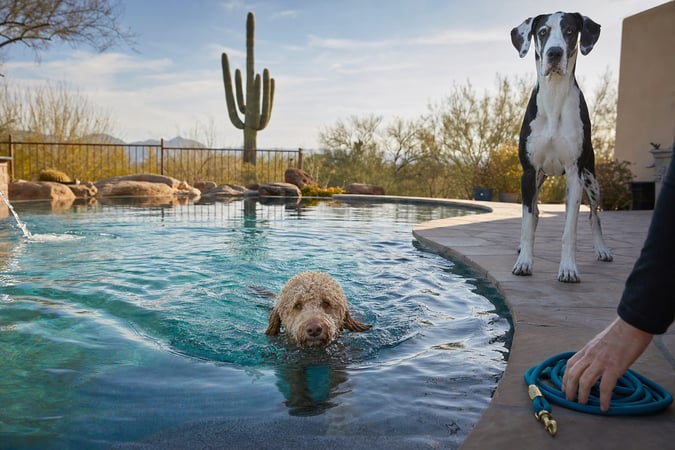
Digging matters as much as jumping. Bury the fence 12 inches or add an 18-inch L-shaped apron. The safest setup is a fully enclosed roofed area. A block wall plus a dog door is not that.
A fence is management, not a guarantee. Train the recall like the fence does not exist.
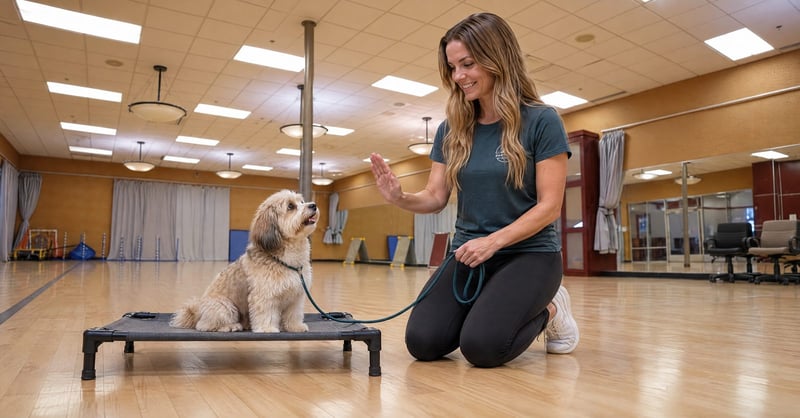
That is the line our Group Class trainers use at both campuses: train the recall like the fence doesn't exist, because one day it won't. A trainer sets the distances, reads your dog, and you learn to read it too.
Is there really a 25-pound rule?
The short version: no. No wildlife agency publishes a 25-pound cutoff. The rule is folklore.
We checked Arizona Game and Fish, the Humane Society's coyote guidance, and veterinary sources. None names a dog weight that is safe. What they say: small dogs and cats are easy food sources, small unattended dogs may be seen as prey, and bold coyotes have attacked small dogs on retractable leashes. "Small" does all the work, and nobody defines it in pounds.
The irony: Arizona Game and Fish lists Arizona coyotes at 20 to 30 pounds. The folk rule's magic number sits inside the coyote's own weight range. A 25-pound dog is not prey-sized to a 25-pound coyote. It is competition-sized, and a territorial coyote defending a den in April does not check the scale first.
Use the agencies' version instead. Keep small pets indoors or in a roofed enclosure, supervise them at night and early morning, walk them on a leash, and never leave any dog unattended at dawn or dusk. Size lowers risk. It does not erase it.
When and where coyotes show up in Scottsdale and Cave Creek
The short version: dawn and dusk, year-round, everywhere the desert meets the neighborhood. Den season runs March through May.
Coyotes hunt at dawn and dusk: prime walk time. Conflicts spike when coyotes become food-conditioned or habituated, usually because someone on the block feeds them. Indifference toward a coyote in your yard has the same effect as feeding it. Feeding wildlife is unlawful in Maricopa County under A.R.S. 13-2927.
Coyotes mate January through March. Females bear four to seven pups in underground dens March through May, and defend them. Most confrontations involve habituated coyotes or coyotes guarding territory and young.
Local hot spots:
- McDowell Sonoran Preserve (Scottsdale). Dogs must be on a handheld leash of six feet or less at all times, per the City of Scottsdale.
- Spur Cross Ranch Conservation Area (Cave Creek). Pets must be leashed at all times, per Maricopa County Parks.
- Scottsdale's off-leash parks. Chaparral, Horizon, and Vista del Camino have designated off-leash areas. Everywhere else, the leash law holds.
- Your street at 6 a.m. Golf course edges, washes, and greenbelts are coyote highways.
What to do when a coyote approaches your dog
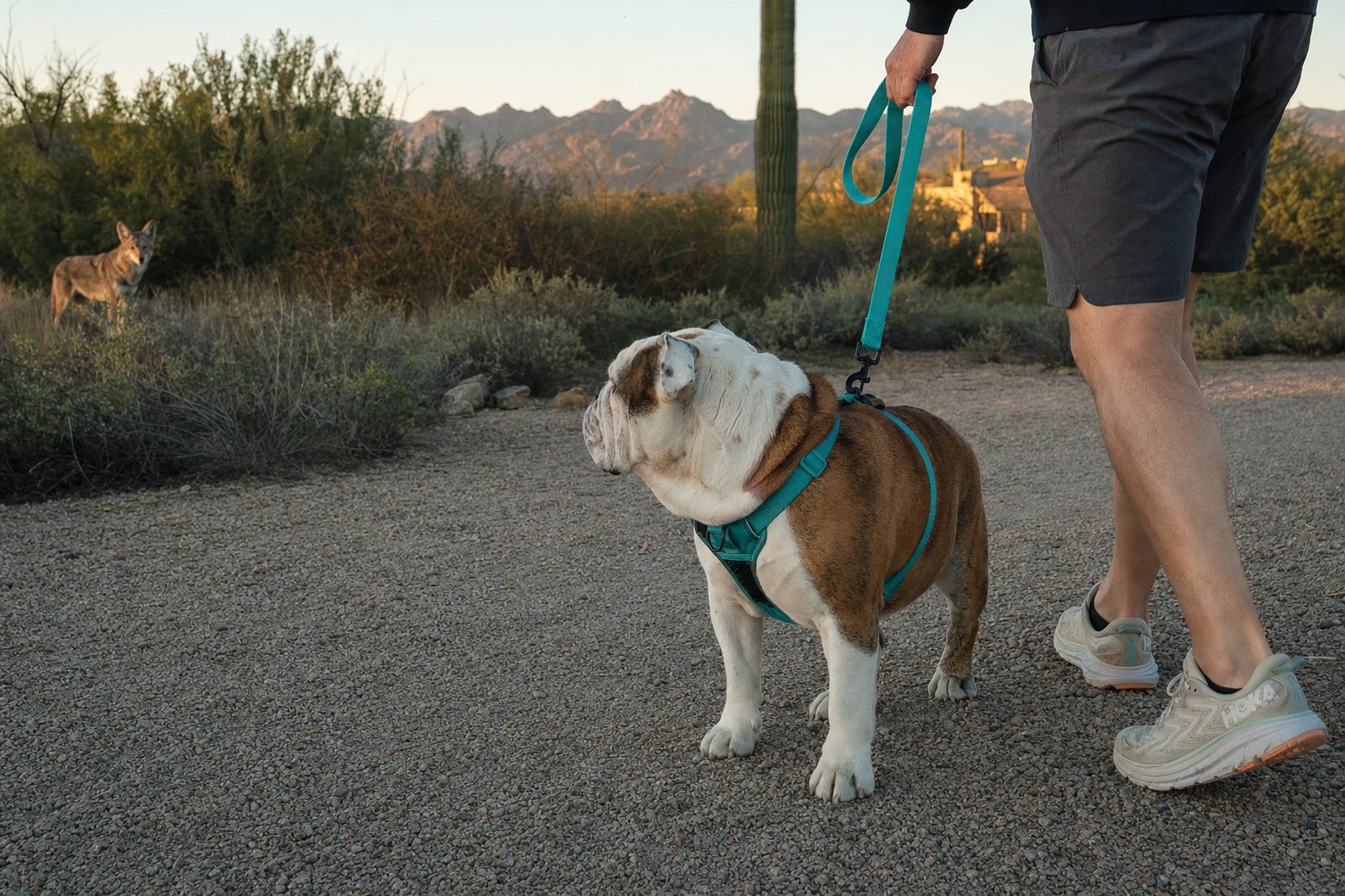
The short version: do not run. Pick up a small dog. Get loud. Move toward people.
Arizona Game and Fish gives a clear encounter protocol:
- Do not run. Running can trigger the chase response. Face the coyote and keep eye contact.
- Pick up a small dog. If you can lift your dog, lift it. Off the ground, against you.
- Make yourself big and loud. Shout, wave your arms, blow a whistle, shake a can of pebbles. This is hazing. It re-teaches the coyote to fear humans.
- Throw something if it keeps coming. Small stones or sticks, near it first.
- Move toward people, a building, or an active area. Go where the humans are.
- Report bites and aggression. Call 911 or Arizona Game and Fish. After hours and weekends: 623-236-7201. Get medical care immediately for any bite.
Three leash rules. Use a real leash, six feet or shorter; the agency specifically notes bold coyotes have attacked small dogs on retractable leashes. Keep the leash on at the trailhead and parking lot, and reel the dog in the moment you spot a coyote.
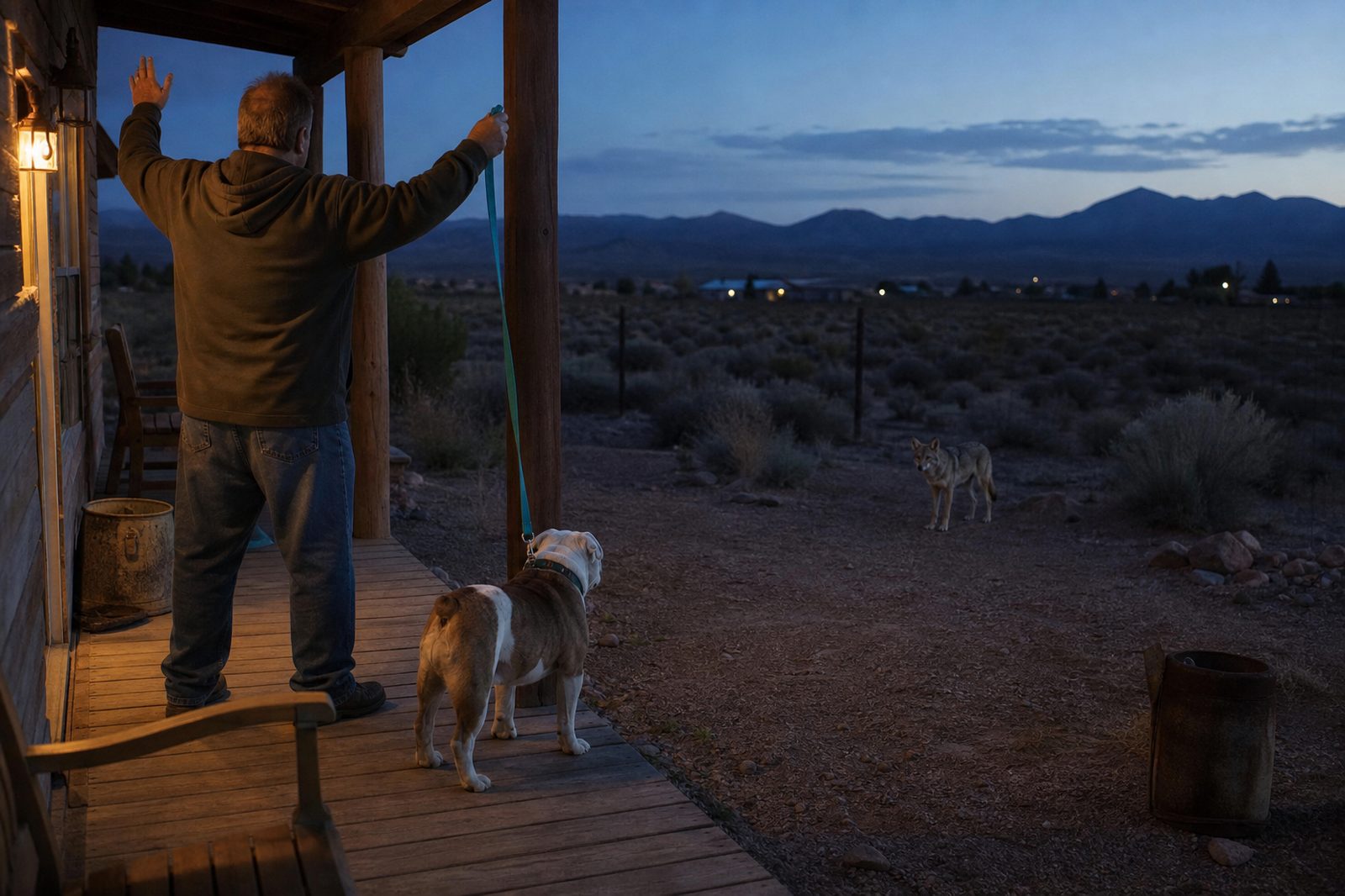
A coyote in your yard gets hazed from the porch. Every time. Hazing is like booing a bad act: if the whole block boos every time the coyote shows up, it stops showing up. If nobody boos, it takes the silence as applause.
How to coyote-proof your yard
The short version: remove the reasons coyotes visit, then harden the fence. Most yards fail the first part.
Audit your yard against what draws coyotes: food, water, shelter.
- Pet food and water. Feed pets inside. Pull water bowls at night.
- Fallen fruit. Pick fruit as it ripens and pick up fallen fruit the same day.
- Garbage. Secure lids. Put bins out the morning of pickup, not the night before.
- Bird feeders. Spilled seed draws rabbits and rodents. Rabbits and rodents draw coyotes.
- Shelter. Trim ground-level shrubs. Close off crawl spaces under sheds, decks, and porches.
- Compost. No meat or dairy unless the bin is fully enclosed.
Then the fence. Six feet is the starting point, not the answer. Eight feet, or six feet with a roller top. Bury the base or add an L-shaped apron. Gates must latch with minimal gaps. A dog door into an open yard at 5 a.m. is an invitation. Our snake-proofing yard guide covers the overlap: removing attractants helps against both threats, but snake fencing and coyote fencing solve different problems.
Coyote or javelina? Two different desert threats
The short version: coyotes are predators that hunt. Javelinas are herd animals that defend. Mix them up and your dog pays.
Both roam Scottsdale and Cave Creek. The response to each is different:
| Coyote | Javelina | |
|---|---|---|
| What it is | A 20 to 30 pound predator and opportunistic hunter. | A 40 to 60 pound herd animal that eats mostly plants. |
| How it moves | Travels and hunts alone or in loose pairs. | Travels in herds. Poor eyesight, strong sense of smell. |
| The danger | Sees a small unattended dog as food. Usually avoids humans. | Sees your dog as a coyote. Defends the herd by charging. |
| Your move | Get loud. Pick up a small dog. Move toward people. | Back away quietly. Give the herd space. Never let your dog chase. |
With coyotes your dog is potential prey; with javelinas your dog looks like the predator. Both punish the same handler error: an uncontrolled dog at dawn or dusk. Full breakdown in our javelina guide.
The training that actually holds: recall and calm under distraction
The short version: management handles the yard. Training handles the moment the plan breaks.
Fences, leashes, and attractant removal are management. But gates get left open and leashes get dropped. Think of it like a fire extinguisher: you hope the house never burns, but you do not skip the extinguisher because the wiring is new. The recall is the extinguisher; the fence is the wiring. What saves the dog then is trained behavior that holds under the highest distraction it will ever face: a wild predator in view.
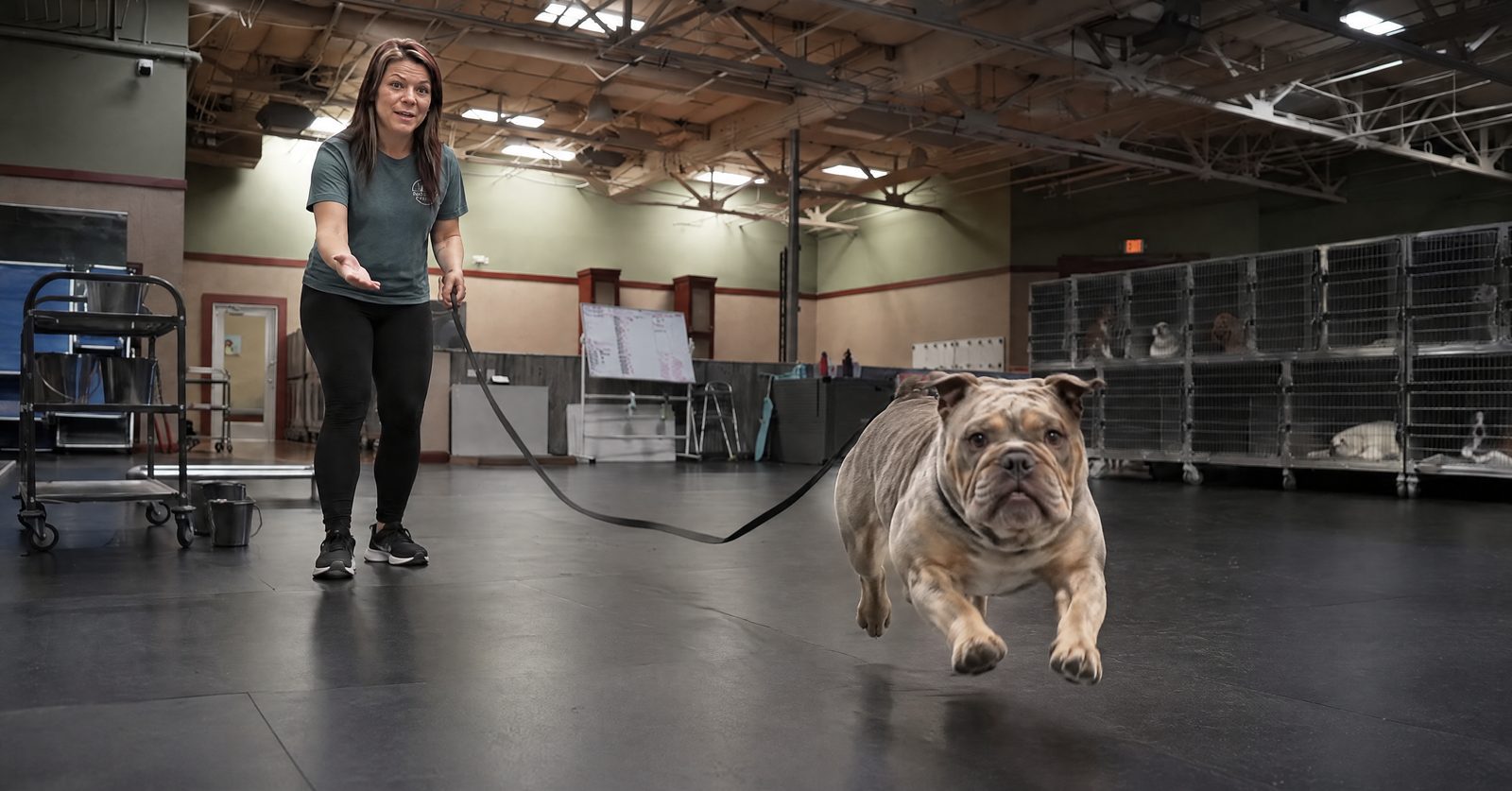
Two behaviors matter. First, a recall that works when it counts. A recall trained in the kitchen is not a recall. It is trained when the dog turns away from a sprinting rabbit and comes back at speed. That is proofing: the same behavior tested against harder distractions until it is reliable.
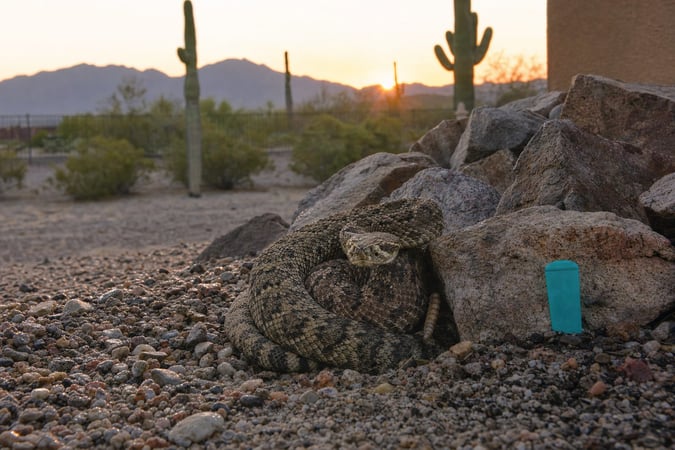
Second, a calm default around wildlife. Not panic, not fixation, not the lunge. The dog sees a coyote and checks back in with you. This is conditioned like our rattlesnake avoidance: the animal becomes a cue for a trained default response, built with positive reinforcement first, then held with fair, minimal, well-timed correction at the lowest level the dog notices. Same standard as our rattlesnake avoidance training.
This is daily work at our Cave Creek campus: dogs that stay calm and responsive with wildlife in view, and owners learning to read their own dogs the same way. Mentor and student, figuring it out together. If your dog fixates, lunges, or blows off recall when aroused, that is a training gap, and coyote country is the wrong place to discover it. For the full framework on arousal-driven behavior, see our reactive dog training guide.
The first move
Start With a PD360 Assessment
The in-person evaluation where a senior trainer reads your dog across nine dimensions, tests recall under distraction, and maps the proofing plan. Every serious case starts here.
Mistakes that make it worse
- Trusting the block wall. A 6-foot wall is a suggestion to a coyote. Walled yards are not automatically safe.
- The retractable leash. A retractable leash puts your small dog well out of your reach. The agency specifically calls out retractable leashes in coyote attacks.
- Ignoring the coyote. Doing nothing teaches it your street is safe. Indifference has the same effect as feeding. Haze it every time.
- Dawn and dusk off-leash time. The dog park at 6 a.m. in April, den season, near the desert edge. That is the highest-risk combination in this article.
- Feeding the neighborhood. Outdoor cat food, fallen citrus, open compost. Your buffet becomes the block's coyote problem. It is unlawful in Maricopa County.
- Assuming size protects your dog. The 25-pound rule is folklore. A 40-pound dog that chases is in more danger than a 15-pound dog on a short leash. Behavior beats weight.
Which program fits
Build the Recall That Holds
Foundation Camp builds proofed recall and a calm default around wildlife over 14 nights of daily coached reps. That is the manners-and-obedience build for the dog with an obedience gap, not a behavior case. Your PD360 Assessment routes your dog to the right program.
Key takeaways
Key takeaways
- A 6-foot fence is not necessarily coyote-proof. The standard is 8 feet, or 6 feet with a roller top.
- The 25-pound rule is folklore. No agency publishes a weight cutoff. Behavior matters more than weight.
- Coyotes run at dawn and dusk, mate January through March, and defend dens March through May. Leash laws apply on every local trail.
- In an encounter: do not run, pick up a small dog, get loud, and move toward people. Report bites to 911 or Arizona Game and Fish at 623-236-7201.
- Coyote-proof the yard by removing food, water, and shelter first, then hardening the fence. Never leave dogs unattended outside at dawn or dusk.
- Management handles what training cannot reach: fence, light, supervision. A proofed recall and a calm default around wildlife handle the moment management fails.
Frequently Asked Questions
Can a coyote jump a 6-foot fence?
Yes. Per Arizona Game and Fish, a 6-foot fence is not necessarily good protection; coyotes are skilled jumpers. The standard is 8 feet, or 6 feet with a roller top, plus buried or apron fencing.
What size dog is safe from coyotes?
No size is guaranteed safe. Small dogs face the highest risk and should never be left unattended outside, especially at dawn and dusk. Larger dogs are safer but not safe, particularly if they chase.
What should I do if a coyote approaches my dog on a walk?
Do not run. Face the coyote, pick up a small dog, and make loud noises to scare it off. Move toward people or a building. Keep the leash at six feet or shorter. Report aggression to Arizona Game and Fish; after hours, call 623-236-7201.
Should I scare a coyote out of my yard?
Yes, every time. Indifference has the same effect as feeding it. Yell, clap, blow a whistle, or spray it with a hose. Then remove what drew it in: pet food, water bowls, fallen fruit, open garbage.
Can training protect my dog from coyotes?
Training closes the gap management leaves. A proofed recall and a calm default around wildlife save the dog when a gate is left open or a leash is dropped.
Where to go from here
Three layers: manage the yard, handle the walk, train the dog. Most Pet Parents stop at one. Do all three - that is the whole order of operations.
Start with the assessment. A senior trainer at either campus will test your dog's recall under distraction and tell you honestly where the gaps are - and whether the gap is a training hole, an arousal problem, or a breed-drive pattern no program can fully erase. That honesty is the whole point of assessing before programming.
Scottsdale: 8642 E Shea Blvd, 85260. Cave Creek: 4640 E Forest Pleasant Pl, 85331. Serving the Phoenix Valley.