In short
DayCamp is the right dog daycare for reactive dogs, fearful dogs, undersocialized dogs, and newly adopted dogs; DaySchool is built for dogs who are already genuinely social. Partners Dogs uses the PD360 Assessment to measure your dog's actual thresholds (distance, duration, and recovery) at our Scottsdale and Cave Creek campuses, and places your dog in the program built for where they are today, not where you hope they will be next month.
The Short Answer: Choosing Dog Daycare for Reactive Dogs
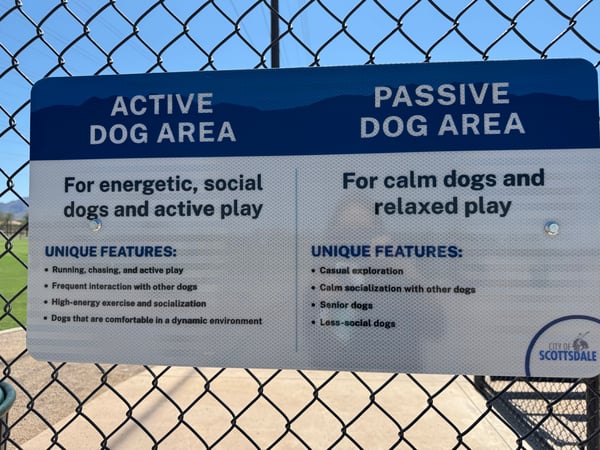
Choosing dog daycare for reactive dogs comes down to one clear question, not a preference. DayCamp is the room built for one dog profile: reactive on leash, fearful of other dogs or strangers, undersocialized, or newly adopted with an unknown history. If your dog already plays comfortably in a loose group of unfamiliar dogs and recovers fast from getting worked up, without a handler managing distance every minute, DaySchool is the better fit and the more enriching one.
We have already made the case for why supervised, screened daycare helps a nervous or reactive dog more than staying home ever will. That is the argument in our companion piece, Dog Daycare for Undersocialized Dogs in 2026. This article assumes you already believe that and answers the next, more practical question: which room does your dog belong in.
- DayCamp: a structured, behavior-focused day program for dogs who are reactive, fearful, undersocialized, or newly adopted.
- DaySchool: daycare plus daily training and enrichment, built for dogs who are already comfortable in loose group play.
Placement is not a judgment call made from a lobby window. It comes from the PD360 Assessment, which we break down further down this page.
What DayCamp Is Built For, and Who It Is Wrong For
DayCamp exists for the dog who is not ready to be turned loose on an open daycare floor with a rotating group of strangers. That covers a wider range of dogs than most owners assume: a dog who barks and lunges at other dogs on leash, a dog who freezes or hides when approached, a dog who was adopted three weeks ago and has no verified socialization history, and a dog stepping down from a boarded behavior program who still needs supervised, deliberate exposure rather than a free-for-all.
Handlers in DayCamp manage distance and exposure on purpose instead of letting dogs sort it out themselves. That only works with enough trainers on the floor to do it. Partners Dogs staffs DayCamp at one trainer per ten dogs, well below the twenty to fifty dogs per staff member common at warehouse-style daycares, so someone is watching thresholds instead of just counting heads. That staffing ratio, and the outcomes families see because of it, is part of why Partners Dogs holds a 4.8-star rating across more than 2,000 reviews. DayCamp is the program built around the exact behavior challenges we cover across our behavior library, including:
- fear of other dogs
- leash reactivity
- reactivity toward unfamiliar people
- barrier frustration at fences, gates, and car windows
Where DayCamp is the wrong fit: a dog who is already relaxed in mixed group play does not need managed distance every single day. Keeping a dog who is already comfortable in group play in DayCamp long after they have outgrown it under-stimulates them and wastes the structure that a truly reactive dog in the room needs. That dog belongs in DaySchool, and we cover how that move happens later in this article.
What DaySchool Is Built For, and Who It Is Wrong For
DaySchool is daycare plus daily training, and it is built for dogs who are already comfortable in loose group play. "Genuinely social" is the specific bar DaySchool requires, not a vibe: a dog who recovers quickly from arousal, stays comfortable in loose group play with dogs he has never met, and does not need a handler actively managing space to keep him calm. DaySchool days are not just free play. Training and enrichment reps are built into the day, which is the difference between daycare that tires a dog out and daycare that also teaches something.
Where DaySchool is the wrong fit: a dog who tenses at the gate, who needs distance from other dogs to stay under threshold, or who has never been formally screened. Placing an unscreened reactive dog straight into loose DaySchool group play is exactly the mistake DayCamp exists to prevent, and it is the risk our companion piece on undersocialized-dog daycare warns families about. DaySchool runs Monday to Friday 7 a.m. to 6 p.m. and Saturday 8 a.m. to 4 p.m., closed Sunday, at both our Scottsdale and Cave Creek campuses.
How Thresholds Decide Placement
Placement is not about how friendly your dog is on your couch. It is about distance, duration, and recovery in a room full of dogs that are not your dog's friends yet. Trainers use three levers to read where a dog actually is:
- Distance: how close a trigger (another dog, a stranger, a gate) can get before your dog reacts instead of just noticing.
- Duration: how long your dog can hold calm behavior in a mildly stimulating environment before it breaks down into barking, lunging, or shutting down.
- Recovery: how fast your dog returns to a relaxed baseline after getting worked up or after a reactive moment.
A dog who needs a wide berth just to stay quiet is a different placement than a dog who tolerates a close pass but takes a good while to settle afterward. Both are common, and both need DayCamp's model: managed distance, deliberate exposure, and built-in rest between engagements, all designed to keep a dog under threshold while it widens over time. DaySchool assumes the opposite starting point, a dog who is already comfortable under threshold for most of an open day.
What the PD360 Assessment Measures Before Your Dog Is Placed
The PD360 Assessment is the intake step that turns placement from a guess into a measurement. Every dog going into DayCamp or DaySchool is assessed first, never enrolled sight unseen, because the whole point is to place your dog based on what a trainer observes firsthand, not on how your dog behaves in your living room. A PD360 evaluation looks at:
- The distance at which your dog first notices another dog or a stranger
- How long your dog can hold calm behavior once a trigger closes that distance
- How quickly your dog recovers to baseline after arousal
- Leash manners, body-handling tolerance, and any bite history you disclose
Current PD360 Assessment rates, including the household discount for a second dog, are on the pricing page, and that fee is applied as store credit when you enroll in your recommended camp or a membership; it does not apply to à la carte bookings or general reservations, so families are not paying twice for the same intake step. This is the mechanism behind everything else in this article: it is what makes "which room does my dog belong in" a scored, repeatable decision instead of a front-desk guess.
Next step
Find out which room fits your dog
Skip the guesswork. A PD360 Assessment measures your dog's thresholds and gives you a placement, not an opinion.
Moving From DayCamp to DaySchool: What Has to Be True First
Dogs are not sentenced to DayCamp forever, and they do not graduate on a calendar. Trainers re-score the same PD360 markers (distance, duration, and recovery) as thresholds widen, and move a dog into DaySchool once the change is consistent rather than a single good day. Before that move happens, a few things need to be true:
- Calm recovery after arousal shows up consistently across multiple DayCamp sessions, not just once
- Your dog is comfortable at close proximity to unfamiliar dogs without a handler actively managing distance
- Nothing new at home, a new dog, a move, a change in routine, has reset the progress a trainer already logged
Movement runs both directions. A DaySchool dog going through a rough stretch (a new trigger, a health issue, a life change) can step back into DayCamp's structure for a while without losing ground. That flexibility uses the same placement tool in reverse, and it is a big part of why families trust the process instead of feeling stuck with it.
What a Day Looks Like in Each Program
A DayCamp Day
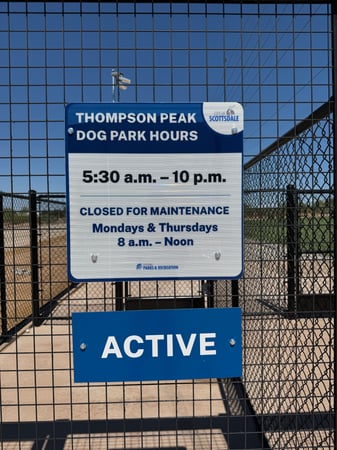
Your dog arrives during Office and DayCamp hours, Monday to Friday 8 a.m. to 5 p.m. and Saturday 8 a.m. to 2 p.m., closed Sunday. The day is built around managed exposure at a safe distance and short, structured engagements instead of unsupervised free-for-alls, with rest built in between them. A trainer works a group small enough to read each dog's body language, not just count heads.
A DaySchool Day
Your dog arrives during DaySchool hours, Monday to Friday 7 a.m. to 6 p.m. and Saturday 8 a.m. to 4 p.m., closed Sunday. The day mixes loose group play with daily training and enrichment reps, so your dog comes home tired and a little sharper, not just tired.
When Neither Is the Answer, and a Camp Is
Some dogs need more than a day program before either DayCamp or DaySchool make sense. A dog with a bite history, resource guarding around food or objects, or aggression severe enough that even DayCamp's managed structure is not enough exposure time in a single day is not a DayCamp placement yet. That is when Behavior Camp or Transform Camp is the right starting point instead, boarded programs that run 12 to 16 weeks including the stay and follow-up coaching, built to do the concentrated work a day program cannot fit into a few hours.
DayCamp is often where those dogs land next, not instead. Once a dog graduates a boarded behavior program, DayCamp becomes the maintenance step: continued supervised exposure at safe thresholds while the new behavior holds up in a room full of other dogs, before DaySchool is ever on the table.
Frequently Asked Questions
Do DayCamp and DaySchool run on the same schedule?
No. DayCamp follows Partners Dogs' Office and DayCamp hours, Monday to Friday 8 a.m. to 5 p.m. and Saturday 8 a.m. to 2 p.m., closed Sunday. DaySchool runs longer hours, Monday to Friday 7 a.m. to 6 p.m. and Saturday 8 a.m. to 4 p.m., closed Sunday, at both the Scottsdale and Cave Creek campuses. Confirm your dog's assigned program before you plan drop-off and pickup.
How do I know if my dog needs DayCamp instead of DaySchool?
DayCamp is the safer starting point if your dog reacts to other dogs or strangers at a distance, needs a handler managing space to stay calm, or gets overwhelmed in loose group play. The same is true if your dog was recently adopted with an unknown socialization history. The PD360 Assessment confirms this with a measurement of distance, duration, and recovery rather than a guess based on how your dog behaves at home.
Can a reactive dog move from DayCamp into DaySchool later?
Yes. Dogs are re-evaluated as their thresholds widen. A dog that shows consistent calm recovery across multiple DayCamp sessions and no longer needs a handler managing distance from other dogs can move into DaySchool. Movement can go the other direction too, if a dog needs to step back into more structure for a while.
Do I need the PD360 Assessment before I can enroll in DayCamp or DaySchool?
Yes, every dog is assessed first, even if you are confident which program fits. The assessment fee is credited toward enrollment in your recommended camp or a membership, not toward à la carte bookings or general reservations, so you are not paying separately for the intake step and the program itself, and it protects the dogs already in that room as much as it protects yours.
What if my dog is too reactive for either DayCamp or DaySchool?
Some dogs, particularly those with a bite history or severe aggression, need more concentrated work before a day program is the right fit. Behavior Camp and Transform Camp are boarded programs that run 12 to 16 weeks including the boarded stay and follow-up coaching, and dogs typically move into DayCamp as a maintenance step once that work is done.
Is DayCamp the same thing as a boarded training camp?
No. DayCamp is a day program, your dog goes home every night, and it focuses on structured, supervised exposure at safe thresholds rather than a boarded behavior curriculum. Behavior Camp and Transform Camp are the boarded programs built specifically for concentrated behavior modification.
Ready when you are
Give your dog the room built for where they are today
Whether that is structured DayCamp or the group energy of DaySchool, placement starts with a real assessment, not a guess.
Keep reading