At a glance
A dog bitten by a rattlesnake needs an emergency vet, not home treatment. Keep the dog still, remove the collar, carry the dog to the car, and drive to an emergency clinic right away. Skip the home remedies. With prompt veterinary treatment, about 94% of bitten dogs survive.
- Keep your dog calm and still. Movement spreads venom faster. Carry small dogs; walk large dogs slowly on a short leash.
- Remove the collar if the bite is on the face, neck, or head. Swelling can close an airway fast.
- Give nothing at home. No Benadryl, no tourniquet, no ice, no cutting the wound. A Texas A&M vet school says no home medication works on snakebite.
- Call the emergency clinic while you drive. Not every vet keeps antivenom on hand.
- Expect an Arizona bite bill in the thousands. In a 2021 study of 282 dogs, antivenom runs into the hundreds of dollars per unit, and most dogs needed more than one unit.
The short answer: get your dog to an emergency vet immediately, and keep the dog still on the way. Every minute of delay gives the venom more ground. This guide is not veterinary advice and never replaces a vet.
If you are a Scottsdale or Cave Creek Pet Parent who hikes desert trails or has a backyard near open desert, memorize this protocol before you need it: how to spot a bite, what to do in the first ten minutes, what not to do, what the emergency vet will do, and what it costs in Arizona. And know the longer game: in a single ~15-20-minute session at either Partners campus, dogs meet live rattlesnakes behind double-mesh cages and rehearse a conditioned turn-and-run until avoidance is the default. Related pieces: our Rattlesnake Avoidance Training guide, our rattlesnake vaccine breakdown, and our Arizona rattlesnake season timeline.
How do you know a rattlesnake bit your dog?
The short version: sudden, fast swelling at the bite site is the tell. Dogs are usually bitten on the face, neck, or front legs.
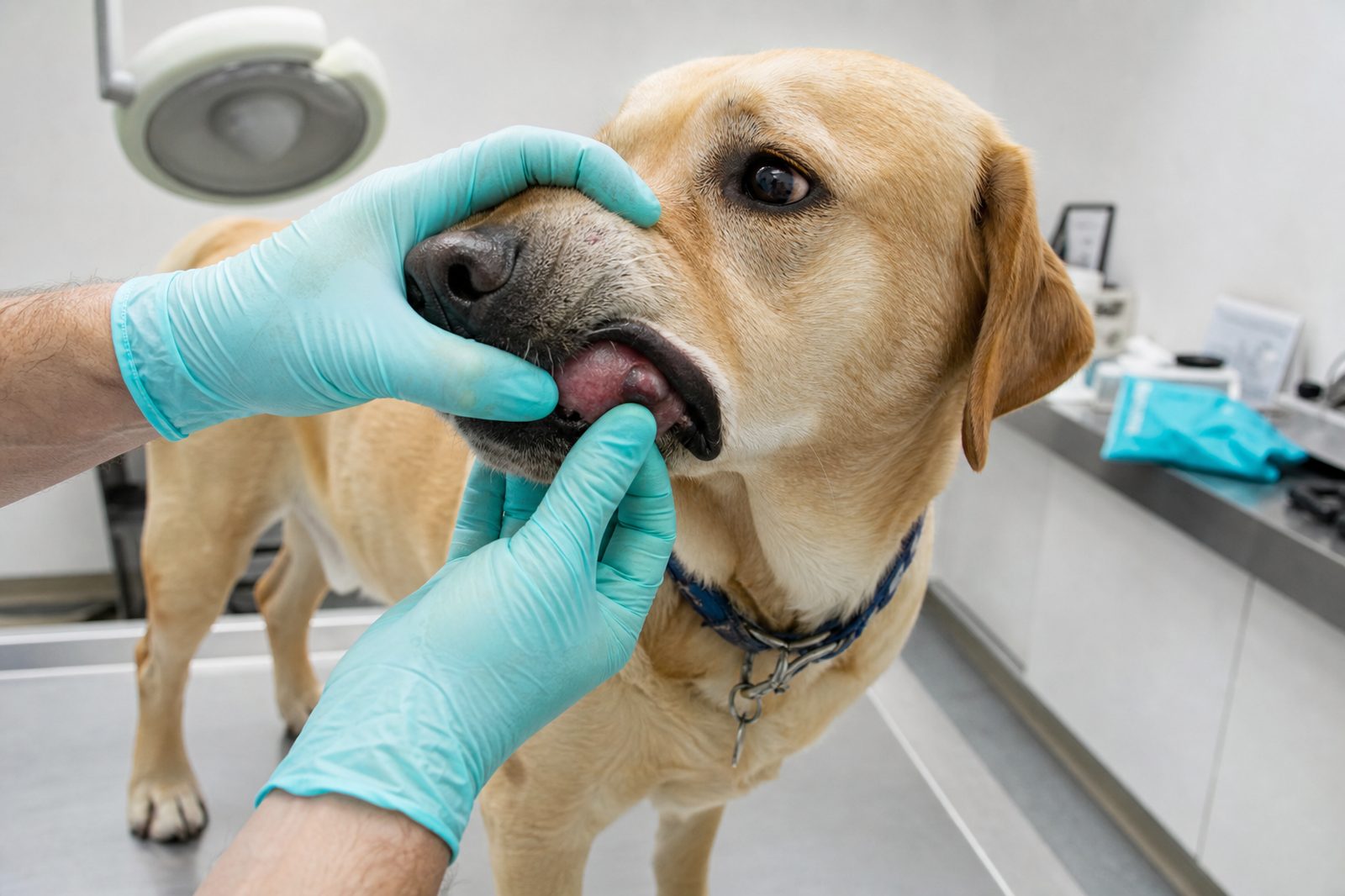
You may not see fang marks. The puncture wounds often hide under the fur, so look for swelling instead: a Texas A&M veterinarian notes the bitten area usually begins to swell almost immediately (Texas A&M). Dogs investigate nose-first, which is why the face, neck, and front limbs take most bites.
Watch for rapid swelling, pain, yelping, limping, drooling, vomiting, trembling, weakness, or collapse. Symptoms can show up right away or over hours. If you are not sure the snake was venomous, assume it was: one vet quoted by GoodRx says to go in even if you think the snake was not venomous (GoodRx).
What do you do in the first 10 minutes?
The short version: do less, drive more. Your job is delivery, not treatment.
- Steady yourself and your dog. Panic moves the dog, and movement moves venom. One vet puts it plainly: the more agitated the dog becomes, the faster the toxin spreads (Popular Science). Think of it like a wet paintbrush resting on a canvas: leave the canvas alone and the paint stays where the bristles touched; drag the canvas around and it streaks across the whole thing. Panic is the dragging - a still, calm dog gives the venom no help spreading.
- Remove the collar if the bite is near the head, neck, or face. Swelling can turn a collar into a noose around the throat (Texas A&M).
- Keep the dog still and quiet. Carry a small dog to the car. Short leash, slow walking for a big dog. Below the heart is ideal if it does not slow you down; the vet comes first.
- Leave the snake alone. Photograph it from a safe distance if it is easy. Color, pattern, and a rattle help the vet pick the right antivenom (Texas A&M). Never chase it.
- Note the time of the bite. The vet will ask.
- Call the emergency clinic while you drive. Many vets do not stock antivenom, so you may need to call around (GoodRx). A heads-up means they are ready when you pull in.
- Give the dog nothing. No Benadryl, no aspirin, nothing from the medicine cabinet. The Merck Veterinary Manual is blunt: the commonly touted home measures are ineffective and can be harmful.
The clock starts at the bite. Everything you do before the vet decides how the story ends.
Why home remedies fail
The short version: everything in the old first-aid playbook is either useless or dangerous on a snakebite. Skip all of it.
| Myth | Fact |
|---|---|
| Give Benadryl at home to buy time. | No home medication works on snakebite. Texas A&M: do not administer anything, just see your veterinarian. |
| Tie a tourniquet, or cut and suck the venom out. | The Merck Veterinary Manual lists tourniquets, incision, and suction as ineffective and potentially harmful. |
| Ice the bite to slow the venom. | Merck lists ice, cold packs, and sprays as ineffective and potentially harmful. They also cost you the drive. |
| Wait to see if it swells before going in. | Merck states that irreversible venom effects begin immediately. Waiting harms as much as the other measures. |
| Catch the snake so the vet can identify it. | The risk is not worth it. A photo from a safe distance, or your description of color, pattern, and rattle, is enough (Texas A&M). |
What will the emergency vet do?
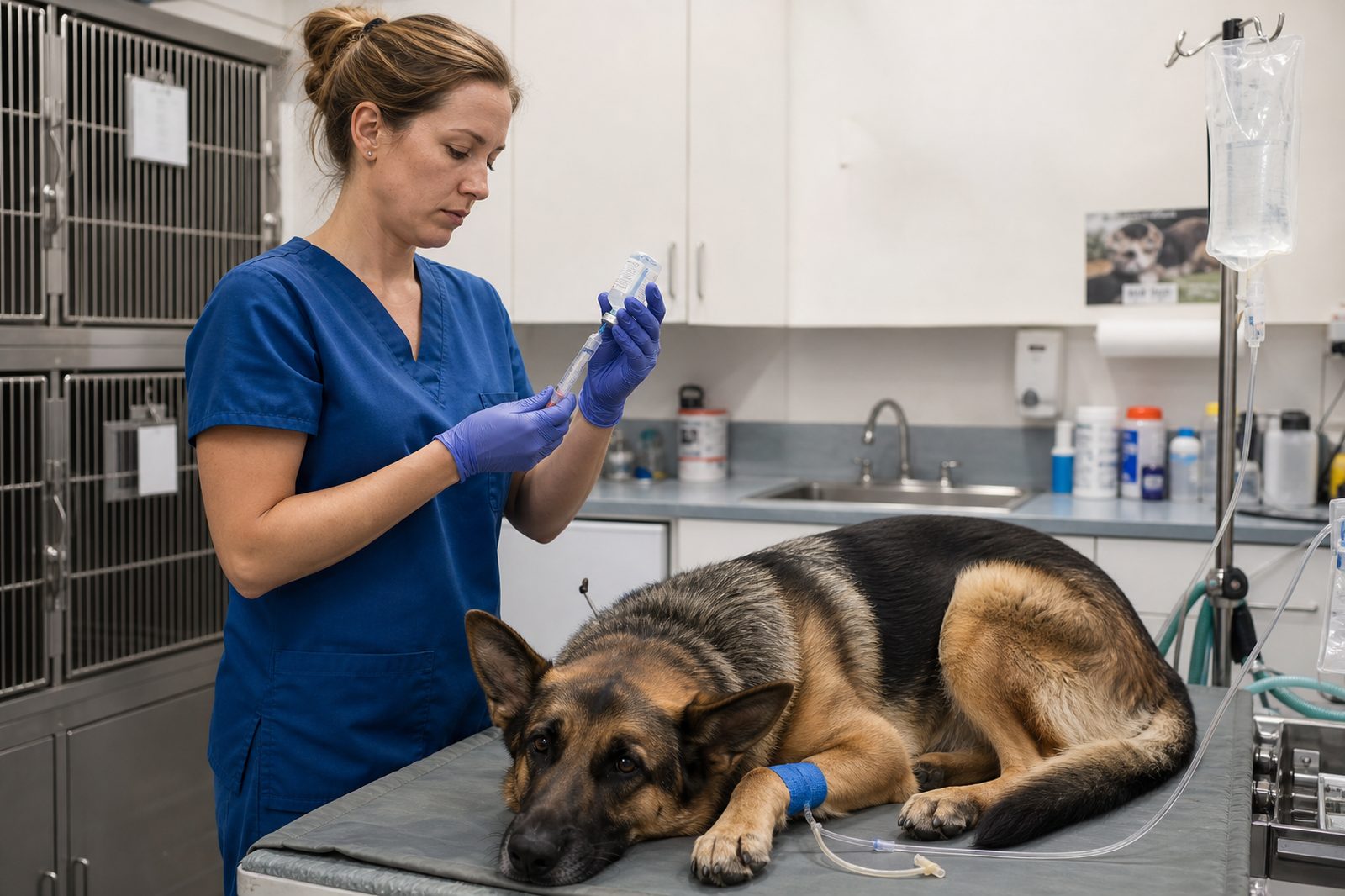
The short version: IV fluids, antivenom, pain control, and at least 24 hours of monitoring. The vet decides the mix.
- IV fluids. Crystalloid fluids combat the shock and low blood pressure that crotalid venom causes (Merck).
- Antivenom. The Asclepius Snakebite Foundation, run by veterinary and human toxicologists, is plain: effective antivenom is the only thing that can neutralize venom and improve outcome (Asclepius). A 2021 JAVMA 259(5), 2021 study of 282 dogs confirmed it works against the blood and neurological effects of crotalid venom.
- Pain medication. Analgesics are standard alongside fluids and antivenom (JAVMA).
- Monitoring. Every crotalid bite patient is monitored a minimum of 24 hours (Merck). In the JAVMA study, surviving dogs were hospitalized a median of 19 hours.
- What most protocols skip. Steroids, NSAIDs, and antihistamines are not part of most recommended treatment protocols, per a 2011 review in the Journal of Veterinary Emergency and Critical Care (J Vet Emerg Crit Care 21(5), 2011). The vet adjusts, not the owner.
If money is tight, ask the vet to prioritize. One veterinarian who treats these cases says the parts not to bypass are IV fluids for shock and antivenin to neutralize the venom, along with pain medication (Beacon Journal).
How much does rattlesnake bite treatment cost for a dog?
The short version: plan on thousands. Antivenom alone is the largest line item: in a published 2021 JAVMA study of 282 dogs, each unit runs into the hundreds of dollars, with a mean of 1.36 units per dog. Total antivenom costs run into the low thousands depending on the product.
The price lands all at once at the ER: exam, bloodwork, IV fluids, antivenom, monitoring, hospitalization, pain medication. All sourced:
- Antivenom. In the 2021 JAVMA study of 282 dogs, most dogs needed more than one unit, and antivenom was the largest cost driver.
- The full Arizona bill. Our Rattlesnake Avoidance page puts a typical Arizona snakebite emergency bill in the thousands (partnersdogs.com/snake-avoidance, verified 2026-09-16).
- Hospitalization. Surviving dogs in the JAVMA study stayed a median of 19 hours. Every day of monitoring, bloodwork, and fluids adds to the bill.
- Why it varies. Bite placement, amount of venom, and the size of the dog all change the treatment and the price (Popular Science).
No one is quoting you a price on the trail. Know your emergency clinic before you need one, the way you know where the fire extinguisher is: before the fire, not while the kitchen is smoking. Ask whether they stock antivenom, and ask about payment plans at the front desk instead of at midnight with a swollen dog.
Can a dog survive a rattlesnake bite?
The short version: most dogs survive when they get treatment fast. Do not let that sentence slow you down.
- The University of Arizona puts the survival rate around 94% with prompt veterinary care (UArizona Health Sciences).
- The 2021 JAVMA study lands in the same range: 94% to 98% of dogs survived to discharge.
- Delayed treatment, face or neck bites that threaten the airway, and very small dogs taking a full venom load make it worse. Variables per one vet: bite placement, amount of venom, size of the dog, and the individual dog's response (Popular Science).
Survival statistics describe other people's dogs. Yours is decided by how fast you deliver it to the vet.
Mistakes that make it worse
- Giving Benadryl and feeling like you did something. You did nothing, and you spent the drive on false comfort.
- Tying a tourniquet or cutting the wound. Both are on Merck's harmful list.
- Walking the dog back to the trailhead. Carry small dogs. Leash large ones short and move slowly. Movement is the enemy.
- Driving to your regular vet without calling. If they do not stock antivenom, you burned the most valuable minutes of the day.
- Waiting until morning to see if it swells. Venom damage starts immediately. Go now.
How do you keep this from happening again?
The short version: a trained dog is the best prevention. Everything else lowers the odds.
Arizona has 13 rattlesnake species, most active March through October in the warm desert, per Arizona Game and Fish (AZGFD). You are most likely to meet Western diamondbacks, sidewinders, Mojaves, and black-taileds; our season timeline is the calendar for hikes and backyard checks. What actually lowers the odds:
- Avoidance training. A dog that recognizes and refuses rattlesnakes by sight, sound, and scent never gets close enough to be bitten. The training installs a conditioned flight response: an e-collar stim, timed by the instructor at the lowest level the dog notices, marks the moment the dog meets a live rattlesnake's scent, sound, or sight behind double-mesh cages, and the turn-and-run gets rehearsed until it is the default. Dogs that hike real snake country like the McDowell Sonoran Preserve get a refresher once or twice a year. Our Rattlesnake Avoidance Training guide explains the full protocol and where the evidence ends.
- Know the vaccine question. The rattlesnake vaccine debate covers what Arizona vets actually say. The line that matters here: the vaccine never replaces an emergency vet visit, vaccinated or not.
- Snake-proof the yard. Clear debris, rock piles, and woodpiles, and keep dogs away from brush and burrows. Many bites happen close to home, not on the trail.
- Leash in snake country. Off-leash dogs investigate. Leashed dogs stay attached to the one animal with the phone.
Next step
Plan Your Desert Dog's Life
The emergency is over. The next ten years of hikes, backyards, and open desert are not. Once your dog is stable, a PD360 Assessment puts a senior trainer on your dog for a full evaluation, including the avoidance program fit.
Key takeaways
Key takeaways
- A rattlesnake bite is a medical emergency. This article never replaces an emergency vet. Go now, not after the symptoms develop.
- In the first 10 minutes: keep the dog still, remove the collar, carry the dog to the car, note the time, and call the emergency clinic en route.
- Give nothing at home. No Benadryl, no tourniquet, no ice, no cutting. Merck's manual calls these measures ineffective and potentially harmful.
- At the ER, expect IV fluids, antivenom, pain control, and at least 24 hours of monitoring. Antivenom is what neutralizes the venom.
- Cost reality: antivenom is the largest line item in a 2021 JAVMA study of 282 dogs, and full Arizona bite bills run into the thousands.
- Survival with prompt care is around 94% (University of Arizona). Speed is the treatment you control.
Frequently Asked Questions
Should I give my dog Benadryl after a rattlesnake bite?
No. No home medication works on snakebite. A Texas A&M vet school advises owners not to administer anything at home and to get the dog to a veterinarian immediately. Benadryl treats allergic reactions, not venom. Spend the drive on getting to the vet, not the medicine cabinet.
How do I know if the bite was from a rattlesnake or a harmless snake?
Rapid swelling at the bite site is the main tell. Note the snake's color, pattern, and whether it had a rattle, or photograph it from a safe distance. If you cannot identify it, assume it was venomous and go. Your uncertainty never justifies waiting.
How much does rattlesnake antivenom cost for a dog in Arizona?
A 2021 JAVMA study of 282 dogs found most dogs needed more than one unit of antivenom, the largest single line item, and full emergency bills in Arizona run into the thousands. Call your emergency clinic ahead of time to confirm they stock antivenom.
When does rattlesnake season run in Arizona each year?
In Arizona's warm deserts, rattlesnakes are most active March through October, per Arizona Game and Fish. Of the 13 species, the Western diamondback, sidewinder, Mojave, and black-tailed are encountered most often. Expect daytime activity in spring and more nighttime movement in summer.
What is the first step to keep my dog from being bitten again?
Book a PD360 Assessment so a senior trainer evaluates your dog and matches it to the right plan, which usually includes our Rattlesnake Avoidance program. Leash on trails, clear backyard hiding spots, and keep the emergency clinic's number in your phone.
Where to go from here
The protocol fits in your pocket: still dog, off collar, carry, call, drive. Nothing in a first-aid kit treats a rattlesnake bite. The vet does. Put the emergency clinic's number in your phone today, while you do not need it. And when the crisis is behind you, start with the assessment, not the program: a PD360 puts a senior trainer on your dog for a full evaluation - avoidance-program fit included - and one short session can teach a dog that the snake's rattle means run the other way.
Scottsdale: 8642 E Shea Blvd, 85260. Cave Creek: 4640 E Forest Pleasant Pl, 85331. Serving the Phoenix Valley.