Short version
This bench carries 50+ trainers doing two different jobs: group class instructors run skill-building sessions like puppy manners and loose-leash walking, while behavior specialists carry cases such as resource guarding, reactivity, and territorial behavior that need an individualized plan built around one dog. A puppy learning to wait at the door and a dog that stiffens over a food bowl are different assignments, and Partners Dogs routes them to different trainers because of that, not because one job outranks the other.
Why does the same training floor send one dog to a Tuesday night class and another dog to a three-week behavior stay? A school with 50+ trainers is not built around one job description. It is built around two, and the case in front of the trainer decides which one applies.
What is the difference between a group class instructor and a behavior specialist?
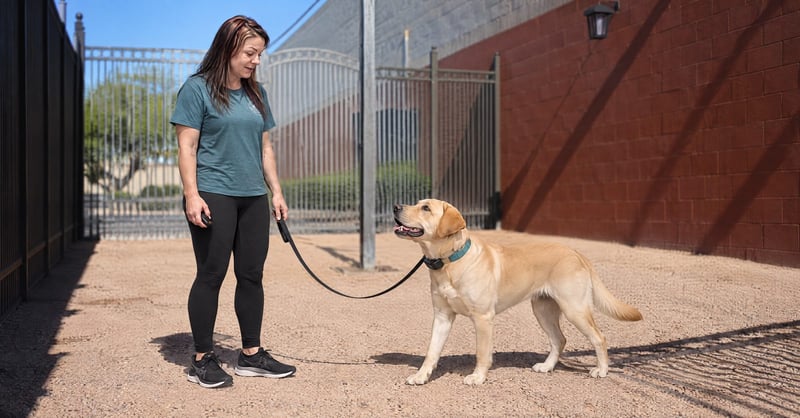
A group class instructor teaches skills to several dogs in one session; a behavior specialist changes one dog's behavior through an individualized plan. A Tuesday-night roster might include a Golden Retriever puppy learning to wait at the door, a Labrador on loose-leash walking, and a Border Collie mix polishing recall around distraction, every dog already comfortable working near others. A behavior specialist's caseload looks different: a dog referred for resource guarding, leash reactivity, or territorial behavior at the front door usually cannot start in a group setting at all, because those first sessions happen without six other dogs and handlers in the room.
| What to compare | Group class instructor | Behavior specialist |
|---|---|---|
| Primary job | Teach and reinforce skills across several dogs in one session | Build and run an individualized plan for one dog's specific behavior |
| Typical roster | Puppy manners, loose-leash walking, recall, CGC-style manners | Resource guarding, leash reactivity, territorial behavior, fear-based responses |
| Where the work starts | Directly in a group setting from week one | One-on-one, usually moving through Teaching before Reinforcing in a group |
| Entry point | Sign up for Group Classes or roll over from a camp | Usually a PD360 Assessment first, then Behavior Camp or Transform Camp |
Why do a puppy manners class and a resource-guarding case go to different trainers on the bench?
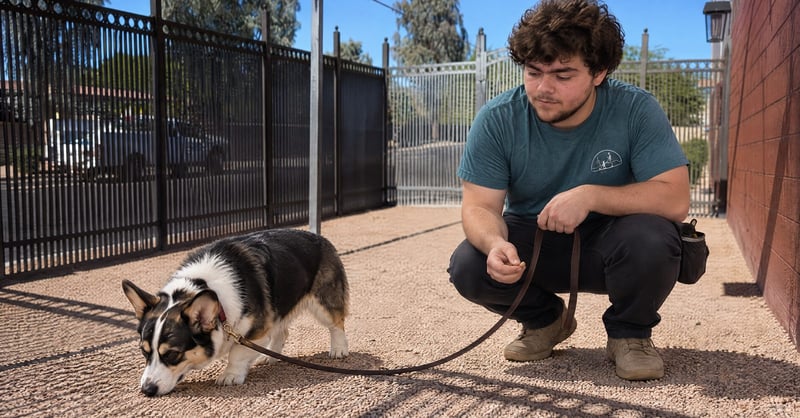
A puppy manners class is a skill to practice; a resource-guarding case is a behavior to change, and those two jobs draw on different muscles even inside the same method. Teaching a puppy to sit and wait at the door is Teaching-stage work: a clear cue, clean marker timing, a handful of repetitions, and the dog generalizes fast because there is no emotional charge attached to the door. A dog that guards its food bowl carries a different history into the room; the behavior did not appear because it missed a lesson, it appeared because guarding worked before. The specialist now has to build a new pattern around the bowl, the approach, and the release, in an order that keeps a hand away from an escalating dog until the dog is ready.
Xela, a German Shepherd mix whose case is documented in Partners Dogs' success stories, is a working example. Her trainer at Behavior Camp worked resource guarding as its own named focus on three separate days of her stay, and territorial behavior at greetings on two more, each addressed on its own before either was proofed around other dogs and people. That sequencing is behavior-specialist work, not what a Tuesday night group class is built to do.
| Situation | Usually routed to | Why |
|---|---|---|
| Puppy manners, socialization, loose-leash basics | Group Classes | Skill practice with low emotional stakes, dog already comfortable near other dogs and handlers |
| Resource guarding around food, toys, or space | Behavior Camp | Needs one-on-one sequencing before the dog can safely practice around distraction |
| Leash reactivity to other dogs or people | Behavior Camp | Requires threshold work and a plan built around the dog's specific triggers |
| Territorial behavior at doors or gates | Behavior Camp, then Group Classes for maintenance | Behavior work first, group setting later to proof the new pattern under distraction |
| Refresher after a camp stay | Group Classes | Maintenance-stage repetition once the behavior work is already done |
Does splitting these two jobs mean one trainer outranks the other?
No. Case fit decides who takes a dog, not seniority, and plenty of trainers do both jobs in the same week. A trainer running three group classes might also carry two behavior cases; a newer instructor might run only group classes while building repetitions, and a veteran might carry mostly behavior work simply because that is where the caseload sits that month. Both jobs share the same underlying method (Teaching, Reinforcing, Proofing, Maintenance) applied to a harder starting point on the behavior side, not a different or superior one.
How does a trainer earn a seat on the behavior side of the bench?
Every trainer starts on the same ladder; behavior caseloads only layer on once enough supervised hours build underneath them. That ladder runs from coursework hours through Instructor and on to Senior Instructor, the level where most behavior caseloads sit, and it is laid out in full in how many hours it takes to become a dog trainer at Partners Dogs. The same climb applies to every trainer no matter which side of the bench they land on, a path Partners Dogs has run since opening in Cave Creek in December 1997.
What does this look like for a family driving in from Fountain Hills or Anthem?
Both campuses run the same split, so a family coming from Fountain Hills, Anthem, or Paradise Valley meets the same routing logic whether they land at Scottsdale or Cave Creek. That routing question gets answered at the PD360 Assessment, before the drive happens, not at the front desk. For a family further out in Anthem or Peoria, that matters more: one drive to sort the right track beats signing up for a weekly class and learning three sessions in that the dog needed a behavior specialist from day one.
Key takeaways
- Group class instructors teach skills to several dogs in one session; behavior specialists build an individualized plan for one dog's specific case.
- A PD360 Assessment usually decides which track a dog needs before either trainer meets the dog.
- Every trainer climbs the same hours-based ladder, from coursework through Senior Instructor, before carrying a behavior caseload.
- Splitting the two jobs is about case fit, not rank; the same trainer can run group classes and carry behavior cases in the same week.
- A dog often moves between tracks, finishing a behavior stay and then continuing in Group Classes to proof the new pattern.
"I took my dog Rex to the behavioral camp because he was so reactive with dogs. He worked mostly with Megan but also with other trainers and it is amazing how much he learned and how responsive he is now to commands. I am continuing my training with the parenting classes but I am very pleased with the difference from when I took him in to now."
Catherine L., Cave Creek
Frequently Asked Questions
Is a behavior specialist a higher rank than a group class instructor?
No. The split is about case fit, not seniority. A trainer carries more behavior cases as supervised hours build, but running group classes stays a different job some trainers choose for years, never a lower step on a ladder.
Can the same trainer run group classes and carry behavior cases in the same week?
Yes, and it is common. A trainer might run a Tuesday night puppy manners class and also carry two behavior cases, applying the same method (Teaching, Reinforcing, Proofing, Maintenance) at different starting points.
What happens if a group class instructor notices something like resource guarding during a session?
The instructor flags it and the dog comes off the group roster for an assessment. A behavior concern spotted mid-class gets referred so a specialist can build a plan first, not worked in front of six other dogs and handlers.
Does a dog with a past behavior diagnosis ever go back to group classes?
Yes, and it is common. Once a specialist has worked through the named problem, Group Classes is often how the new pattern gets proofed under real distraction with other dogs and handlers around.
How does a family know whether their dog needs Group Classes or Behavior Camp?
A PD360 Assessment answers that directly. The evaluation covers the dog across varied environments and ends with a verbal breakdown and a plan, so the routing decision is made before a family books either program.
Go from plan to progress
See how instructors earn a seat on this bench
Every trainer on this floor climbs the same hours ladder before carrying group classes or behavior cases, from coursework through Senior Instructor.
Keep reading