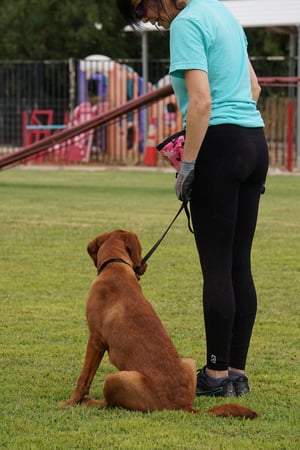
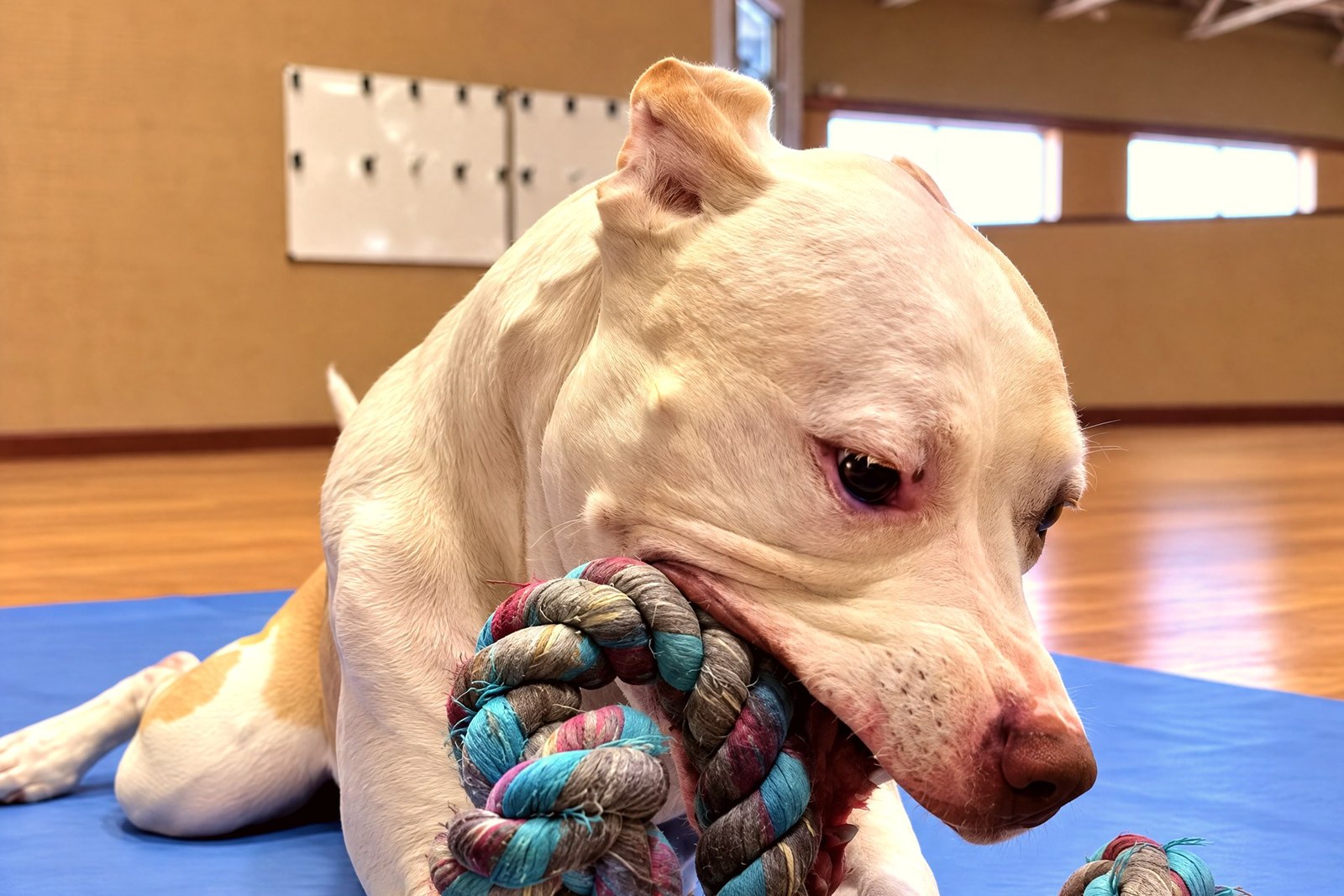
Stop puppy nipping around kids by ending play the instant teeth touch skin, redirecting your puppy to a chew toy, coaching your kids to move slow and stay calm, and keeping an adult in charge of supervision until the habit fades.
"We were crazy and rescued two puppies while having a 1 year old and another on the way."
Zachary P., Cave Creek
That family's board and train stay is one of more than 2,000 reviews (4.8 stars) families across Scottsdale and Cave Creek have left for Partners Dogs, and the nipping-around-toddlers scenario is one of the most common calls the front desk takes. Puppy teeth are sharp and kids move fast, and that combination can make an easygoing family feel like they made a mistake. They did not. What follows is the household plan, not just the puppy plan. It gets a family through this stage with fingers, sleeves, and confidence intact.
Is Puppy Nipping Around Kids Normal or a Warning Sign
Puppy nipping is a developmental stage, not aggression, but the supervision habits that prevent real bites are worth building now, while the stakes are still low. A puppy explores the world with its mouth because that is the only tool it has had since it could walk. Littermates yelped and stopped playing when a bite landed too hard, and a young puppy has not yet learned that human skin does not work the same way as a sibling's fur.
/Programs/Foundation%20Camp/Step%203%20Transition%20(1).jpeg?width=1200&name=Step-3-Transition-1.jpeg)

The American Veterinary Medical Association's National Dog Bite Prevention Week materials put real numbers behind why supervision matters at every age of dog: millions of dog bites happen in the United States every year, and children account for roughly half of those injuries. The AVMA's guidance on the fix is direct, urging that children never be left unsupervised with a dog, since even a familiar, well-trained family pet can react unpredictably in the wrong moment. That statistic covers dog bites broadly rather than a claim that ordinary puppy mouthing turns into an injury; the supervision principle still matches what Partners Dogs has seen across 28 years and 70,000+ dogs, that a household with a nipping puppy in it is exactly where supervision habits built now pay off later.
If you want the mechanics behind bite inhibition itself, from teething biology to the yelp-and-stop method, the mouthing and nipping behavior page walks through it in more depth. This piece stays focused on the part that page does not cover: what to change on the kid side of the house.
What Should You Teach Your Kids to Do Differently
The fastest-moving kid in the house is usually the biggest predictor of a hard nip, so the training that fixes this starts with the children, not only the puppy. Fast, jerky movement is exciting to a puppy, and a puppy that is excited grabs with its mouth the way it would grab a littermate mid-chase. Running, squealing, and quick hand movements near a puppy's face all read as an invitation to play rough.
Teach kids a short list of habits instead of a long lecture:
- Walk past the puppy, do not run, even in the backyard.
- Keep hands low, slow, and away from the puppy's face.
- Use a calm voice instead of a high, excited one when the puppy is nearby.
- Offer a closed fist for a sniff instead of open fingers.
- Stand still and fold arms if the puppy starts mouthing, rather than pulling away, which turns a nip into a chase game.
Practice these as a game, not just a rule, with a five-minute "slow hands" drill after dinner.
How Do You End Play the Moment Teeth Touch Skin
The same game-over signal has to come from everyone who touches the puppy: parents, grandparents, and older siblings included, or the puppy is getting two different lessons from two different teachers. When teeth touch skin, whoever is closest calmly says one word such as "done," then stands up and turns away for a few seconds. Skip the yelling and the fast hand-yank, since a quick pull often reads as more play, not less.
The point is not punishment. It is a consequence a puppy can connect to its own behavior: teeth on skin means the fun stops immediately. This only works if it happens the same way every time, from every person, which is why the rule belongs to the whole household and not just to whoever is doing the "real" training.
What Should the Puppy Get Instead of Hands
Keep an appropriate chew toy within reach in every room your puppy and kids share, so redirecting takes one second instead of a chase across the house. The moment you end play, offer a toy your puppy loves: a stuffable chew, a rope, or one of two or three favorites kept in rotation so none of them go stale. A puppy that gets a toy in its mouth within seconds of nipping learns the substitution fast.
Keep a toy basket in the room where kids play the most, not tucked away in a crate across the house. A redirect that requires a chase across the house is the step families skip first when life gets hectic.
Size the plan to your puppy
Not sure how much structure your puppy needs
Answer a few questions and get a program recommendation built around your puppy's age, household, and how much time you realistically have for training.
How Do You Structure Supervision That Fits a Busy Household
A baby gate or exercise pen is not a failure of supervision, it is supervision, built into the house itself instead of depending on one adult's attention span all day long. No parent watches every interaction between a puppy and a toddler for twelve straight hours. Dinner needs cooking, a phone rings, an older kid needs help with homework, and that is exactly when an unsupervised nip tends to happen.
Build physical separation into the day on purpose, not as a last resort after something goes wrong:
- A gate between the kitchen and the living room during meal prep.
- An exercise pen or crate with a stuffed chew during homework time.
- A closed door for the puppy's own nap, which lowers overtired nipping later in the day.
Families who want one-on-one, in-home-style coaching on this exact routine often start with Private Lessons. A trainer builds the plan around your rooms, schedule, and kids instead of a generic checklist.
How Do You Reward the Behavior You Want From Both Ends of the Leash
Praise the moment your puppy chooses gentle over grabby, and praise your child the same way for staying calm, so the whole household is reinforcing one shared standard. Puppies repeat what gets attention, so mark and reward soft mouths, four paws on the floor, and a puppy that sits still for a gentle pet.
Coach kids into that same reward loop instead of leaving them as bystanders.
"Our pup had a wonderful experience and was super responsive to the training. Not only did our pup learn manners, but we were also able to have him work with my children who gained a ton of confidence in handling him."
Jodi H., Cave Creek
That is the outcome worth building toward: kids who know exactly what to do, not kids who are simply told to stay away from the puppy. Group Classes build this directly into the curriculum, starting with Pre-School Puppy for dogs still working through this exact stage, with age-appropriate handling work kids can do alongside a parent so the whole family learns the same cues instead of just the puppy.
When Does Puppy Nipping Need a Professional Look
Most puppies phase out hard mouthing as their adult teeth come in and they get more bite-inhibition reps under their belt, but persistent, escalating, or genuinely hard-bite nipping past the puppy stage is worth a professional look rather than more months of DIY management.
"We had a great experience with Partners! Our dog no longer bites/mouths from teething, she walks well on a leash and she goes in to her crate quietly at night."
Maggie F., Cave Creek
It is exactly the mouthing-specific outcome families come in asking for.
Signs it is time for an evaluation: nipping getting harder instead of softer with age, nipping with no obvious trigger, or kids who have started avoiding the puppy out of fear. A PD360 Assessment scopes what is happening: developmental mouthing, an under-socialized puppy, or something that needs a structured plan, and sets a clear baseline for the family.
Key takeaways
- Ending play the instant a puppy's teeth touch skin, every time and from everyone in the household, teaches a puppy that teeth on skin stops the fun immediately.
- Millions of dog bites happen in the United States each year, and children account for roughly half of those injuries, according to the AVMA's National Dog Bite Prevention Week data.
- Most puppies phase out hard mouthing as their adult teeth come in and they get more bite-inhibition reps under their belt.
- Partners Dogs' Pre-School Puppy class builds kid-safe, age-appropriate handling into every session so the whole family learns the same cues together.
- A PD360 Assessment sets a clear baseline for whether nipping is normal development or something that needs a structured plan.
Frequently Asked Questions
Is it normal for a puppy to nip harder at my kids than at the adults in the house?
Yes. Kids move faster, talk in a higher pitch, and get down to the puppy's level more than adults do, and all three read as play invitations to a puppy. Teaching kids the slower, calmer habits above, rather than just keeping them away from the puppy, is what stops the play-bite response.
What should I do if my puppy grabs at my child's shoelaces or sleeve while they are running?
Stop the movement first, since a moving target triggered the grab. Have your child stand still, fold their arms, and stay quiet while an adult redirects the puppy to a toy. Long term, practice "walk, don't run" drills in the yard, and keep a leash on the puppy during high-energy play so you can separate them calmly.
How long does it typically take for puppy nipping around kids to stop?
There is no fixed number of weeks, since it depends on age, breed energy, and how consistently the household applies the rules. Most puppies phase out hard mouthing as adult teeth come in and bite-inhibition reps add up. Household consistency matters more than the calendar.
Should my kids be the ones giving the puppy commands and rewards?
With supervision, yes. A puppy that only takes cues from one adult has not learned the cue, it has learned one person's voice. Age-appropriate handling practice, coached by a parent or trainer, builds a puppy that listens to the whole family.
When does puppy nipping around kids need a professional evaluation instead of home management?
Get an evaluation if nipping is getting harder rather than softer as the puppy ages, if it happens without any obvious trigger like rough play or overtiredness, or if your kids have started avoiding the puppy out of fear. A PD360 Assessment sets a clear baseline so you know whether you are managing a normal developmental stage or something that needs a structured plan.
When should I start group dog training classes in Scottsdale, and which one is best for a nipping puppy?
Start as soon as your puppy is old enough for its foundational vaccines. For a puppy still working through the nipping stage, Pre-School Puppy is the best starting point in Partners Dogs' Group Classes at the Scottsdale campus, serving North Scottsdale and the 85255 and 85266 area. Every session builds kid-safe, age-appropriate handling so the whole family learns the same cues together.
Bring the whole family in
Kids and puppy, learning the same rules
Group Classes in Scottsdale and Cave Creek build kid-safe handling into every session, so your whole household learns the same cues at the same time.
/Resources/Blog%20and%20Training%20Tips/Boarding%20for%20reactive%20dogs%20(2).jpeg?width=800&height=450&name=Boarding%20for%20reactive%20dogs%20(2).jpeg)