In short
Come when called is built on motivation, not correction: reward every honest return, add a long line for distance, and layer in obedience only once recall is consistent. That is what gets a dog back through an open gate, away from a coyote crossing a Scottsdale wash, or settled instead of bolting the front door when a guest walks in.
A reliable recall is the difference between a dog you have to manage and a dog you can actually live with. It is the command that gets your dog back when a gate is left open, when a coyote crosses the wash, or when a guest walks in the front door. Here is how we build a recall that holds the first time, every time.
How Recall Training Actually Works
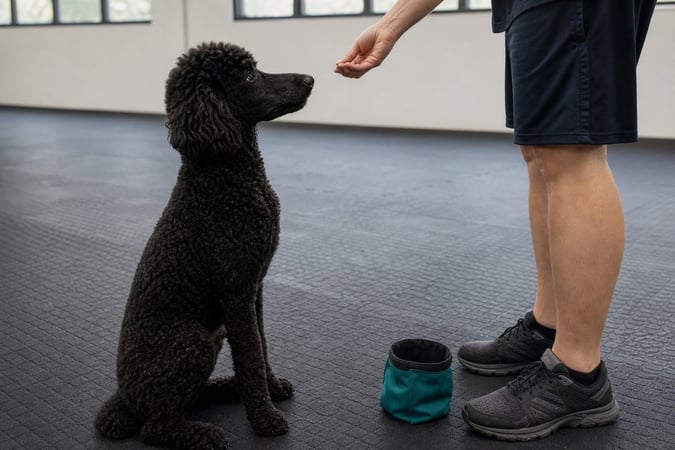
Recall is built on motivation before it is built on obedience. When your dog turns and comes to you, pay him. Food, a toy, or genuine, enthusiastic praise all work, and the payment has to feel worth the trip every single time.
- Set the foundation at meal times. Most dogs are highly food motivated, so calling your dog to his bowl builds a routine where coming to you is always the right answer.
- Layer in obedience once he is consistent. After your dog reliably comes, ask for a sit or a down when he arrives. That turns a recall into a finished behavior instead of a drive-by.
- Do not reward a half effort. Paying for a slow, half-hearted return teaches your dog that half efforts are enough.
- Do not build recall on fear. A dog who thinks coming back means the fun stops, or that something unpleasant is waiting, will get slower every week. Recall has to be the best decision available to him, every time.
What to Do When Your Dog Will Not Come at All
If your dog simply leaves when called, go back to routine, reward, and motivation, then add a long line.
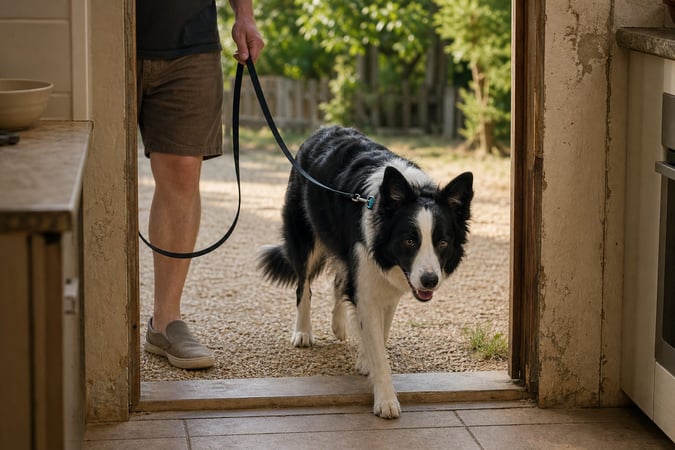
A long line lets you create gentle drag when your dog moves away instead of a hard correction. Stepping on the line slows him and encourages him to turn and make eye contact. Step lightly, because stopping a dog abruptly at speed risks injury. The moment he looks back at you, praise him and encourage him in with real energy. The more enthusiasm you show, the faster the response.
Two safety rules that are not optional. Long lines should not have handles, because handles catch on everything. And never wrap a long line, or any leash, around your neck, hand, or arm.
Do not wait until your dog hits the end of the line to call him. By then he has built up too much speed and drive to turn cleanly.
When Your Dog Runs Toward a Distraction Instead of You
Sometimes a dog is not ignoring you so much as heading toward something: reacting to another dog, patrolling the fence line, or chasing whatever just moved. In those cases recall is not really the problem. The problem is that your dog does not believe staying near you is the rule.
Work basic control first, especially holding a heel position. That teaches your dog that staying at your side is the default, which is far more useful than only teaching him that leaving is wrong. If your dog's recall keeps breaking down around specific triggers, our guide to rebuilding a dog's recall when he stops listening covers what is going on underneath, and whether the fix is more reps at home or a structured program like Foundation Camp.
How to Recall Two Dogs at Once
Dogs feed off each other, so your tone and energy matter more with two dogs than with one.
- Train each dog individually before you train them together.
- Remember dogs know when you are not paying attention. Focusing on one dog opens the door for the other to test you.
- Go back to basic obedience whenever things fall apart.
- Tell one dog to stay, then calmly call the other. An excited voice will break the stay on the wrong dog. A calm voice keeps both of them listening.
Most Partners families get their first real practice recalling around other dogs and handlers in Group Classes, since a controlled group is a far safer place to work out the kinks than an off-leash park full of strangers.
Stopping Door Dashing With a Recall Foundation
Put your dog in a sit or a down, open the door, close it again, and reward him for holding position. Build from there. With two dogs, put both in a down stay and call them out one at a time. This is genuinely difficult and worth every session you put into it.
One thing that will set you back every time: yelling. Shouting at a dog who is already unsure drives him further away instead of bringing him back.
Next step
Want a Trainer to Build the Recall With You
A PD360 assessment maps exactly where your dog's recall breaks down, distance, distraction, or motivation, so practice stops being guesswork.
Recall Training for Deaf Dogs
A disability calls for an adjustment, not an exception. General obedience and recall are both very achievable with a deaf dog.
Hand signals do the job a verbal cue would normally do, and the vibration feature on an electronic collar can replace a verbal recall cue for getting your dog's attention at distance. Lean heavily on reward-based work so your dog learns to check in with you often for direction, since he cannot rely on hearing you from across the yard.
When Your Dog Will Not Come Because of the Leash
This dog has learned that recall predicts the end of his freedom. The fix is to break that association.
- Practice recalls with rewards and no leash at all.
- Call him in, go through the motions of clipping the leash, then reward him and release him without actually attaching it.
- Use the sound of the clip on its own until it stops meaning anything, then reward him for holding position even while he hears it.
A Recall That Holds Under Real Distraction
Recall training is slow, and then it is suddenly reliable. Consistency, patience, and payment your dog actually values will get you there. A dog who comes when called is a dog you can take to Brown's Ranch or Cave Creek Regional Park without a second thought, and a dog you stop worrying about every time a door opens or a gate is left ajar.
Partners Dogs has trained dogs in Arizona for 28 years, since 1997, starting at our original Cave Creek campus and continuing today at our Scottsdale campus as well. If recall is one gap among several, a PD360 assessment maps out exactly what is holding your dog back and how quickly it can close.
Frequently asked questions
How long does it take to teach a dog to come when called?
Most dogs start responding reliably in the yard within a few weeks of consistent, rewarded practice. Off-leash reliability around real distractions, other dogs, a coyote, an open gate, takes longer and depends on how consistently every person in the house rewards a genuine return.
What if my dog only comes when I have a treat?
That usually means food has been the only motivation offered. Mix in a toy, genuine praise, and physical affection so recall stays strong even on days you do not have food in your pocket, then wean off treats gradually once the behavior is consistent.
Is it too late to teach recall to an adult dog?
No. Recall can be built or rebuilt at any age. An older dog with an established habit of ignoring the cue may need a fresh word or hand signal and a long line to relearn the skill without falling back into the old pattern.
Should I correct my dog for coming to me slowly?
No. Correcting a slow return teaches a dog that coming back at all is risky, which makes recall worse, not better. Reward every honest return, even a slow one, and work on speed as a separate, positive rep.
What is the safest way to practice recall around distractions?
Start on a long line without handles in a low-distraction area, then add distance and distraction gradually. Step on the line instead of yanking it to slow your dog, and never wrap a leash or long line around your hand, wrist, or neck.
Ready for more structure
Give Your Dog a Recall That Holds Anywhere
Foundation Camp puts a trainer on recall and every other foundational skill for fourteen nights, so your dog comes home already listening instead of you starting from zero.
Keep reading