In short
Doggy daycare is good for the right dog, but it is the daycare itself, not daycare in general, that decides the outcome. A strong program in Scottsdale or Cave Creek runs a real assessment before day one, keeps a low dog-to-staff ratio (Partners Dogs runs about one trainer per 10 dogs), and has staff trained to read body language before a scuffle starts. A weak one just rehearses whatever anxiety or reactivity your dog already carries.
Every daycare's marketing sounds the same: your dog will play all day and come home happy. That is not automatically true, and it depends entirely on the daycare. Partners Dogs runs a version of it ourselves, DaySchool, daycare paired with daily training for dogs who are already genuinely social. Our answer, as a behavioral training school and not just a daycare operator, is yes, for the right dog. Here is what a good daycare actually gives your dog, and what to ask before you pick one, whether that is us or somebody else.
What Doggy Daycare Actually Does for Your Dog
Good daycare is not only a fix for problems you are already living with. It is one of the best tools there is for keeping those problems from starting in the first place, when it is done well.
- Socialization. Dogs need it, young dogs especially. A dog who never gets real exposure to other dogs and new environments tends to grow wary and anxious around whatever he missed, and that anxiety widens over time instead of fading on its own.
- A real physical outlet. Plenty of dogs, working breeds and adolescents especially, carry more energy than a house and a backyard can absorb, even a Scottsdale backyard with a pool. A high-energy dog left home alone all day does not get tired, he gets destructive. That energy is going somewhere either way, and daycare gives you a say in where.
- Training folded into the day. Some daycares, ours included, layer real training into the day instead of only supervising free play. That matters, because a dog who listens in your kitchen and not around ten other dogs has not actually learned the skill yet. Trained staff also teach dogs how to play appropriately, since roughhousing is fine right up until it is not, and someone needs to be watching that line.
- A break for you. We all love our dogs. They are also a lot, some days. A dog who comes home mentally and physically worked is a dog you actually enjoy having around that evening.
How to Choose a Good Daycare in Scottsdale or Cave Creek
Franchising turned daycare into a land grab over the last few years, and the brochures all read the same. These are the questions that actually separate a good one from a bad one.
Ask About Staff Experience and Training
Whatever the sign out front says, the people running a daycare floor need real grounding in dog behavior, not a weekend orientation. Daycare is a high-arousal environment, and staff who cannot spot trouble building, and either defuse it or step in, can end up with your dog in a fight. Injuries are never fully preventable in a group setting, but the gap between trained and untrained staff is enormous.
Ask About the Dog-to-Staff Ratio
This is the number that tells you the most, and the one daycares are least eager to volunteer. Daycare can be a genuinely profitable business, and the fastest way to widen the margin is to cut staff. Some operations run more than twenty five dogs to a single handler, which makes real supervision close to impossible. Partners Dogs staffs at about one trainer per 10 dogs specifically because that gap is where fights and injuries happen. Ask directly, and look for small groups with real coverage, not a big room and one person watching a phone.
Ask About Assessments Before Day One
An assessment before the first day is a minor hassle, and it is a good sign. It confirms your dog is a fit for the group, and just as importantly, it confirms every other dog in that group was screened too. A dog showing heavy pushiness, guarding, or anxiety needs a training plan first, not an open invitation to tomorrow's playgroup. A daycare that skips this step is putting your dog in a room with whoever walked in that morning.
Look at the Play Space Itself
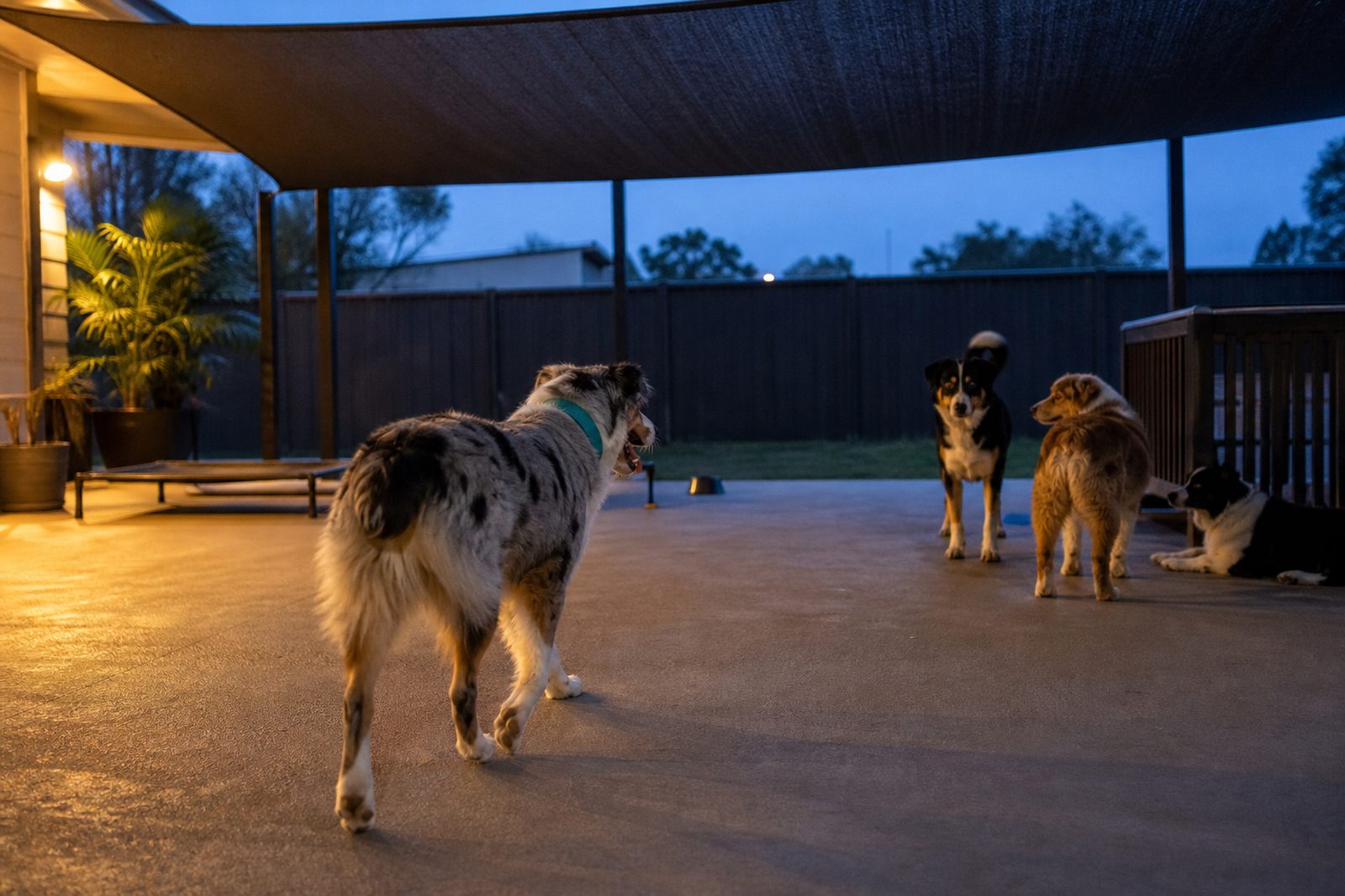
Cleanliness is the obvious thing to check. Safety gets overlooked in favor of play equipment that photographs well. The safest play yards are usually fairly bare. Watch for toys that can be shredded and swallowed, equipment that blocks a handler's sight lines or could tip over mid-play, and water features deep enough to be a real hazard for a small dog.
Next step
See What a Well-Run Daycare Day Looks Like
DaySchool pairs real supervision with daily training, at the ratio and the assessment standard this whole guide is about.
What If My Dog Is Anxious or Reactive Around Other Dogs?
Then a big, mixed daycare group is not where you start. There is a persistent idea that exposure alone fixes this, that a dog who is nervous or reactive around other dogs will simply get used to it if he spends enough time around them. He will not. A dog who is already over threshold around other dogs rehearses that reaction all day in a mixed group and gets better at it, not less anxious about it.
A dog like this benefits from structure before he benefits from a crowd. A dog who is anxious or reactive around other dogs usually needs a plan built around that specific problem, not a bigger room. A PD360 assessment maps out exactly what is driving the reaction, and depending on what it finds, that can mean a structured, lower-stimulation setting like DayCamp, which is built for reactive, fearful, or undersocialized dogs rather than an open mixed group. For dogs further along that spectrum, the assessment may point toward a dedicated behavior program before daycare of any kind is the right call.
The Bottom Line: Is Doggy Daycare Good for Your Dog?
Daycare is a genuinely good tool for socialization, exercise, and burning off energy that would otherwise go into your baseboards, and it is only as good as the people watching the room. Ask about staff experience, ask about the ratio, ask about assessments, and walk the floor before you commit, whether that is at DaySchool or somewhere else.
If you want your dog to come home tired, better mannered, and genuinely safe, a PD360 assessment is the fastest way to find out whether he is ready for a group day now or needs a bit of structure first.
Frequently asked questions
Is doggy daycare good for every dog?
No. Daycare is a strong tool for dogs who are already reasonably comfortable around other dogs and people. A dog who is anxious, reactive, or fearful around other dogs usually needs structure or an assessment first, not a mixed playgroup.
What dog-to-staff ratio should a good daycare have?
Look for something close to one trainer per 10 dogs, the ratio Partners Dogs runs on. Some daycares run more than twenty five dogs to a single handler, which makes real supervision, and real intervention when something starts to go wrong, close to impossible.
Does my dog need an assessment before starting daycare?
Yes, and any daycare that skips it is a red flag. A real assessment before day one confirms your dog is a fit for the group and confirms every other dog in that group was screened the same way. A daycare that skips this step is putting your dog in a room with whoever walked in that morning.
What if my dog gets overwhelmed or anxious around other dogs at daycare?
Then a big mixed group is not the starting point. Rehearsing that reaction in a crowd tends to make it worse, not better. A structured, lower-stimulation setting like DayCamp, or a dedicated behavior program depending on severity, is usually the better starting point, and a PD360 assessment is how you find out which one fits.
How can I tell if a daycare's play space is actually safe?
Walk it in person before you sign up. The safest play yards are usually fairly plain: no toys that can be shredded and swallowed, no equipment that blocks a handler's sight lines, and no water feature deep enough to be a real hazard for a small dog.
Ready when you are
Give Your Dog a Structured Day Instead of a Free-for-All
DayCamp is built for dogs who need more structure than a mixed playgroup, reactive, fearful, or newly adopted, with a PD360 assessment first to confirm it is the right fit.
Keep reading