First hour first
My dog attacked another dog: whether it turns into a Behavior Camp case or a Transform Camp case depends on what happened in the first few seconds, not on how frightening the moment felt, and a same-day assessment is what tells you which one you are looking at.
“My dog attacked another dog.” If that is where you are right now, a few hours out from a walk near Scottsdale or a park in Cave Creek, the adrenaline probably has not worn off yet and neither has the fear. This walks through the first hour, who needs a phone call instead of a search engine, and how to tell a scuffle apart from a serious bite using what you saw rather than how scared you were. None of this is legal advice: anything binding about liability, citations, or an insurance claim belongs with animal control, your own veterinarian, and your insurer, not a training blog.
The First Hour: Safety, Contact Details, and What to Write Down
Separate the dogs first, check for injuries second, and get contact information before anyone leaves. Use a car, a fence, a jacket over one dog's head, whatever gets space between them without a hand near either dog's mouth. Once they are apart, look both dogs over. A wet patch of fur can hide a puncture that will not stop weeping for an hour, so a glance from a distance is not the same as knowing there is no wound.
Exchange information with the other owner before either of you drives off, even if the moment feels tense. Write down:
- The other owner's name, phone number, and address if they offer it
- Whether either dog has current rabies vaccination proof, and who holds it
- The exact location, the time, and whether either dog was on leash
- What led up to it: a toy, a doorway, a squirrel, a greeting that went wrong
- Any witnesses and how to reach them
Photograph any visible injury and the immediate area before you leave. Keep the conversation to facts and contact details. What gets said in the heat of the moment can matter later, and neither owner is in a state to make promises about fault or vet bills standing on a sidewalk.
Reporting, and Who to Call Rather Than Search
The first call is to your local animal control non-emergency line, not a search engine. If either dog has a wound worse than a scrape, the next call is a veterinarian, the same day, even if the dog seems fine on the walk home. Puncture wounds from teeth trap bacteria deep under skin that can look intact. If the other owner mentions a vet bill or wants one covered, that conversation belongs with your insurance carrier (homeowner's, renter's, or pet), not something to negotiate at the scene.
Animal control involvement does not by itself create a dangerous dog designation. What happens next depends on your specific city or county's ordinance, the dog's history, and the severity of the incident, and only animal control can tell you which of those applies at your address. If you do get a call or a letter from an officer, that is the moment for a direct answer from them, not a guess from a training article.
- Animal control's non-emergency line: for any incident involving a bite or an off-leash dog
- Your own veterinarian: for either dog, the same day, even without a visible wound
- Your insurer: before you agree to cover anything out of pocket
Partners Dogs cannot advise on citations, liability, or what a specific ordinance requires. That is outside a trainer's job, and getting it from the wrong source costs more than waiting a day to ask the right one.
My Dog Attacked Another Dog: Scuffle or Attack?
A scuffle is loud, brief, and ends the instant a body gets between the dogs; a real attack involves contact that holds, a wound, or a dog that will not disengage. The two sound almost identical at first, which is why details matter more than how frightening it felt. Fear does not scale with severity, and a loud bark-and-lunge match with no contact can feel worse in the moment than a fast, silent bite that ends before anyone reacts.
A few observable details separate one from the other:
- Duration: noise with no contact differs from a hold that outlasts the first attempt to break it up
- Contact and depth: a graze differs from a puncture, and a puncture differs from a tear
- Recovery: a dog that shakes off and moves on differs from one still fixated minutes later
- Pattern: a one-time trigger differs from a dog that has done this more than once
- Size and grip: a mismatch, or a dog that grabbed and held, changes the risk math even when the wound looks minor
Tension building on leash before either dog got close, rather than a sudden flashpoint, usually has a name of its own: leash reactivity that escalated into contact. A dog that has gone after others more than once, regardless of the leash, is closer to what the dog aggression assessment covers. Either way, this is a starting read, not a diagnosis: an assessment settles it with the dog in the room.
Walking, Boarding, and Daycare After an Incident
Most families manage three things differently right after an incident: how the dog walks, whether boarding or a day program still makes sense, and what a muzzle is for. None of this is punishment. It is management while you get a clearer read on the dog.
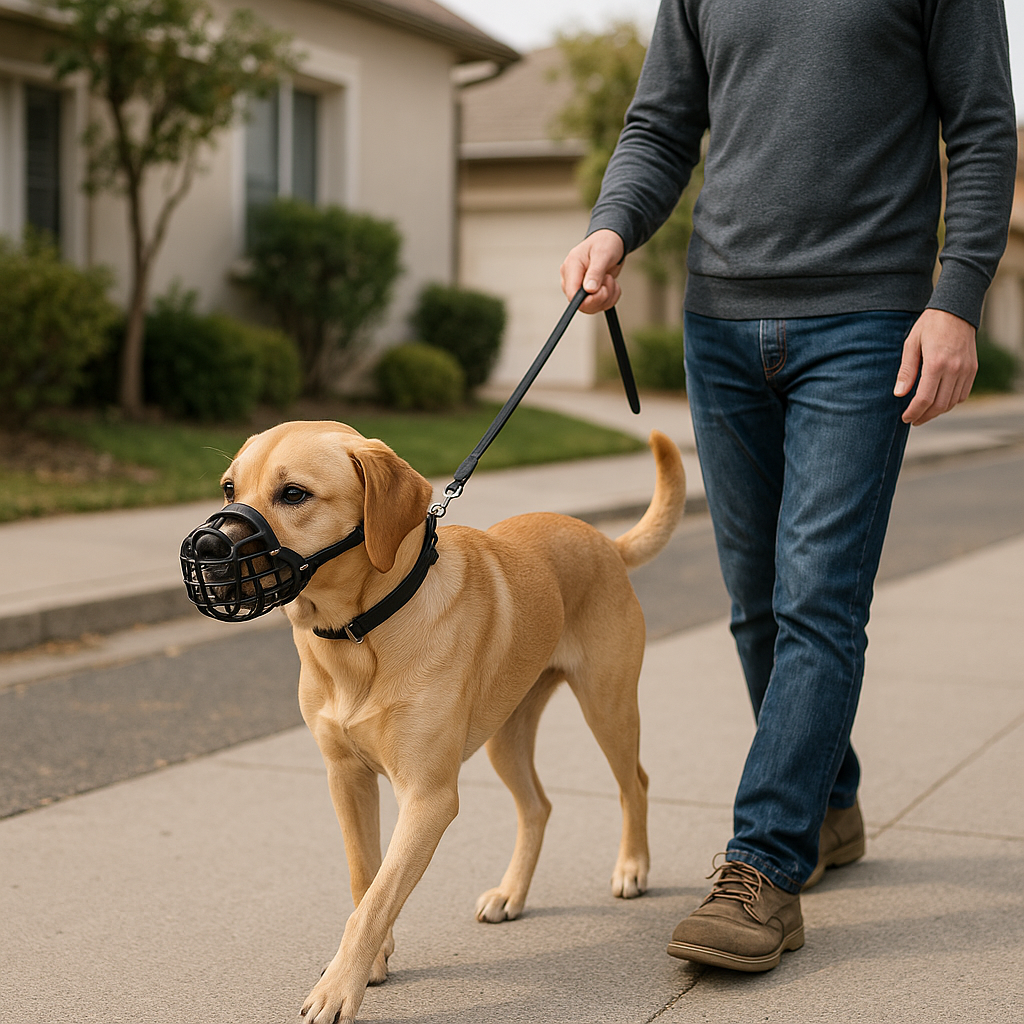
Walking usually shifts first: quieter streets, more distance from other dogs, and skipping off-leash areas until you know more. A well-fitted basket muzzle, the kind that still lets a dog pant, drink, and take a treat, is a legitimate tool for this window. Partners Dogs carries basket muzzles, including the Baskerville Ultra, in the shop, sized to the dog rather than guessed at.
Boarding and day programs are the harder call. A facility that has not met your dog is not in a position to say yes safely, and one that says yes without asking questions is not one to trust with this. A same-day assessment closes that gap: it gives any program a specific plan instead of a guess, and it is the same visit that would start Transform Camp if that turns out to be the level your dog needs.
“We looked for a boarding that can handle dogs with aggressive behavior.”
Miki P., Scottsdale
That is the plain version of what most families want in this window: a facility built to ask the right questions first, not one that pretends nothing happened.
What an Assessment Can Settle in a Single Day
A PD360 Assessment is what turns "how bad was this" into a direct read on the dog, in one visit, at either the Scottsdale or Cave Creek campus. It is the gate in front of both Behavior Camp and Transform Camp, and current pricing lives on the assessment page. If you would rather talk it through with a person first, you can schedule a call before booking anything.
What gets evaluated is not just the incident you describe, it is how the dog responds to a set of controlled situations that day: another dog at a distance, a stranger's approach, handling around the mouth and paws, resource presence, and recovery time after arousal. That gives a direct, current read instead of secondhand detail filtered through fear.
“We have a male American Pit bull Terrier named Cruz that was aggressive toward other dogs and strangers.”
Rodney H., Cave Creek
Families in that exact spot, with a dog that has already shown a pattern rather than one flare-up, are usually the ones who benefit most from getting the assessment scheduled quickly instead of waiting to see if it happens again.
When Transform Camp Is the Right Level, and When It Is Not
Transform Camp fits a dog with a documented bite history, a repeated pattern, or a size and drive that make the next encounter genuinely dangerous. The program runs 28 boarded nights plus 7 hours of private lessons, 12 Pet Parenting classes, and 24 DayCamp follow-up days across a 12 to 16 week arc that includes the follow-up coaching, built for this level of case rather than everyday obedience gaps.
Not every incident belongs there, and saying so plainly is part of taking a scared family seriously. A dog with one scuffle, no puncture, a fast recovery, and a single clear trigger is likely a lighter case: a stolen toy, a startled reaction near a gate, or a resource-guarding flare that never happened before. For that dog, Behavior Camp or a handful of private lessons is often the better fit, and a longer boarded program it does not need helps no one.
“Our dog Mac went in because he needed intensive training with dog aggression. I am so impressed with his behavior after 3 weeks.”
Dawna K., Cave Creek
None of this means you did something wrong. Dogs escalate for reasons tied to genetics and prior experience more than how they were raised. Transform Camp exists for the dogs at the harder end of that range, and an assessment tells you, without guessing, whether that is the dog in front of you. If you want more than one family's account, more are on the reviews page.
Frequently Asked Questions
Is my dog automatically a "dangerous dog" after one incident?
No, a single incident does not automatically create a formal designation on its own in most places. What happens next usually depends on severity, whether a bite broke skin, and local ordinance, and only your local animal control office can tell you what applies at your address. A behavior assessment is a useful step regardless of any official outcome, since it tells you what the dog needs going forward.
Do I have to report a dog-on-dog incident to animal control?
Reporting requirements vary by city and county, and this is not something a training article can answer for your address. Many jurisdictions do treat a bite that breaks skin as reportable, but the only way to know what applies at your address is to ask your local animal control's non-emergency line directly rather than guessing from an article.
Should my dog wear a muzzle after this happens?
A well-fitted basket muzzle is a reasonable management step while you get a clearer read on your dog, and it still lets a dog pant, drink, and take a treat normally. A muzzle in this window is a management tool while you get that read through an assessment, and it does not mean the dog is beyond help.
Can my dog still go to boarding or daycare while I sort this out?
Most programs, Partners Dogs included, want a current behavior read before placing a dog back into a group setting after an incident like this. A same-day assessment provides exactly that: a specific plan for group settings instead of a blanket yes or no based on a phone call.
Is Transform Camp always the answer after a dog attacks another dog?
No. Transform Camp fits a dog with a documented bite history, a repeated pattern, or size and drive that make another encounter dangerous rather than merely startling. A dog with one scuffle, a fast recovery, and a single clear trigger is often a better fit for Behavior Camp or a handful of private lessons. An assessment tells you which side of that line your dog is on, rather than guessing from how frightening the moment felt.
What settles it
Get a Direct Read on What Happened
A PD360 Assessment gives you an actual answer in one visit instead of a guess, and it is the same step that starts either camp if that turns out to be the right level.
Keep reading