Bottom line
Scorpion sting dog symptoms usually start with a sudden limp on one leg, sometimes with swelling, and sometimes with coughing. The Arizona bark scorpion is the only US scorpion of medical significance. When in doubt, bring your dog to the vet and let the exam decide.
- Sudden limping or a held-up leg is the classic sign. Many dogs feel a limb-fall-asleep sensation more than sharp pain, and coughing afterward is common (Texas A&M).
- Bark scorpion venom is neurotoxic: severe pain with little swelling. Worse cases can bring numbness, twitching, drooling, or breathing difficulty (University of Arizona).
- Symptoms usually start within 20 minutes and can build over the first 4 hours.
- Do not medicate at home. Vets prescribe dog-specific pain medication after an exam.
- This article never replaces veterinary care. If your dog was stung, call your vet or the nearest emergency clinic.
The short answer: watch for a sudden limp, swelling, or coughing, and bring your dog to the vet if you suspect a sting. This guide covers what a bark scorpion sting looks like on a dog, what to do in the first hour, what the vet will do, and how to keep scorpions away from your dog. For the other desert emergency every Arizona Pet Parent should know cold, read our rattlesnake bite protocol. Same keep-calm-and-drive logic, different venom.
What are scorpion sting symptoms in dogs?
The short version: a sudden limp on one leg is the tell. You may never see the sting itself.
Most dogs do not yelp and point at the spot. What you see instead is a dog that was fine a minute ago and now will not put weight on a leg, holds the paw up, or moves slowly like the leg feels wrong. Dr. Lance Wheeler, a clinical assistant professor at the Texas A&M College of Veterinary Medicine, says many pets do not feel sharp pain from the sting itself. They feel something closer to a limb falling asleep, and that strange sensation is what makes them limp.
Coughing afterward is common too, in Wheeler’s clinical experience. And do not wait for a big red welt: a bark scorpion sting is known for severe pain with little swelling, according to the University of Arizona. Watch the gait, not the skin. Wheeler’s rule: "If there’s lameness, sudden swelling, and known scorpions in the area, then I’d be suspicious and I would bring them in to a veterinarian" (Texas A&M). Limp plus scorpion country equals a vet visit.
Can a bark scorpion kill a dog?
The short version: severe outcomes in dogs are rare, but the bark scorpion is the one US scorpion worth taking seriously.
Here is the honest picture. The Arizona bark scorpion (Centruroides sculpturatus) is the only scorpion species of medical significance in the United States, per the University of Arizona. Its venom is neurotoxic. In people it can cause severe pain, numbness, drooling, muscle twitching, and breathing difficulty. Deaths are extremely rare.
For dogs specifically, the published record is thin, and we will not pad it. Wheeler spent four-plus years in a small animal ER and says he never saw a dangerous or life-threatening scorpion envenomation in a dog or cat. Published case reports of dogs stung by scorpions (a Brazilian species, not the bark scorpion) describe vocalization, rapid breathing, a racing heart, and recovery within 24 hours on supportive care. There is no published count of dog deaths from bark scorpions.
Two things still earn this scorpion your respect. Vets think in dose per pound, so a ten-pound dog and an eighty-pound dog do not get the same sting. Small dogs get the closer look. And neurotoxic symptoms can build over hours, which is why "he seems fine" at minute thirty is not a diagnosis.
"A bark scorpion sting in a dog is a vet decision, not a wait-and-see. The symptoms tell you something happened. The exam tells you what."
What should you do if your dog is stung by a scorpion?
The short version: note the time, call the vet, and drive. Your job is delivery, not treatment. One action per step:
- Keep the dog calm and still. Do not chase it around the yard trying to look at the paw. Carry a small dog. Walk a big dog slowly on a short leash.
- Note the time and what you see. Which leg? Limping, swelling, coughing, drooling? The vet will ask, and your memory at midnight is worse than you think.
- Leave the scorpion alone. Do not handle it to get a look. Note where the dog was: the woodpile, the back door, under the patio furniture.
- Call your vet or the nearest emergency clinic. Say "possible scorpion sting," describe the symptoms, and ask whether to come in. Wheeler’s guidance is plain: if you suspect a sting, bring them in.
- Drive. Most stings turn out to be minor, and the exam is how the vet tells the difference: "Most scorpions are benign, so we might not need to treat a sting, but it’s important to make that distinction with a physical exam," Wheeler says.
- Give nothing from the medicine cabinet. No human pain pills, no creams, no home dosing. The vet prescribes dog-specific pain medication after the exam.
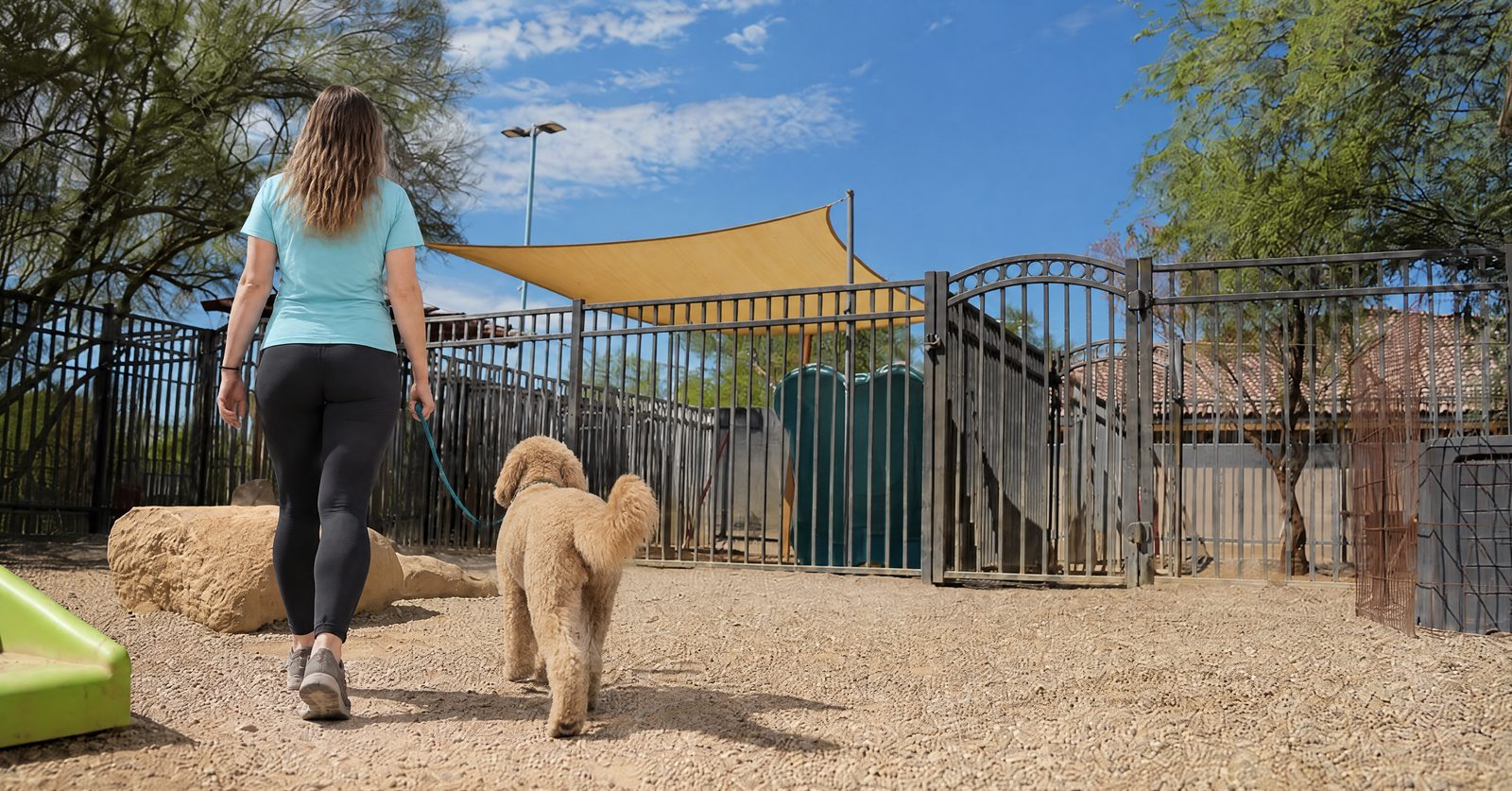
The same keep-calm-and-drive logic runs our rattlesnake bite protocol. Different venom, same principle: the clock belongs to the clinic, not the kitchen.
What will the vet do for a scorpion sting?
The short version: an exam first, then pain control. Most dogs go home with medication and monitoring.
The exam is the whole point of the visit. The vet checks the sting site, watches the gait, listens to the heart and lungs, and decides whether this is a benign sting that needs nothing or an envenomation that needs treatment. Wheeler is direct: most stings do not need treatment at all.
When the dog is clearly painful, the vet prescribes several days of pain medication: an anti-inflammatory formulated for dogs and cats, or a nerve-pain medication, per Wheeler. Dog-safe pain medication is not the human bottle with a smaller pill. Guessing at home risks the kidneys, the stomach, and the liver for zero benefit.
In rare cases, a more venomous sting can cause skin or tissue damage that needs extra veterinary care. Published case reports show dogs recovering within 24 hours on supportive care: IV fluids, local pain control around the sting, and monitoring. There is no home version of it.
This article is information, not veterinary advice. It never replaces your vet, and on a suspected sting the vet outranks everything you just read.
Why do bark scorpions show up in Arizona homes?
The short version: they live where you live. Bark scorpions are built for houses. Open desert is their second choice.
For Arizona dogs, the bark scorpion is the one that matters. It is a homebody species: researchers describe bark scorpions as synanthropic, meaning they live near people, and warm weather keeps them active across Arizona’s long warm season. They do not want your yard. They want shelter, and your house has more of it than the desert does. The yard walk that clears scorpion shelter is the same walk that clears snake shelter: one habit, two hazards.
They are nocturnal. Days are spent wedged into tight, dark cover: shoes by the back door, folded blankets, closets, woodpiles, the gap behind the patio furniture. Nights are for hunting, which is when your dog meets them: the late let-out, the midnight water bowl trip, the dog that sleeps by the slider.
The pattern in Scottsdale and Cave Creek is usually the same: homes near open desert with fresh bark and rock landscaping, block walls, and plenty of tight shelter. Finding one inside does not mean the house is dirty. It means the house is in Arizona.
How do you keep scorpions away from your dog?
The short version: you do not scorpion-proof a yard. You make it unwelcoming, and you check the dog.
Wheeler names two moves that actually work. First, pest control: if you live in a scorpion-heavy area, hire a company that targets scorpions specifically. General bug spray is not the same service. Second, hunt them with a blacklight. Scorpions fluoresce under ultraviolet light, so a UV flashlight on a night walk around the foundation, the woodpile, and the block wall shows you exactly where they travel. It is like scanning a bank statement for fraud. The light shows you the charges you never saw happen.
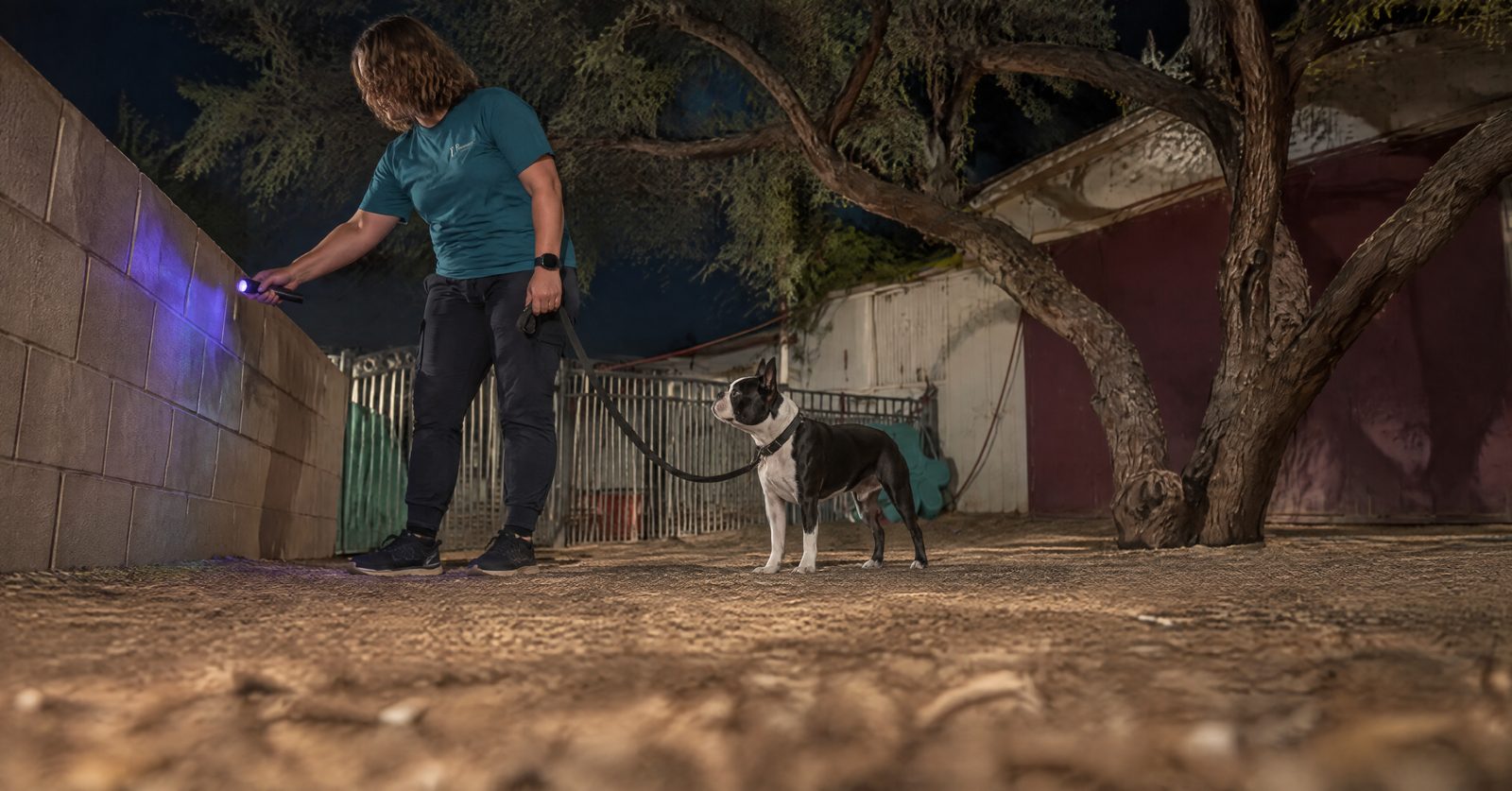
Around the house, cut the cover. Move woodpiles and dense ground cover away from the foundation and seal the gap under the back door. Shake out shoes left outside and blankets the dog sleeps on.
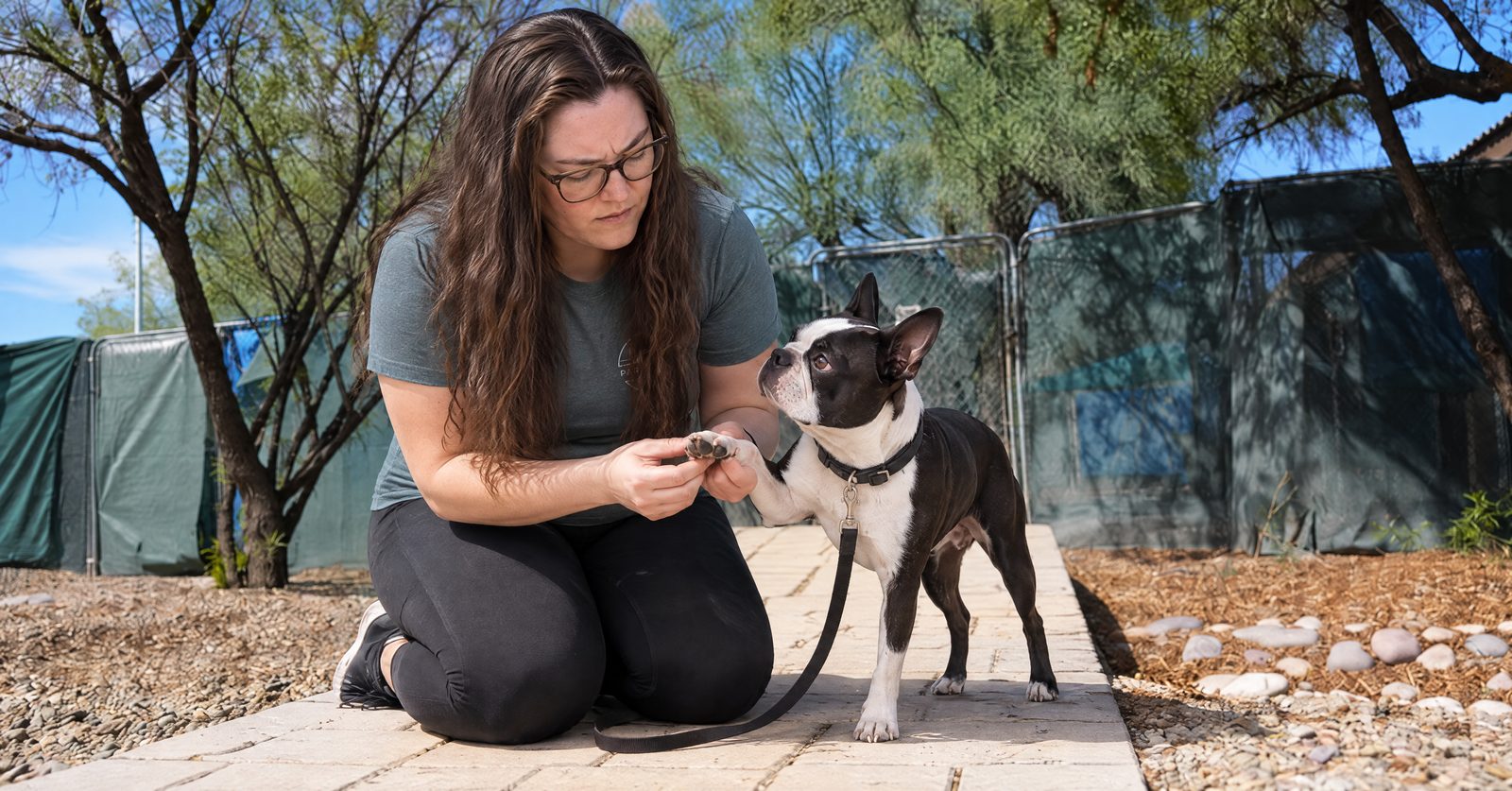
After hikes, run the same check you run for foxtails: paws, ears, armpits, belly. The habit is the same and it costs you ninety seconds. The training version of the habit - a dog that checks back with you instead of nosing along the block wall - is the leave-it default we proof in Group Classes at Partners. Desert hazards share a season, so pair this with our heatstroke signs guide before summer hiking months.
By the numbers
Myth vs. fact: scorpion stings and dogs
| Myth | Fact |
|---|---|
| A scorpion sting always leaves a big swollen welt. | Bark scorpion stings are known for severe pain with little swelling (University of Arizona). Watch the gait, not the skin. |
| If the dog seems fine after an hour, you are in the clear. | Neurotoxic symptoms can build over about 4 hours (University of Arizona). Bring the dog in and let the exam decide. |
| Give pain pills at home to buy time before the vet. | Vets prescribe dog-specific pain medication after the exam (Texas A&M). The drug and the dose are the vet’s call, not the medicine cabinet’s. |
Begin with the assessment
Build Your Dog’s Desert-Hazard Plan
Scorpions you manage; snakes you train. Start with a PD360 Assessment: a senior trainer reads your dog across nine dimensions and routes it to the right program, including Rattlesnake Avoidance Training for the desert hazard a dog can actually be conditioned to give space.
Key takeaways
Key takeaways
- Sudden limping or a held-up leg is the classic scorpion sting sign in dogs. Coughing afterward is common. Many dogs feel a limb-fall-asleep sensation more than sharp pain (Texas A&M).
- The Arizona bark scorpion is the only US scorpion of medical significance. Its venom is neurotoxic: severe pain with little swelling, and in worse cases numbness, muscle twitching, drooling, or breathing difficulty (University of Arizona).
- Symptoms generally start within 20 minutes, can build over 4 hours, and usually resolve within 72 hours.
- Do not medicate at home. Bring the dog in; the physical exam decides whether treatment is needed at all.
- Prevention that works: scorpion-targeted pest control and blacklight night sweeps. Scorpions are nocturnal and fluoresce under UV (Texas A&M).
- This article never replaces veterinary care. A suspected sting is a vet visit, full stop.
Frequently Asked Questions
Can a scorpion sting kill my dog?
Severe outcomes in dogs are rare. A Texas A&M emergency veterinarian reports never seeing a dangerous or life-threatening scorpion envenomation in a dog or cat across four-plus years of ER work. The bark scorpion is still the one US scorpion of medical significance. Do not let the reassurance slow you down: bring the dog in.
How soon after a sting do symptoms show up?
Usually within 20 minutes, and they can keep worsening through the first 4 hours, per the University of Arizona. That is why the first hour looking fine means little. Watch the dog through the full window, and get the vet involved early instead of timing it yourself.
What can I do at home before we reach the vet?
Keep the dog calm and still, note the time and every symptom you see, and call the clinic while you get ready to drive. That note is the same observation skill our trainers coach in every program: watch the dog, timestamp the change, report exactly what you saw. Do not give human pain medication. Vets prescribe dog-specific pain medication after the exam.
Are bark scorpions a year-round problem in Scottsdale and Cave Creek?
They are warm-weather active and nocturnal, and they shelter indoors, so encounters follow Arizona’s long warm season. Scorpion-targeted pest control and blacklight night sweeps are the year-round answers, per Texas A&M’s veterinary guidance.
What is the first step if I want a desert-hazard plan for my dog?
Medical first: save your emergency vet’s number in your phone tonight, before you need it at midnight. On the training side, start with a PD360 Assessment. It routes your dog to the right program, including Rattlesnake Avoidance Training for the desert hazard dogs can actually be trained to give space.
Where to go from here
Scorpions are part of the Arizona package, like heat and rattlesnakes. The plan is short: learn the limp, keep the dog calm, call the clinic, drive. Load the plan before the night you need it.

Scottsdale: 8642 E Shea Blvd, 85260. Cave Creek: 4640 E Forest Pleasant Pl, 85331. Serving the Phoenix Valley.
Route by fit
Build Your Dog’s Desert-Hazard Plan
Scorpions you manage; snakes you train. Start with a PD360 Assessment: a senior trainer reads your dog across nine dimensions and routes it to the right program, including Rattlesnake Avoidance Training for the desert hazard a dog can actually be conditioned to give space.