Straight answer
Summer demand for dog boarding in Arizona spikes because two things collide: owners travel through the hot months, and 100°F-plus heat makes leaving a dog home alone a genuine risk. A structured stay keeps your dog in AC and on routine, hearing the same cues. The right boarder turns time away into training.
- AAA projected a record 72.2 million Americans traveling over the July 4th week in 2026, more than 1.59 million of them in Arizona. Every one of those trips needs a plan for the dog.
- Phoenix averages 111 days at 100°F or higher per year. Heat turns "home alone for the weekend" from an option into a gamble.
- A good stay runs the same cues your dog hears at home: structure, routine, rest. A stressful stay is chaos with a price tag.
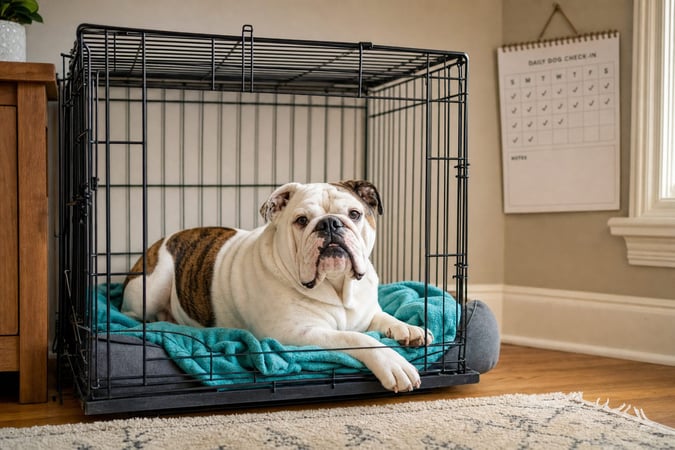
- A structured stay keeps your dog in AC and on routine: climate-controlled suites, daily rotations, feeding and meds on your schedule.
Every summer the same math hits: the trip is booked, the forecast says 112, and the dog you raised on a routine is about to spend a week without one. Summer heat drives Scottsdale boarding demand: travel season collides with 100-plus days of triple-digit heat, so suites fill and the home-alone option gets risky. This guide covers why, what a good stay looks like, what to ask any boarder, and what a stay at Partners includes.
Why does dog boarding demand spike every summer in Arizona?
The short version: everybody travels at once, and the heat takes the easy options off the table.
Summer is travel season. AAA projected 72.2 million Americans traveling at least 50 miles from home over the July 4th week in 2026, a record (AAA, retrieved 2026-09-16), with more than 1.59 million of them in Arizona (AAA Mountain West, retrieved 2026-09-16). Every one of those trips leaves a dog behind. Families that could ask a neighbor to swing by in October stop asking in July, because the math changes.
The math is the heat. Phoenix averages 111 days at 100°F or higher every year, and the average first 100-degree day lands on May 2. In 2025 the city hit 122 of them, with 37 days at 110°F or hotter (azcentral, retrieved 2026-09-16). That is a third of the year. For five months running, only full-time climate-controlled care is enough. The demand spike is two spikes stacked: peak travel and peak heat.
What makes leaving your dog home alone risky in an Arizona summer?
The short version: a house in July has one point of failure, and it is the AC.
In a mild month, a dog home alone is bored. In an Arizona summer, a dog home alone is one power outage from an emergency. Monsoon storms knock power out every summer, and an AC that dies at 2 p.m. turns a house into an oven by dinner. It is like wiring the whole house to one circuit breaker: nothing fails until the one thing fails, and then everything fails at once.
The second problem is routine. Dogs work in patterns. A dog left alone for a long weekend invents its own schedule, usually pacing the house and barking at the door. The patterns a stressed dog invents are the ones you spend September untraining.
A dog with no useful patterns invents its own.
That is the whole case for structured boarding in one line. The stay is a place where the day has a rhythm: wake, potty, exercise, rest, repeat. Time away either builds the score or erodes it. The difference is whether anyone is running the program.
What separates a good boarding stay from a stressful one?
The short version: the good stay runs the same cues your dog hears at home. The stressful one is a free-for-all.
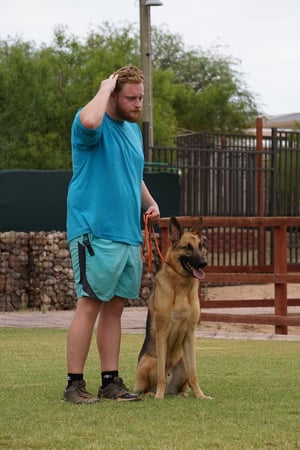
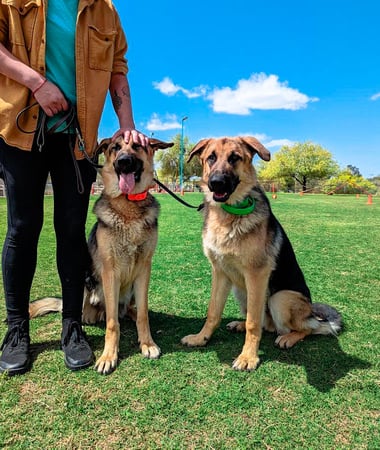
Your dog spent months learning sit, place, heel, and how to settle. Those behaviors hold up only while they keep getting used and paid. A stay that runs the same cues keeps the score climbing. A warehoused week sends you home to a dog that practiced chaos for seven days.
| A good stay | A stressful stay | |
|---|---|---|
| Daily rhythm | Fixed blocks: exercise, rest, potty, feeding on the dog's home schedule | Random: dogs out whenever staff gets to them |
| The cues | Staff use the same commands and markers the dog knows; training dogs keep their reps | Nobody knows what the dog was taught, so nothing is asked and nothing is reinforced |
| Heat plan | Climate-controlled suites, midday indoors, exercise in the cool hours, a plan for power outages | Dogs in outdoor runs at 2 p.m. because that is when the rotation came up |
| Rest | Real downtime between rotations; tired means settled | All-day open play; the dog comes home wired and fried, not tired |
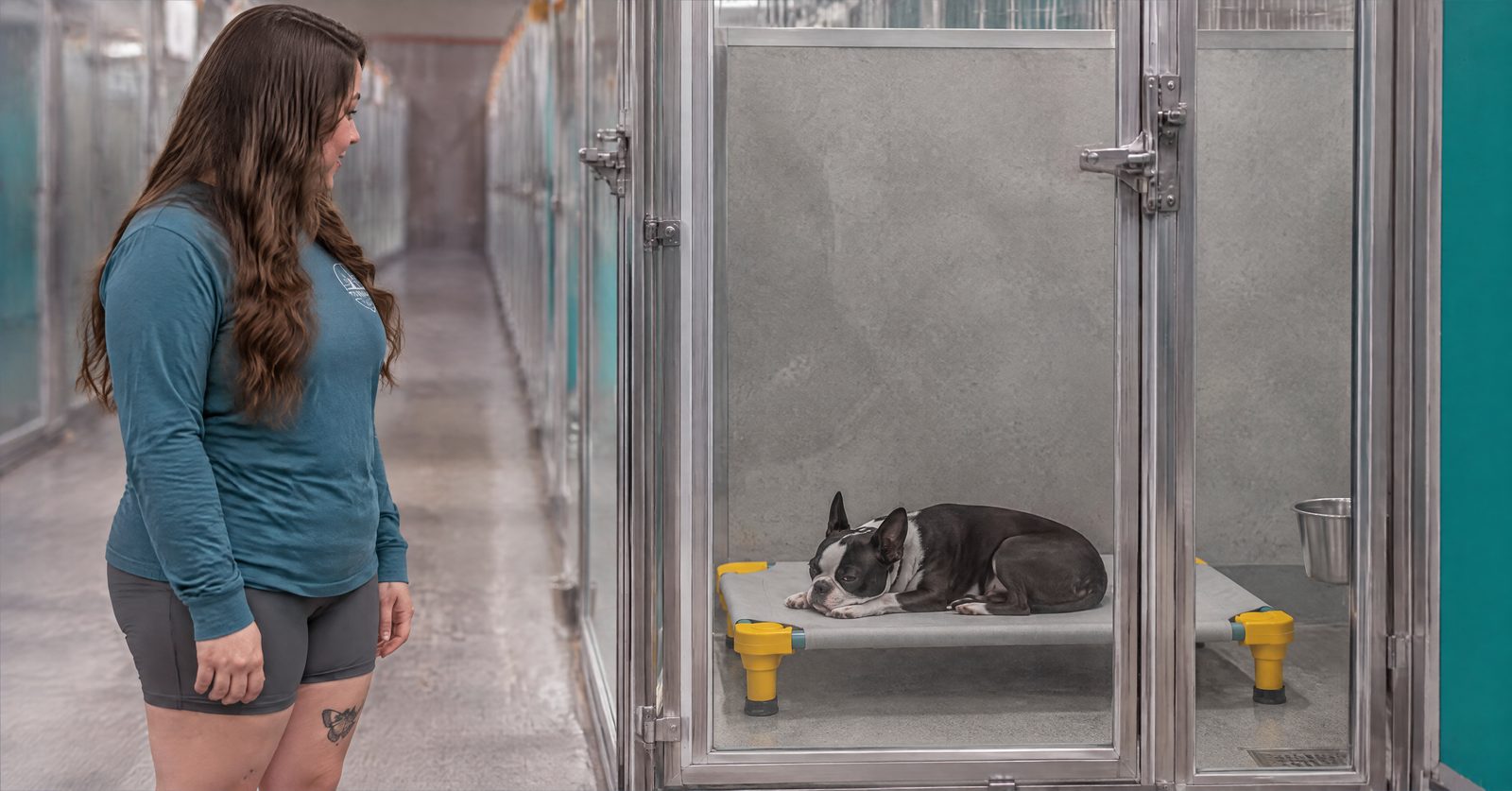
Exhaustion and over-arousal look alike in a busy dog. A dog run ragged in all-day play can pace the house for an hour after pickup, and the owner reads it as "he had so much fun." Fun has a shape. So does stress. Think of rest blocks like halftime: no team wins by sprinting all four quarters. Dogs are the same: the rest block is when the morning's work turns into a dog that can settle. Ask which one your dog is coming home with. Our trainers read the pickup the same way: a dog that crashes and sleeps for six hours after a week away had a week with no rest blocks. A dog that comes home tired and settled had a week with rhythm. The owner usually knows which one they picked up.
What should you ask any boarding facility before you book?
The short version: ask about staffing, heat, rest, and what happens when something goes wrong. Then tour the place.
This checklist is honest on purpose. Use it on us. Use it on the competitor down the street. The right answers do not change based on whose logo is on the door.
- Who is there overnight, staff or cameras? A person in the building beats a camera feed. Ask who is there at 2 a.m.
- How do you handle midday heat? Suites should be climate-controlled and exercise should happen in the cool hours. Demand a real answer for a power outage.
- Does the dog get real rest? Ask for the daily schedule. Exercise blocks plus rest blocks is the right shape. Dawn-to-dusk group play is a rave.
- How do you take in a new dog? Look for a trial day or meet-and-greet before the first overnight. A five-night stay should never be the first visit.
- What vaccines do you require? Bordetella, Rabies, and Distemper/Parvo are the standard trio. If they do not ask about vaccines, leave.
- How are medications handled? Meds given on your schedule should be part of the service.
- What is included? Get the full weekly total before you book.
- What happens if my dog struggles or gets sick? The answer you want is a plan: quieter suite, adjusted rotation, a call to you, a vet call protocol.
For the full version with the reasoning behind each question, see our post on 7 questions to ask about structured dog boarding in Phoenix. And if you are weighing an app sitter against a staffed facility, read pet-sitting apps vs structured dog boarding in Scottsdale first. The comparison is not flattering to the apps.
Your first step
Book your dog's summer stay
A summer stay includes a climate-controlled suite, daily rotations, feeding and meds on your schedule, and photo updates while you travel. Summer is peak season, so lock in your dates early.
What does a summer stay at Partners look like?
The short version: a climate-controlled suite run by trainers.
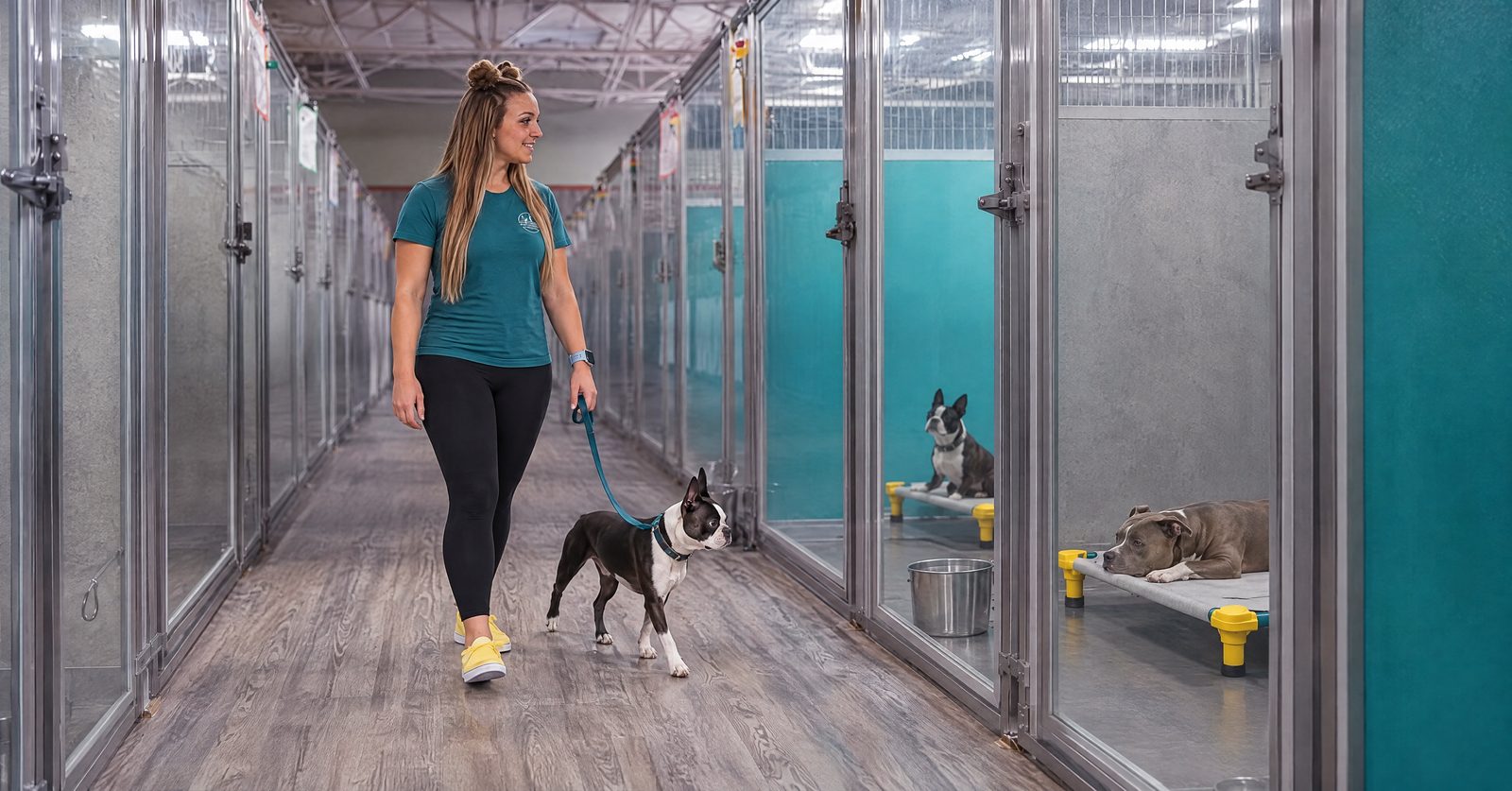
Every stay includes a private climate-controlled suite with a raised Kuranda cot, daily exercise and potty rotations matched to your dog's energy and social comfort, feeding and medications on your schedule at no extra charge, wellness checks with a call or text if anything looks off, and photo and video updates. Low staff-to-dog ratios, never a warehouse. The people running the day are trainers, so the handling matches the method: reward first, fair correction only after the dog knows the alternative, never out of frustration. For what stays cost, see how much dog boarding costs in Scottsdale. The trainers running the day are the same trainers running classes on campus: same markers, same cues, same standards. A stay never drifts into chaos because the people running it never drift off the method.
Two facts that matter in summer. Scottsdale has staff on-site overnight; at Cave Creek one of the owners lives on the property. We are closed to the public on Sunday, so drop-off and pickup happen Monday to Friday 8 a.m. to 5 p.m. or Saturday 8 a.m. to 2 p.m. Plan your flights around that.
Want the stay to do more than maintain? Add a DaySchool day as a boarding guest. Private sessions and baths can be added. Dogs with a bite history or special needs board under senior-instructor care, because the dogs most kennels turn away still need a safe place to stay. Dogs that need structure before open play can start in DayCamp, the structured on-ramp that runs the same grade-level curriculum.
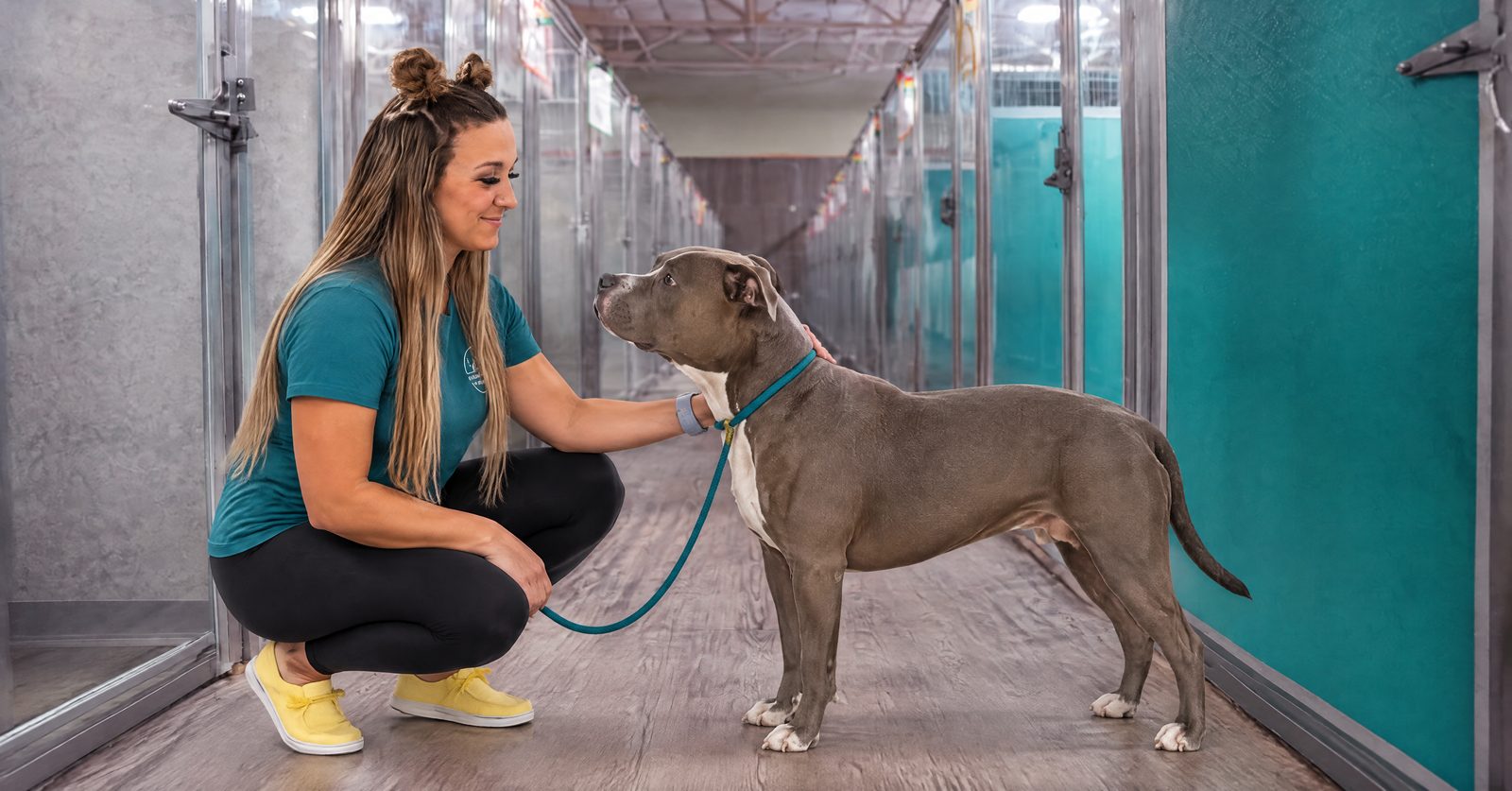
Booking a summer stay takes three steps:
- Check the vaccination window. Current Bordetella, Rabies, and Distemper/Parvo, given at least one week before check-in. Upload records to the Pet Parent Portal or have your vet send them.
- Complete your dog's profile. Feeding schedule, medications, emergency contacts, and the quirks we should know, so we can match your dog's home routine.
- Book a trial day, then the stay. A DaySchool day first lets your dog learn the campus and the routine before the first overnight. First-timers skip this step and pay for it in stress.
Bring food for the whole stay plus one extra day and medications in their original labeled containers. Leave personal items at home; the suites come with clean bedding and safe-tested toys. Our trainers will tell you the same thing they tell every first-timer: a stay that keeps the dog's routine is a stay the dog comes home settled from. The trial day is where that starts.
By the numbers
(partnersdogs.com/dog-boarding, retrieved 2026-09-16).
Myth vs. fact about summer boarding
| Myth | Fact |
|---|---|
| Boarding sets training back a week. | Only unstructured boarding does. A stay that runs the same cues keeps the reps going, and progression prevents regression. Time away builds the score when someone is running the program. |
| All-day play is the best deal because the dog comes home tired. | Exhaustion and over-arousal look alike. A dog needs rest blocks between exercise to settle. Dawn-to-dusk play rehearses arousal, not calm. |
| My dog is fine home alone for a long weekend in summer. | One monsoon power outage turns a cool house into an oven. Home alone in July has a single point of failure, and it is the AC. |
Mistakes that make it worse
- Booking the week you leave. Summer is peak season and holiday weeks fill months ahead. Reserve as soon as your travel dates are set.
- Missing the vaccination window. Records must be current and given at least a week before check-in. A lapsed Bordetella the day before drop-off cancels the trip.
- Skipping the trial day. A DaySchool visit first teaches your dog the campus and the routine. The first overnight should never be the first visit.
- Packing the toy box. Personal items get lost in a busy building. Bring food plus one extra day and meds in original containers.
- Forgetting the monsoon plan. July storms knock out power across the Valley every year. A good boarder has a real outage answer: a fail-safe climate plan and a call to you. Ask what it is before the storm does.
- Sending a different routine. Tell the boarder your dog's actual schedule and the cues you use. The stay should match the home program.
Choose by case, not by tool
Add a DaySchool day
Layer training onto any boarding stay as a boarding guest: your dog works the grade-level curriculum by day and sleeps in its suite by night. Dogs new to Partners start with a PD360 Assessment so the stay runs the right plan.
Key takeaways
Key takeaways
- Summer boarding demand spikes because peak travel and peak heat arrive together: a record 72.2 million Americans traveled over the July 4th week, and Phoenix averages 111 days at 100°F or higher.
- In an Arizona summer, home alone is a gamble: one power outage turns a cool house into an oven, and a dog with no routine invents its own schedule.
- A good stay runs the same cues your dog hears at home. Time away builds the score instead of eroding it when someone runs the program.
- Ask any boarder about staffing ratios, the midday heat plan, rest blocks, intake process, and the incident protocol, then tour the actual suites.
- Partners boarding: climate-controlled suites, three-night minimum, feeding and meds on your schedule included. DaySchool days can be added for boarding guests.
Frequently Asked Questions
How much does overnight dog boarding in Arizona cost in summer?
At Partners Dogs, boarding is a private climate-controlled suite with a three-night minimum. Feeding, medications on your schedule, wellness checks, and photo updates are included. DaySchool days, private sessions, and baths can be added, and senior-instructor care is available for bite-history or special-needs dogs.
How far in advance should I book summer boarding in Scottsdale?
As soon as your travel dates are set. Summer is peak season and holiday weeks fill months ahead. Plan around Sunday: both campuses are closed to the public that day, so drop-off and pickup happen Monday to Friday 8 a.m. to 5 p.m. or Saturday 8 a.m. to 2 p.m.
Is it safe to leave my dog home alone during an Arizona summer?
It is a gamble. Phoenix averages 111 days at 100°F or higher per year, and a monsoon power outage can turn a cool house dangerous in hours. A neighbor checking in at lunch cannot fix a dead AC. Structured boarding keeps your dog in climate control on a fixed daily rhythm.
Which vaccinations are required before a boarding stay?
Current Bordetella, Rabies, and Distemper/Parvo (DHPP) vaccinations, given at least one week before check-in. Upload the records to the Pet Parent Portal, email them to the team, or have your vet send them directly. A lapsed vaccine the day before drop-off will cancel the stay, so check the dates early.
What is the first step if my dog has never stayed at Partners?
Complete a profile in the Pet Parent Portal with feeding and medication details plus emergency contacts, then book a DaySchool trial day so your dog learns the campus before the first overnight. If your dog needs training layered onto the stay, start with a PD360 Assessment: a senior trainer reads your dog across nine dimensions and matches it to the right plan.
Where to go from here
Summer in the Valley runs five months, and your dog's routine should not take a vacation every time you do. A structured stay keeps the cues and the rhythm moving in the right direction while you are gone. Check your travel dates against the vaccination window, then book the trial day and lock in the stay. The trainers running the stay are the same trainers who run classes, so the plan does not change when you leave the building.
Scottsdale: 8642 E Shea Blvd, 85260. Cave Creek: 4640 E Forest Pleasant Pl, 85331. Serving the Phoenix Valley.