
The decision in brief
If a dog is still guarding the gate, avoiding the handler, or unable to settle past the first few nights of boarding, that pattern is a Behavior Camp signal, and East Valley families (Queen Creek, Mesa, and Chandler included) are better served extending into structured work than repeating the trip for a stay that only manages symptoms.
Here is a myth worth retiring: a longer boarding stay is basically training with more nights attached. Boarding is supervised rest inside a structured routine; Behavior Camp is a trainer actively rewriting a pattern. A dog can do well in one and still need the other.
Most dogs settle inside the first few nights, and the stay stays exactly what the intake form said it would be. Every so often a pattern shows up that a kennel stay was never built to fix, and it comes up often enough for anxious travelers driving in from the East Valley, Queen Creek included, to deserve a plain answer.
"First time boarding for the pups. I was more anxious then they were. Everyone made an effort to make me feel comfortable with leaving the pups for 4 nights. They kept me updated on how the pups were doing daily and took the time to talk to me when I called to check in."
Kelly H., Scottsdale
What signs during a boarding stay suggest a dog needs behavior camp instead?
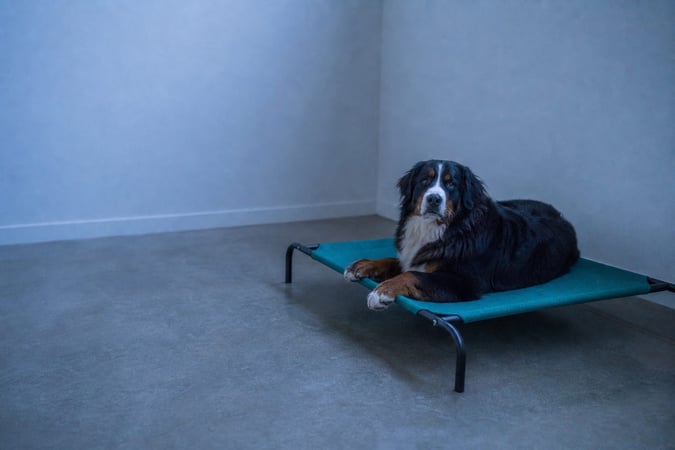
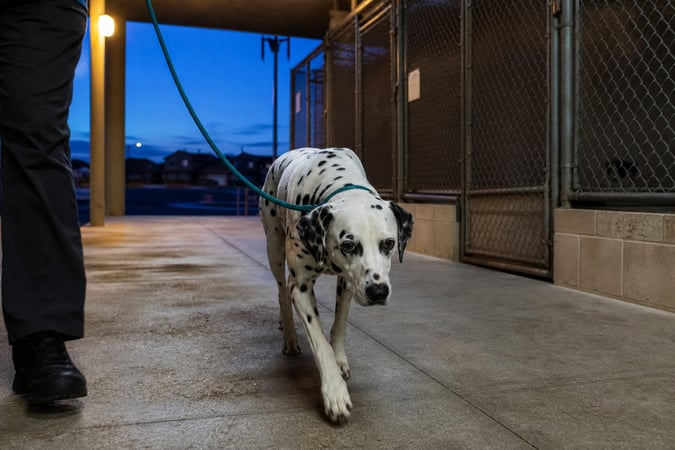
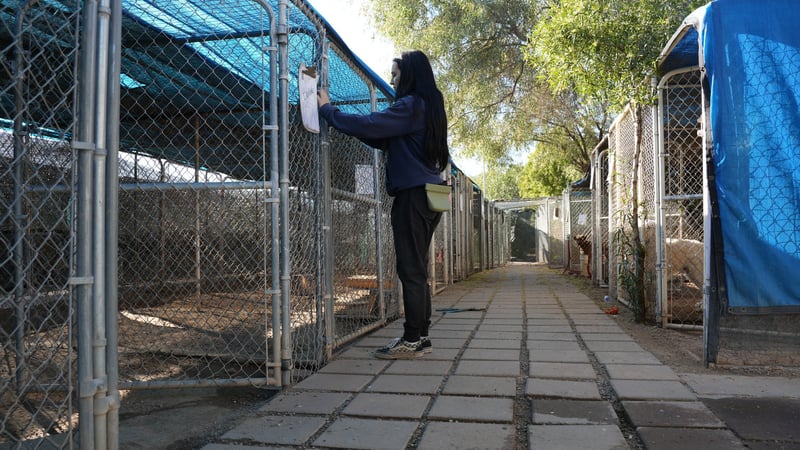
The signal is a pattern that keeps repeating. Ordinary adjustment looks like panting, pacing, a skipped meal, or a clingy first evening: it fades within a few nights. A behavior-camp signal repeats: stiffening or guarding every time a handler reaches for the gate latch, avoiding the person feeding it, or reacting to every dog passing the run instead of just the first one.
Resource guarding at feeding time, territorial behavior at thresholds, and handler avoidance are the patterns that come up most often. None is a reason to panic; each is a reason for a trainer to look directly at the dog.
Lock in the first appointment
Get a trainer's eyes on the pattern before you book either program
Whether a longer stay should turn into structured work is a call a trainer makes in person, not one made over the phone.
When is extending a boarding stay the right call, and when is it not?
Extending only makes sense when the dog is still working against a pattern, something bigger than plain unfamiliarity. A dog who paces the first two nights and settles onto the mat by the end of the week only needed a safe place to sleep. That dog goes home on schedule; extending adds nothing.
The opposite case is a dog still guarding, still avoiding, or unable to settle past the point where adjustment stress should have faded. Sleeping in the same suite a few more nights will not train that pattern out. That is when a trainer recommends converting the remaining reservation into Behavior Camp, shifting the plan from rest to active work.
Is board-and-train worth it for a Queen Creek family already driving in for boarding?
Yes, when the pattern is real, because the drive is already the expensive part. Families coming in from Queen Creek, Mesa, or Chandler are not popping over for a same-day drop-off; the trip is a planned event. The real question is not whether board-and-train costs more than boarding alone. It is whether repeating that drive later for a harder intervention beats doing the work now, while a trainer has already seen the pattern firsthand.
Best fit means the recommendation follows what the trainer observed, not the program booked at drop-off: a dog that only needed rest goes home as boarding, and a dog showing gate guarding, fear-based reactivity, or handler avoidance is worth the extension.
See the campus, meet the team
See how a trainer matches the program to the dog in front of them
A recommendation to convert boarding into Behavior Camp comes from days spent watching the dog directly, the kind of read a drop-off form cannot give.
What does Behavior Camp add that a boarding stay cannot?
A boarding stay manages a dog's day. Behavior Camp changes what the dog does the next time the same trigger shows up. Boarding runs on routine, rest, and trainer supervision. Behavior Camp adds daily, deliberate work against the pattern on top of that supervision: leash reactivity worked in low-distraction settings, muzzle conditioning, resource guarding named as the day's specific focus, and a working session with the family before pickup.
That transfer session matters as much as anything. A trainer can get a dog walking away from a food bowl on command in a controlled setting, but the test is whether the family can hold that boundary at home. Behavior Camp is built around that handoff, not a printed sheet at pickup.
What does that decision look like in a real stay?
Two Behavior Camp stays show how this plays out depending on what the trainer finds. Bruno is a Bull Terrier who came in on a resource-guarding concern. Trainer Sierra opened on relationship-building and crate comfort instead, naming resource guarding as the primary focus only on day 17. Leash reactivity and territorial behavior at greetings surfaced and were worked on their own days, and the muzzle became standing equipment for continued use at home.
Xela, a German Shepherd mix, shows a pattern visible only once a trainer works the dog daily. Her family described a dog reactive at the door and difficult to crate, but the deeper finding, separation anxiety tied to her owner, surfaced only once trainer Chase had her past the crate resistance. Neither case was one a longer kennel stay alone could have sorted.
Get a plan, not a pamphlet
Ready to put a real behavior plan behind the pattern you are seeing?
If gate guarding, handler avoidance, or unresolved reactivity is the pattern, Behavior Camp works it directly and sends the family home with a plan that holds.
Frequently Asked Questions
Is dog boarding worth it for an anxious dog in Mesa?
It is worth it when the dog only needs a safe, supervised stay, since a trainer-run floor watches for stress a standard kennel run would not. Ask about Behavior Camp if the dog cannot settle past normal adjustment.
Is board-and-train worth the drive in from Chandler?
It is worth it once a trainer identifies a real pattern (reactivity, guarding, or fear at handling), since the alternative is repeating the drive later for a harder intervention.
Where does aggression rehab start for a Queen Creek dog?
It starts with a PD360 Assessment, since booking a program sight unseen skips the step where a trainer observes the dog first and can recommend the right fit.
What happens after a trainer flags a pattern during a boarding stay?
The trainer talks to the family directly, describes what was observed, and lays out what converting the remaining nights into Behavior Camp would look like. A dog only adjusting normally is never pushed toward it.
Does switching from boarding to Behavior Camp change what I already paid for the stay?
Current rates are on the pricing page, since the two programs run on different structures. A trainer walks through the change before anything is adjusted.
Keep reading