
Here is the short version
Arizona's monsoon season runs 108 days, from June 15 through September 30, and it is the hardest stretch of the year to leave a noise-phobic dog home alone or in a bare kennel run. Look for three things: an indoor, sound-buffered suite, a staff protocol for active storm nights, and a facility willing to prep your dog before the first thunderclap of the season, not after it.
Monsoon season in the Phoenix metro is not a single bad night. It runs June 15 through September 30, and a storm cell can roll over Scottsdale or Cave Creek with almost no warning and leave a noise-phobic dog shaking under a bed for hours. For a family that travels or takes a weekend away, the question is not whether a storm will hit. It is who is with the dog when it does.
Anxious owners are not overreacting, and first-time boarding families tell us some version of the same thing every season.
This was my dog's first time going to a boarding facility so I was nervous if he'd do OK. I was SO impressed when I walked in. The staff is efficient and everyone is well informed. The facility is amazing - clean, spacious, top notch and fully equipped. The trainers immediately knew how to make my dog feel comfortable and when I picked him up he was wagging his tail.
Cathy R., Scottsdale
When does monsoon season actually hit the Phoenix metro?
Arizona's monsoon season runs June 15 through September 30 every year, about 108 days that Arizona State Parks and the University of Arizona Cooperative Extension both mark the same way. UA Extension notes the moisture-bearing wind shift fueling the storms can start over Mexico earlier in summer and arrive in the Valley on its own schedule, not a calendar's. A family in Scottsdale or Fountain Hills can see the first serious cell in late June, while Cave Creek or North Phoenix might not get hit until mid-July, then face storms almost nightly through August.
The Arizona Department of Transportation lists what shows up during that window: thunderstorms, lightning, hail, high winds, flash flooding, and dust storms. None of that is abstract to a dog. Thunder rattles windows in Paradise Valley and Carefree the same way it does anywhere else, and a dust storm's pressure drop and wind noise can set off a noise-phobic dog before a single drop of rain falls.
What is happening inside a dog during a monsoon storm?
Noise phobia is a fear response to sound intensity and unpredictability, not a training failure or a sign a dog was never properly socialized. A dog under threshold notices the rumble and checks in with a person or moves toward a familiar spot. A dog pushed past threshold stops making choices altogether. Trainers call that flooding, and once a dog is there, comforting words rarely reach the part of the brain doing the deciding. That is the mechanism behind the dog that shreds a crate pad during a two a.m. storm despite spending all day calm on the couch.
Monsoon storms are harder on a noise-phobic dog than a single fireworks night because they repeat, all summer, with no reliable pattern to learn from. Our noise phobia behavior page breaks down the specific triggers and the training approach we use once a dog's fear runs deeper than a single scary night. Our guide to fireworks and thunder fear covers the same threshold-and-flooding pattern outside of monsoon season.
Should you board a noise-phobic dog, or keep the dog home during monsoon season?
A familiar living room is genuinely the more comfortable option for some noise-phobic dogs, and a family that can be home for every storm this summer should stay with what already works. Dogs form real associations with their own space and bed, and none of that transfers automatically to a new building.
The complication is timing. Monsoon storms do not wait for a convenient week, and a cell can roll in on the one weekend a family already committed to travel or during a house sitter's own shift elsewhere. A dog checked on once or twice a day is not neglected, but it is also not actively managed during the hours a bad storm lasts. Boarding solves a different problem than a sitter does: it puts a person on-site, awake, and trained to redirect a dog the entire time the storm is active.
What should a boarding facility actually do for a storm-anxious dog?
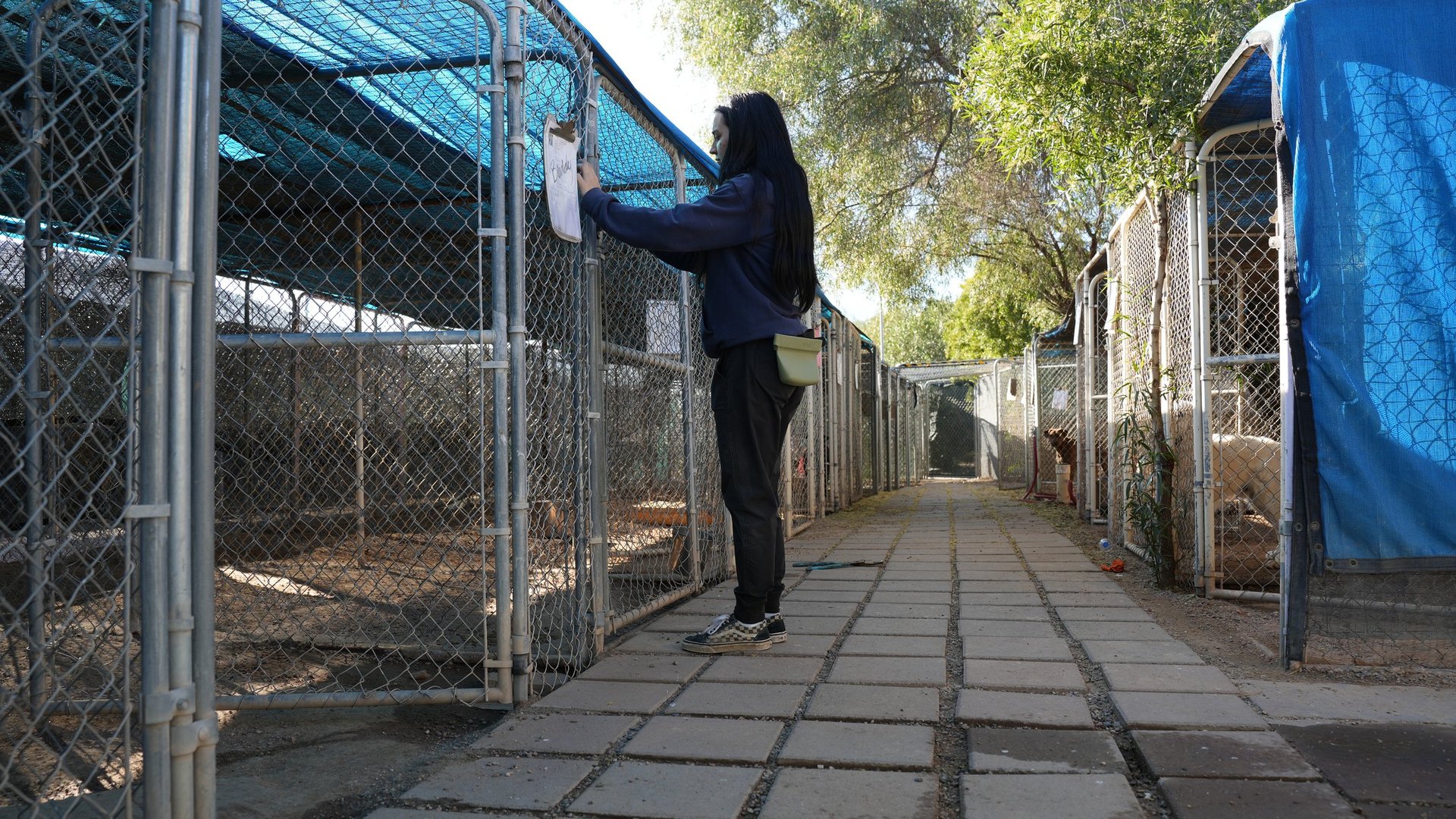
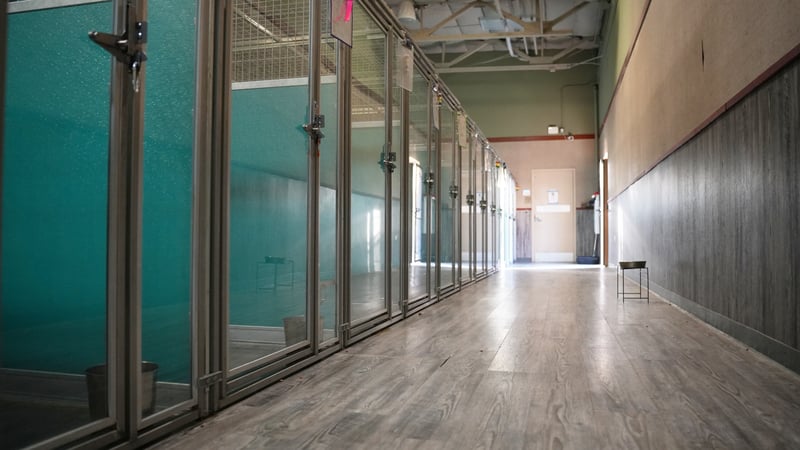
The structural answer to monsoon anxiety is an indoor suite set away from exterior walls and rooftop runoff, not a fan running in the corner of an outdoor kennel run. A run backed against an exterior wall during a hailstorm is a very different experience than an interior suite buffered by a hallway and other rooms.
Beyond the building, ask what staff do when a storm starts at 11 p.m. Someone on-site overnight can walk the suites during an active cell, offer a chew or a puzzle to a dog that settles better with something to do, and hold off an outdoor break until the worst of the wind passes. That is different care than a facility that locks up at close and checks cameras from a phone. Across 70,000+ dogs boarded and trained since we opened in Cave Creek in December 1997, the dogs who come through a monsoon stay the calmest are the ones whose triggers staff already knew. Our indoor climate-controlled boarding guide covers how the same suites hold up during peak summer heat, not just storms.
How do you prepare a noise-phobic dog for a monsoon-season boarding stay?
A noise-phobic dog does better at boarding when the first loud storm of the season is not also the first night in an unfamiliar suite. A little sequencing beforehand changes the whole stay.
- Book a trial night before June 15. An early stay on a calm night lets a dog learn the building before a storm becomes a second new variable to handle.
- Tell staff about specific triggers at intake, not just "storms." Wind, hail, and a distant siren can each set off a different dog, and specifics help staff spot early signs.
- Pack something that already smells like home. A worn blanket or unwashed shirt gives a familiar scent anchor in a new room.
- Ask about the overnight storm protocol before you book, not at drop-off. A facility that can describe its midnight routine has thought about it already.
- Ask your vet whether anti-anxiety support makes sense before the season starts. Vets generally recommend starting a medication well ahead of a known trigger window rather than in the middle of a storm.
- Start the stay a day or two before you actually need to travel. That buffer lets a dog settle into the routine before facing a storm without you in the building.
Is boarding the right fit for an anxious dog in Phoenix, Scottsdale, or Cave Creek?
The honest answer depends less on which city a family lives in than on whether the facility treats a storm-anxious dog as a management problem or a training opportunity. Scottsdale, Cave Creek, Paradise Valley, and North Phoenix all sit inside the same monsoon window. A family driving in from Fountain Hills or Anthem is trading a single trip for a season's worth of not being the only line of defense during a storm.
Noise phobia alone has never been a reason to say no to a family, and it never will be. A dog that startles at a garbage truck and a dog that tries to go through a window during a storm both get the same starting point: an honest look at what is happening, and a plan built around it.
Get answers in person
See the boarding add-ons that help an anxious dog through a storm
Extra settle time, enrichment, and an overnight storm check are add-ons you can book alongside a standard stay. Current boarding rates are on our pricing page.
Key takeaways
- Arizona's monsoon season runs June 15 through September 30, about 108 days when storms can hit with little warning.
- Noise phobia is a fear response to sound intensity and unpredictability, not a training failure.
- An indoor suite away from exterior walls, with staff on-site overnight during storms, is the structural fix for a monsoon boarding stay.
- A trial night before June 15 lets a dog learn the building before it also has to handle a storm.
- A PD360 Assessment is optional before boarding; it only becomes store credit if it leads to enrollment in a recommended camp or a membership.
Frequently Asked Questions
For an anxious dog, what actually makes a Phoenix-area boarding stay work during monsoon season?
An indoor suite away from exterior walls, a staff member on-site overnight during storms, and an intake conversation about the dog's triggers before the first stay. The building matters, but the plan behind it matters more.
What is the best boarding setup in Scottsdale for a dog that panics during summer storms?
A suite buffered from the outside, not a run backed against an exterior wall, at a facility that describes its overnight storm routine before you book. A trial stay before June 15 helps a Scottsdale dog learn the building before it also handles a storm.
In Cave Creek, how do you pick the better boarding option for a dog that is scared of storms?
Ask where the suite sits inside the building, who is on-site during an active storm, and what happens if the dog will not settle. Cave Creek shares the same monsoon window as the rest of the Valley, but the answers to those questions often differ.
Can boarding actually help a noise-phobic dog get calmer over multiple stays, or does the fear stay the same?
Many dogs improve across repeat stays once staff know their triggers and can intervene early instead of reacting to a full panic. It is not automatic, and severe noise phobia may need dedicated behavior work alongside boarding.
What should you tell boarding staff about a dog's storm triggers before drop-off?
Be specific about whether the dog reacts to thunder, wind, hail, or the pressure drop before rain starts. Mention early warning signs like pacing or hiding, and anything that helps at home, such as a specific blanket.
Does a noise-phobic dog need a PD360 Assessment before a monsoon-season boarding stay?
No. A PD360 Assessment is optional ahead of a boarding stay. If it leads a family to enroll in the recommended camp or a membership, the fee is applied as store credit toward that; it does not apply to a la carte bookings or general reservations like boarding.
Keep reading
/Programs/Foundation%20Camp/Training%20%26%20Demos.jpeg?width=800&height=450&name=Training%20%26%20Demos.jpeg)
/Programs/Boarding/What%20Makes%20Partners%20Dogs%20boarding%20different%20from%20Kennels.jpeg?width=800&height=450&name=What%20Makes%20Partners%20Dogs%20boarding%20different%20from%20Kennels.jpeg)