In short
Your dog can sleep in your bed, but we usually recommend a crate or a dedicated dog bed instead. The issue is rarely hygiene, it is what unrestricted access to the highest-value spot in the house teaches a dog about territory, and in Scottsdale-area homes that shows up most often as guarding or a nightly fight over getting off.
Where your dog sleeps is your call, and most owners let their dog on the bed. We usually suggest otherwise, and it has less to do with hygiene than with what the arrangement teaches your dog about space.
The Case for It
Here is the honest case for letting your dog up.
- They are good company. Plenty of owners genuinely sleep better with a dog nearby, and there is nothing wrong with wanting that.
- It helps people feel safe. For a child who is nervous at night, or an adult living alone, a dog in the room takes the edge off the dark. That is a real benefit and we are not going to argue with it.
- They are warm. A dog runs between 101 and 103 degrees. They double as a heater, an intruder alarm, and an alarm clock you cannot snooze.
The Case Against It
- They bring the outside in. Whatever your dog walked through comes into the sheets with them: dirt, plant matter, insects, and anything picked up in the yard. Some of it transfers to people.
- The hair is relentless. Coat ends up in the bedding, and for anyone in the house with allergies or asthma, the bed is the worst possible place for it to accumulate. Washing sheets weekly becomes non-negotiable rather than optional.
- It can trigger territorial behavior. This is the one that actually brings people to us. The bed is a high-value resting spot, and some dogs start defending it: marking it, stiffening when a partner gets in, or reacting to another pet approaching. If your dog is already inclined toward guarding food, toys, or resting places, the bed hands them the most valuable territory in the house.
- They take the bed. A dog will spread out and you will contort around them. Beyond the lost sleep, letting your dog claim your space quietly erodes the idea that your space is yours to give rather than theirs to take.
So Where Should Your Dog Sleep
In a Crate
A crate is not cruel, and it is worth saying clearly because so many owners feel guilty about it. Denning, the instinct to seek out a small enclosed space to rest in, is natural to dogs both domestic and wild. A crate is a den with a door.
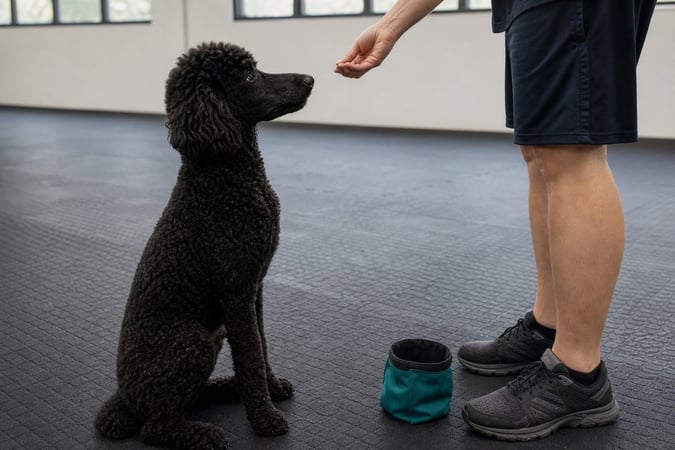
Get your dog comfortable there with food, treats, and toys, so the crate becomes the place good things happen rather than the place they go when they are in trouble. Done right it becomes the spot your dog chooses on their own.
On a Dedicated Dog Bed
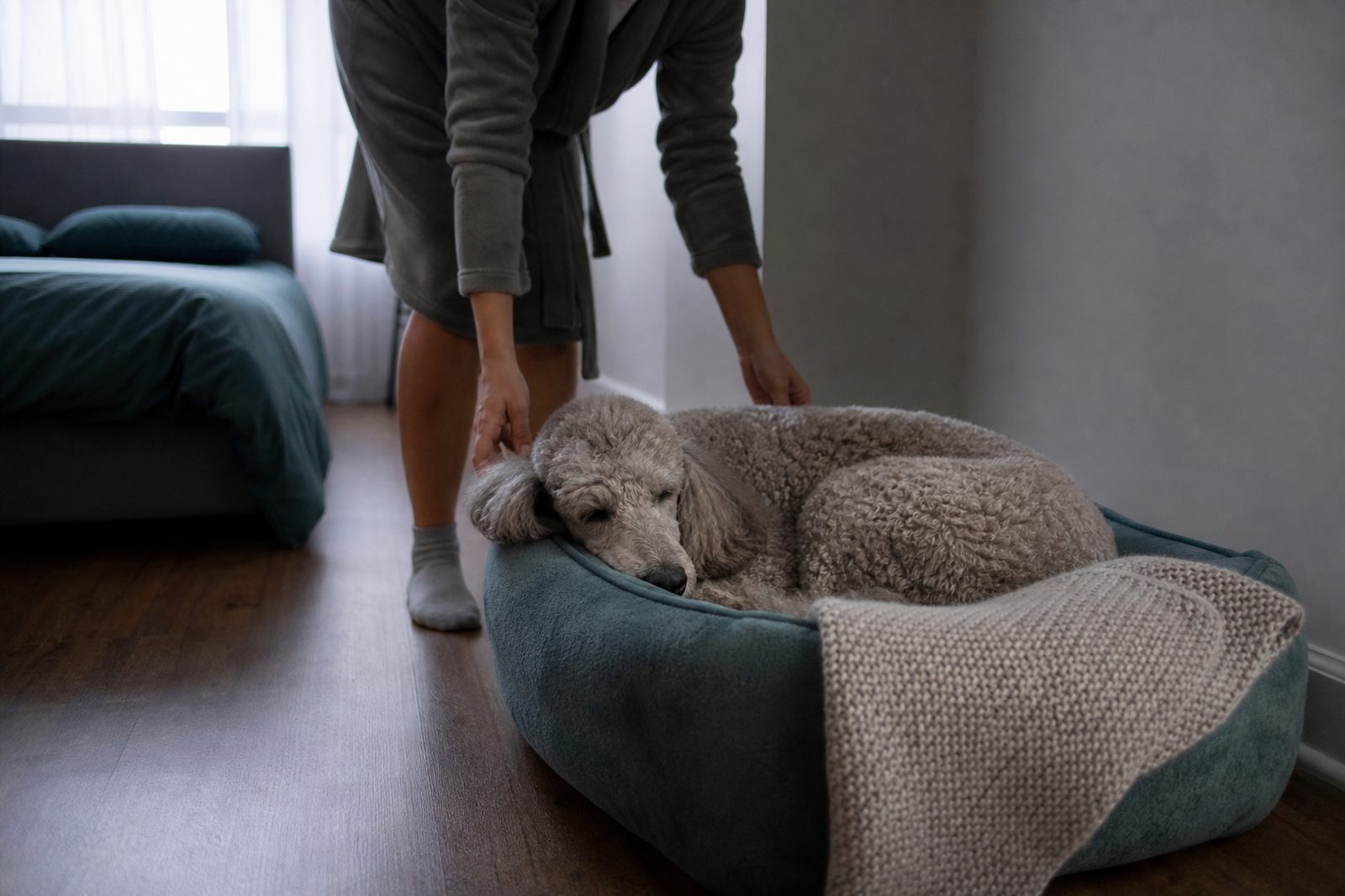
Put it in a corner, against a wall, or on the floor at the foot of your bed. Dogs settle better with their back protected, and the point of the bed is that it is unambiguously theirs.
What matters is the specification, not the brand. Look for something elevated, which makes teaching the place command far easier, durable enough to survive a chewer, simple to clean, and comfortable to lie on. Wherever it goes should be quiet, cool, and secure. In a Scottsdale or Cave Creek summer, a lot of dogs vote with their bodies anyway and stretch out on the cool tile long before the thermostat gets involved, so a bed placed near tile rather than carpet tends to get more use.
Next step
Get a Read on What's Driving It
If the bed has turned into a nightly standoff, get a professional read on what is driving it before you retrain around a guess.
How to Break the Habit
If your dog is already sleeping in your bed and you want to change it, do not just shut the bedroom door and hope.
Teach a command for getting on and off. Something like "up" to get on and "off" to get down works well. Be careful reusing words your dog already knows: if "down" means lie down for a treat, do not also make it mean get off the bed.
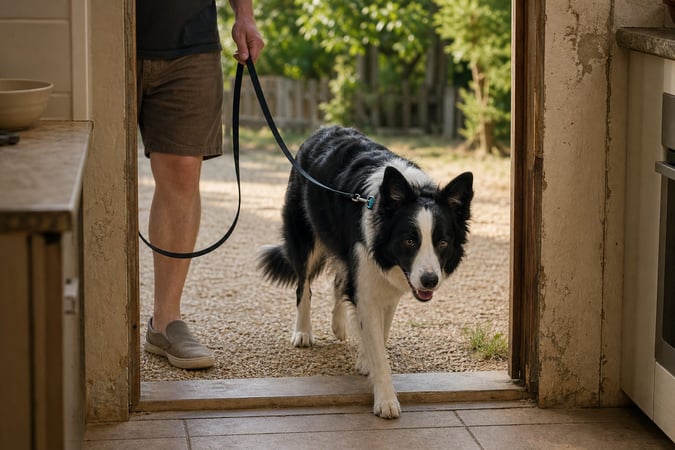
Then practice it deliberately. Put your dog on a leash, invite them up, call them back off for a reward, wait a moment, and invite them up again. Make them wait for the command each time. Repetition is what turns it from a fight into a routine, and it reframes the bed as a privilege you grant rather than a right they hold.
If it turns into a nightly negotiation instead of a quick fix, a block of Private Lessons puts a trainer in your corner while you retrain the routine.
Marking and Territorial Behavior
A dog who is already showing territorial aggression should not be in your bed, and possessive behavior around resting spots is worth addressing with a professional rather than negotiating around.
In a multi-dog house, make it all of them or none of them. Letting one dog up and not another is a reliable way to start a confrontation.
Some dogs will mark the bed outright. Marking a sleeping area is normal dog behavior and completely unacceptable in a human bed, and a crate at night generally discourages it. If your dog is marking or eliminating where they sleep, track eating, drinking, sleeping, and potty times, and ease back on food and water before crate time. Until it is resolved, keep your dog supervised on a leash whenever they are out of the crate.
The Bottom Line
Most people love the idea of their dog in bed with them, and the idea is not the problem. Treat it as a privilege with rules attached rather than a default, and make sure your dog understands the bed is a calm, clean, shared space.
If you decide you both sleep better with your dog crated, commit to it and crate train properly. Dogs want to sleep somewhere they feel secure, same as we do. Deciding where that is, and teaching it clearly, is the part that belongs to us.
Frequently asked questions
Is it bad for a dog to sleep in your bed?
Not automatically. Many owners and dogs do fine with it. The risk is smaller for a dog with no guarding history and bigger for a dog that already gets possessive over toys, food, or space, where the bed adds fuel to a habit already forming.
Why does my dog get territorial about the bed?
The bed is the single highest-value resting spot in the house, and a dog inclined to guard space will treat unrestricted access to it as reason to defend it, sometimes with stiffening, growling, or blocking access when a partner or another pet gets close.
How do I get my dog to stop sleeping in my bed?
Teach a clear up and off cue, practice it on leash with rewards for coming off on command, and give your dog a genuinely comfortable alternative, either a crate or a dedicated dog bed, so the change feels like a new routine rather than a punishment.
Is crate training cruel?
No. Denning, the instinct to rest in a small enclosed space, is natural to dogs. A crate introduced with food, treats, and toys becomes a den your dog chooses on their own, not a punishment.
Ready for more structure
Build Boundaries That Hold at Home
A predictable bed routine is part of the everyday structure we build in camp, and if guarding is already showing up, there is a program built for exactly that.
Keep reading