Bottom line
The adolescent window runs roughly six to eighteen months, and it moves through at least two distinct phases before it settles. A friendly six-month-old can turn selective and pushy by nine months, then wary of a dog it used to greet without a second thought by ten or eleven. Open, unstructured daycare play can rehearse the wrong habits during this stretch. A structured DaySchool day is built for exactly this stage: dogs grouped by size, energy, and play style. Some still need the calmer DayCamp lane for a while before open play works again.
The dog who graduated Pre-School Puppy as a model citizen and now blows past a recall, mugs strangers at the gate, or growls at a dog it used to play with fine has not been ruined. It has entered adolescence, and the daycare pattern that worked at five months is not automatically the right pattern at nine, eleven, or fifteen. What changes month to month, and what a day should look like at each stage, is the whole question.
The Adolescent Window, Month by Month
Six to eighteen months breaks into three distinct stretches, and each one calls for something different from a daycare day. The early stretch is mostly about impulse control catching up to a body that is already fast, strong, and confident. The middle stretch is where a fear period can show up in individual dogs. The late stretch is where habits either lock in as defaults or stay soft enough to still correct.
| Age band | What's changing | What a daycare day should do |
|---|---|---|
| 6 to 9 months | Testing limits, selective hearing, rude greetings | Structured practice, grouped by size and energy |
| 9 to 12 months | Possible fear period; wider spread between bold and shy | Smaller, calmer groups; step down to DayCamp if needed |
| 12 to 18 months | Defaults setting; play style mostly formed | Return to broader group play once responses hold |
None of this runs on a fixed calendar. A toy-breed adolescent moves through the whole window faster than a giant-breed dog who is still growing into its body at fifteen months. Treat the age bands below as a rough map, not a schedule, and read your own dog's behavior over the number on the birth certificate.
Six to Nine Months: Testing, Selective Hearing, and Rude Greetings
A dog who sat, stayed, and came reliably at five months starts running experiments around six. This is not regression. It is a young dog with more confidence and more physical ability testing which cues still apply outside the living room. Jumping on guests, blowing off a recall at the dog park, and mugging other dogs at the gate instead of greeting politely are the three complaints that show up most in this window.
- Recall that worked in the yard falls apart around distractions
- Greetings turn into jumping, body-slamming, or face-first crowding
- Known cues get a slower, more negotiated response than they used to
None of this means the earlier training failed. It means the dog is generalizing new impulse control in a body it did not have at four months, and that takes reps in everyday settings, not just repetition of the same five commands at home. A recall that has started slipping is one of the clearest early signals that this stage has started, and it is also one of the easiest to correct while it is still a testing pattern rather than a settled habit.
Get a professional read
Testing Behavior or a Pattern Worth Watching
A PD360 Assessment sorts a normal testing phase from a pattern that needs more support, before six months of practice turns into a three-year habit.
Nine to Twelve Months: The Second Fear Period and Social Pickiness
Somewhere in this window, dogs split into two groups, and neither one is wrong. Some get bolder, pushier, and harder to redirect. Others go through what trainers call a second fear period, growing newly cautious or reactive around dogs and situations that never bothered them before. A dog does not have to be destined for one path or the other; the same dog can show flashes of both in the same month. Anthea U., a Cave Creek client with a six-month-old cattle dog, described the bolder end of it plainly:
I allowed him to pull me around whilst walking, he would jump up at everyone and was very rambunctious! He would never come when called and refused to listen to my requests.
Kina E., also a Cave Creek client, described the other end, a dog whose comfort around other dogs went backward before it went forward:
The girls there really seem to care about our dog, Stevie and he's gone from being shy and scared around other dogs to being a social butterfly.
A dog who suddenly gives another dog a hard stare, a stiff body, or a bark at the gate has not become aggressive overnight. It is worth treating as exactly what it usually is, a fear response that needs smaller exposures and a calmer group, not a bigger one. The fear of other dogs spoke covers what that looks like day to day and how it is worked through without forcing the issue.
Twelve to Eighteen Months: What Sets and What Is Still Moving
By a year, most of the loud stuff from the earlier months has quieted, and what is left starts to look like the dog's actual adult temperament. Play style is mostly formed by now: a dog who prefers wrestling with one or two familiar friends over a full-yard scrum at nine months usually still prefers that at fifteen. Recall and impulse control are the pieces still moving the most, since a young dog is still building the self-control to choose the cue over the impulse when something more interesting shows up.
Large and giant breeds run later than this range, sometimes well past eighteen months before the same settling shows up. A Great Dane or a mastiff-type dog acting like a nine-month-old at fourteen months is simply running on the slower developmental clock that matches its size.
Match the program to the stage
Not Sure Which Lane Your Dog Needs Right Now
A five-minute quiz sorts a bold, testing adolescent from one moving through a fear period, and points at the right starting lane for either.
Why Unstructured Play Can Make This Stage Worse
A big, unsupervised free-for-all is the wrong setting for a dog whose impulse control has not caught up to its arousal. Open play with no size, energy, or temperament grouping lets the pushiest dogs in the yard set the tone, and an adolescent learns fast from whatever tone is on offer. Body-slamming greetings, chase games that never stop for a check-in, and resource guarding over a toy or a person all get rehearsed instead of corrected in a group with no structure and no one reading the room.
Free-for-all play does not calm an over-aroused adolescent. It rehearses the exact arousal spiral a family is usually trying to break. A dog practicing rude greetings in an unstructured yard five days a week is drilling that habit into a permanent default. The same is true in the other direction: a dog moving through a fear period who gets thrown into a large, loud group because "socialization" is supposed to help usually comes out more guarded, not less. Overexcitement that never gets interrupted in daycare tends to show up at the front door, on leash, and around guests too, since a dog does not leave a habit in the yard.
What a Structured Day Builds at Exactly This Age
The reason a structured day matters more now than it did at four months is that this is the stretch where defaults get set. Whatever greeting style, arousal ceiling, and play manners a dog practices most between six and eighteen months are the ones most likely to still be running at three years old. That makes this the highest-leverage window to spend on practice with a trainer shaping it, not the lowest.
At both the Scottsdale and Cave Creek campuses, DaySchool groups dogs by size, energy, and play style rather than mixing everyone into one yard. A trainer is present to interrupt a greeting before it turns into a body-slam or redirect a chase before it becomes a chase-and-pin. Kc, a Cave Creek client, summed up why that grouping matters:
The daycare is organized according to each pups temperament and personality! Highly recommend!
Feedback like that is not an outlier. Partners Dogs holds a 4.8-star rating across more than 2,000 reviews, and a good share of them come from families who booked daycare during exactly this stretch of their dog's first two years.
That grouping is also where a graduate of the grade-level class ladder keeps using what it already knows. A dog who learned a solid down-stay and a polite greeting in class gets to practice both with other dogs moving around it, not just in a quiet training room, which is exactly the kind of repetition this age needs most.
When to Step Down to the DayCamp Lane for a While
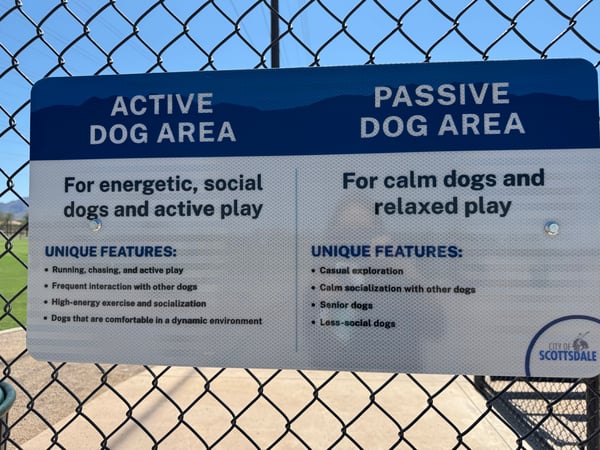
Some adolescents are not ready for open group play yet, and that is a normal stage, not a setback. A dog who is too aroused to settle in a group, too fearful to enter one comfortably, or too pushy for the dogs around it to enjoy their day is telling you something useful. DayCamp is the smaller, more structured lane built for exactly that dog: fewer dogs per group, more direct trainer attention, and a slower reintroduction to the skills open play assumes a dog already has.
A stay in that lane is not a permanent label. Most adolescents move through it for a matter of weeks or a few months, not years. They graduate back to standard group play once arousal, recall, and greeting manners hold up when something more interesting shows up. A PD360 Assessment is the fastest way to get a clear read on which lane fits right now instead of assuming either the easy answer or the hard one by default.
How to Tell the Window Is Closing Well
The adolescent window is closing well when the loud behaviors stop being the loudest thing about the dog. A few signs tend to show up together once a dog is coming out the other side:
- Recall holds up when something more interesting is happening, not just in a quiet yard
- Greetings are four-on-the-floor more often than not, without a reminder every time
- Arousal has a ceiling; a dog gets excited, then comes back down, instead of climbing and staying up
- Play style looks settled and familiar rather than shifting week to week
None of these need to be perfect. A dog closing out this window well still has off days. What matters is the trend line, not any single visit, and a dog whose report cards are trending calmer and more consistent over a few months is on schedule, even if the calendar says it still has a few adolescent months left.
Frequently Asked Questions
What exact age range counts as adolescent for a dog?
Roughly six to eighteen months, though it varies by size. Small and toy breeds tend to move through the whole window faster, while large and giant breeds often run past eighteen months before the same settling shows up. Read your dog's behavior over the number on the calendar.
Why did my friendly puppy suddenly get picky about which dogs it plays with?
This usually shows up in the nine-to-twelve-month range and is often called a second fear period. A dog who greeted every dog without hesitation can become newly cautious, stiff, or reactive around dogs it does not know well. It is a normal developmental stage that plenty of well-socialized dogs go through, and it responds well to smaller, calmer exposures rather than more volume.
Is unstructured free play always bad for an adolescent dog?
It depends on the dog. A dog whose impulse control has not caught up to its arousal, which describes a lot of dogs in this age range, is the wrong fit for a big, ungrouped yard with no one reading the room. Pushy behavior sets the tone there, and a dog in that state tends to practice whatever tone is on offer rather than correct it on its own.
How do I know if my dog needs the DayCamp lane instead of standard daycare right now?
Three signs point to stepping down for a while: your dog cannot settle in a group, is too fearful to enter one comfortably, or is too pushy for the other dogs to enjoy the day. A PD360 Assessment gives a clear read on which lane fits instead of guessing from a single bad day.
Does this awkward stage mean my earlier puppy training failed?
No. A dog testing limits at seven months or going cautious around other dogs at ten months is not undoing what it learned in Pre-School Puppy or group classes. It is generalizing new impulse control and, in some cases, moving through a fear period, both of which are normal parts of this age and both of which respond to structured practice rather than more time alone.
When does the adolescent stage typically end?
Most dogs are showing settled adult defaults by eighteen months, with recall holding up around distraction, calmer greetings, and a play style that stays consistent rather than shifting week to week. Large and giant breeds often take longer, sometimes into the second year, before the same settling shows up.
See What a Day Built for This Age Looks Like
DaySchool groups by size, energy, and play style so an adolescent practices the right habits, not just any habits. If your dog needs a quieter lane first, DayCamp is built for that stretch.
Keep reading