Eight sequenced changes lower how often a Scottsdale yard attracts snakes, scorpions, and other desert wildlife: gap audit, gate hardware, harborage removal, water control, dusk lighting, safer ground cover, a plant audit, and a supervised-access zone. These steps do not stand in for snake avoidance training. What they change is how often your dog is ever in a position to need it.
A block wall keeps a dog inside a Scottsdale yard, but it does not keep a rattlesnake, scorpion, or coyote out. Yards across Scottsdale, Cave Creek, and North Phoenix often border open desert on at least one side, and the eight steps below work directly on the yard itself: hiding spots, water, light, and ground cover to lower how often your dog meets one of these animals. They work alongside snake avoidance training, not instead of it.
The eight steps at a glance
- Audit the perimeter for gaps
- Upgrade the gates
- Clear harborage piles
- Control standing water
- Light the yard
- Fix ground cover
- Audit toxic plants
- Build a supervised-access zone
Step 1: Audit the Perimeter for Snake-Sized Gaps
Walk the full perimeter of the yard scanning close to the ground, since most entry points sit lower than a standing walk-through catches. Check these spots first:
- Under gates and along the base of block walls
- Anywhere two fence materials meet
- Any spot where a wall sits on sloped or washed-out ground
- Expansion joints in block walls
- Gaps under wrought-iron sections
- Low spots where monsoon runoff has undercut a wall's base
Most snake-sized gaps sit at the exact spots people rarely check: a sagging gate corner, a hairline separation in a block wall, or ground that has washed away under a fence line. Mark every gap you find before moving to the next step, since gate and fence repairs are easier to plan as one project than several.
Step 2: Upgrade the Gates Before the Fence
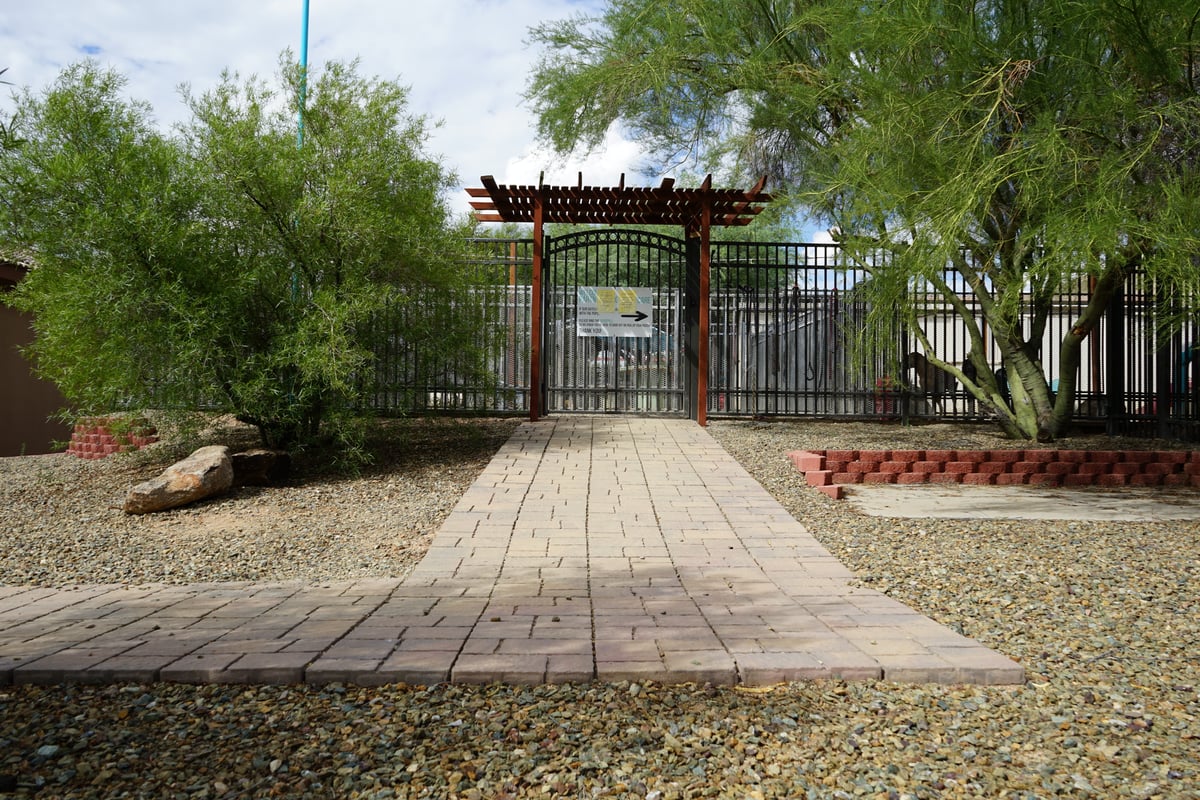
In the yards we see, the gate is almost always the weak point. A gate that sags, does not latch flush, or lacks a self-closing hinge undoes an otherwise solid perimeter in one spot. Add a self-closing hinge and a latch a person has to operate deliberately, then check that the gate closes flush at both the hinge side and the latch side. A self-closing gate fixes the single mistake that undoes every other step on this list: a door left open. Treat any side-yard gate that only gets used a few times a year as the highest priority, since it is the one most likely to sit ajar without anyone noticing.
Step 3: Clear Out Harborage Piles
Woodpiles, stacked pavers, loose rock, and dense ground cover all create the same problem: a cool place for snakes and scorpions to hide during the heat of the day. Move firewood and paver stacks off the ground, break up rock piles used as yard decoration, and trim ground cover so it does not sit thick against a wall or fence line. If you would not want to reach into a space with a bare hand, assume something is already using it.
Check under pool equipment enclosures and HVAC units too, since both create the same dark, still air without looking like an obvious hiding spot. We apply the same approach in our own outdoor training spaces: harborage cleared and sightlines kept open. The wildlife risk in a Scottsdale backyard does not stop at a training ground's fence line either.
Step 4: Control Standing Water and Water Features
Water draws wildlife in the desert as reliably as food does. A dripping hose bib, a low spot that holds water after a monsoon storm, or an uncovered water feature all become a stop along the route wildlife travels through a neighborhood. Fix leaks, grade low spots so water drains instead of sitting, and cover or circulate any decorative water feature rather than leaving it still. Standing water is a yard hazard that keeps building as a monsoon season goes on, storm after storm. A kiddie pool or a dog-specific splash pool is fine for supervised play, since the real concern is water left sitting and unattended overnight.
Close the gap
Give Your Dog the Response a Fence Cannot
A dog-proofed yard lowers how often your dog meets a rattlesnake, scorpion, or coyote. Snake avoidance training gives your dog the response for the day a gap, a gate, or a neighbor's yard puts one in front of them anyway.
Step 5: Light the Yard for Dusk and Dawn Trips
Dusk and dawn are when snakes are most active, and they are also when a yard is hardest to see. Motion-activated lighting along walkways, gates, and the areas closest to the house buys a few extra seconds to spot something before your dog does. A well-lit path from the door to the yard is a low-cost fix that changes the riskiest fifteen minutes of a dog's day. Point fixtures down toward walkways and gates, closer to ground level where most wildlife moves.
Step 6: Fix Ground Cover and Paw-Safe Surfaces
Some ground materials work against you twice. Decorative gravel and rock holds afternoon heat long after the sun moves off it, and dense, unmowed grass gives wildlife the same cover Step 3 just cleared. Choose a surface your dog can walk on safely at midday, one that stays low, open, and easy to see across. Keep grass trimmed short, avoid sharp decorative rock in high-traffic zones, and give paws a shaded path option for the hottest stretch of the afternoon.
Step 7: Audit the Yard for Toxic Plants
Several common Scottsdale landscaping choices are toxic to dogs if chewed, including oleander and sago palm, and certain cactus varieties cause injury even without being toxic. Walk the yard and note anything within reach of where your dog spends unsupervised time. A plant that has sat in the yard for years without an incident is still worth a second look once a dog joins the household. Move container plants out of reach, fence off garden beds with toxic plantings, and confirm anything you are unsure about with your veterinarian.
Step 8: Build a Supervised-Access Zone
Even a fully audited yard benefits from one more layer: a space where your dog has full run only while you are outside with them, and a smaller, easier-to-monitor space for unsupervised time. A supervised-access zone turns "the whole yard, all the time" into "the highest-risk hours, with a person present." This matters most at dusk and dawn, right after storms, and during the warmer months when snakes are most active. It is the step that ties the other seven together: everything fixed in Steps 1 through 7 still works better with a second set of eyes during the riskiest windows.
Where the Yard and the Training Meet
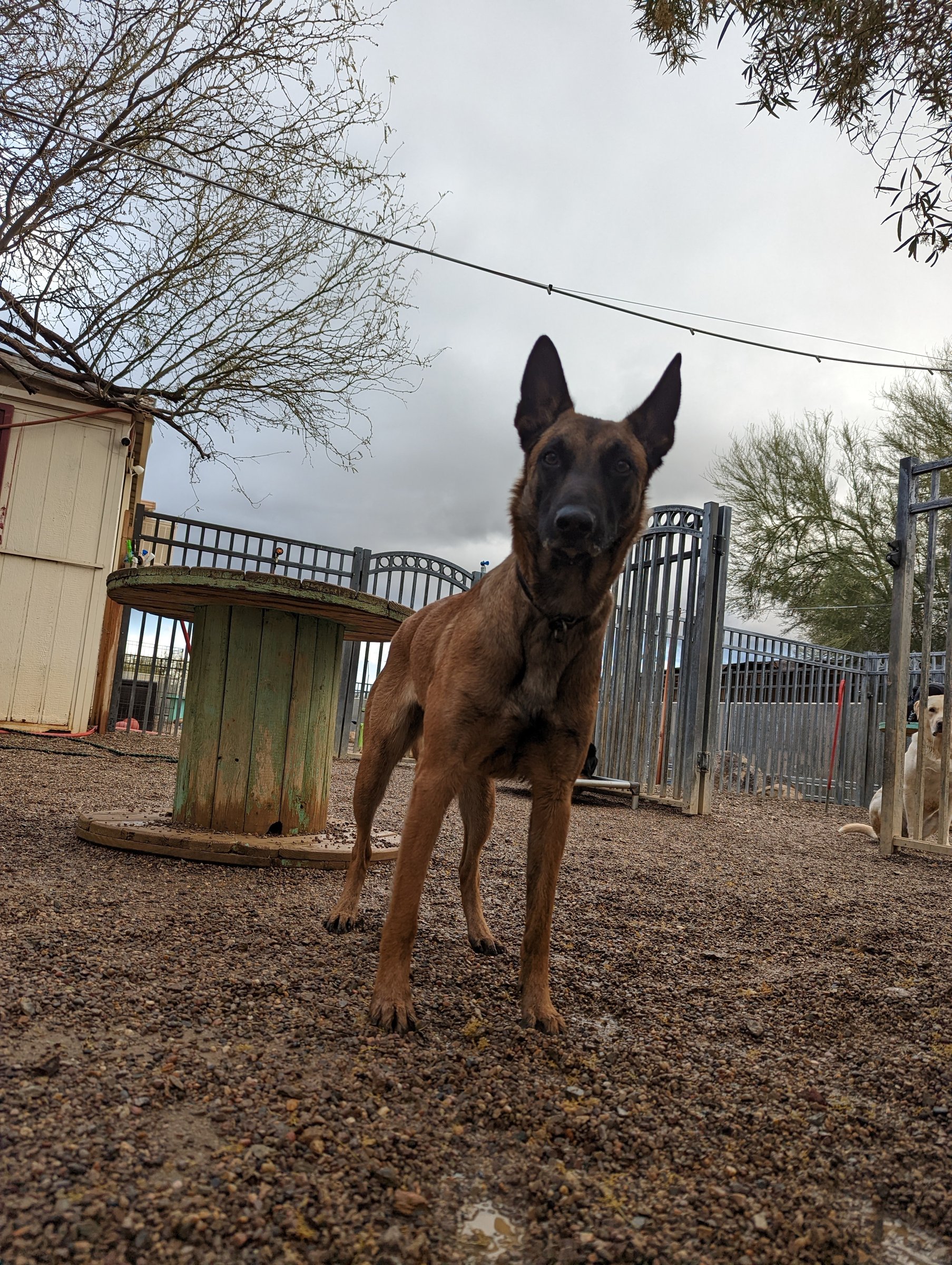
Training is built to generalize past the training yard: a dog that has met a real, controlled rattlesnake is more likely to recognize one in an unfamiliar corner of its own yard. Many families pair these eight steps with an annual refresher, since a yard changes from one monsoon season to the next and a dog's response benefits from the same upkeep. Pet Parents who combine both describe the same layered protection in their own words.
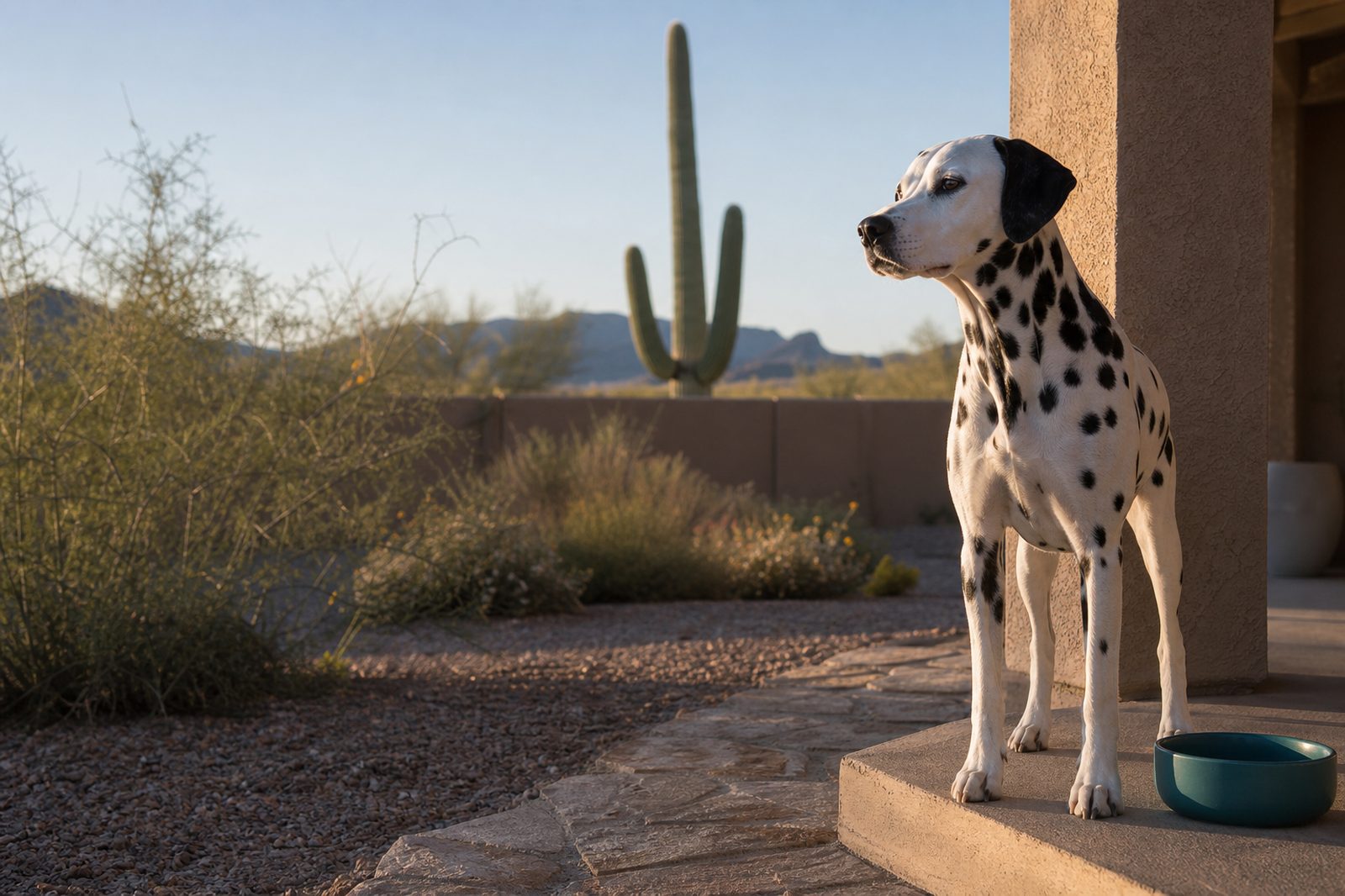
“Two hours after our last session our female Dalmatian alerted to a snake in our backyard.”
“That same night we found a rattler in our backyard.”
For a guide to the species behind these encounters and what to do in the first minutes after a bite or sting, see how to recognize the Sonoran Desert species most likely to show up in a Scottsdale yard. For more on why a walled yard is not automatically a snake-proof yard, see why fencing alone does not stop a rattlesnake.
Frequently Asked Questions
How small of a gap can let a rattlesnake into a yard?
Smaller than most homeowners expect. A snake does not need an opening big enough for a hand, just a gap under a gate, along a sloped block wall, or where two fence materials meet. Walk the yard at ground level, not eye level, checking every point where materials meet or the ground has shifted.
Which ground cover is safest for a dog's paws in a Scottsdale yard?
Keep grass trimmed short and skip dense, unbroken groundcover near doors and walkways. Decorative gravel and rock hold heat long into the evening, so give your dog a shaded, cooler path for midday trips, and save sharp decorative rock for areas your dog does not walk through directly.
Which common desert landscaping plants are toxic to dogs?
Oleander and sago palm are two of the more common toxic plants in Scottsdale-area landscaping, and several cactus varieties cause injury even without being toxic. Walk your yard and note anything within reach of where your dog spends unsupervised time, then confirm anything you are unsure about with your veterinarian.
Is a dog-proofed yard enough, or do I still need snake avoidance training?
Both. Yard changes lower how often your dog meets a rattlesnake, scorpion, or coyote in the first place. Snake avoidance training is what carries your dog through the day one still gets past every yard change you made. Neither step covers what the other one does.
How often should a dog-proofed yard be rechecked for new gaps or hiding spots?
Recheck the perimeter after every monsoon storm, since heavy rain can undercut a wall's base or wash debris against a fence line. Do a full walk-through once a year before the warmer months, when wildlife activity picks up across Scottsdale and Cave Creek. A yard that passed an audit last year can grow a new gap without anyone touching it.