What you need to know
Interview the trainer before you hand over the leash. The right Scottsdale dog trainer assesses your dog before selling a program, states their full method plainly, tracks progress you can see, and trains you alongside your dog.
- Assessment first, package second. A trainer who quotes a program before meeting your dog is guessing.
- Credentials show a trainer submitted to outside judgment. No license is required to train dogs in the U.S., so the certificate is a floor, not proof.
- Watch them work and tour the facility. If you cannot see the training, do not buy it.
- Your questions are the quality control. The ten questions below are the interview.
Choose a Scottsdale dog trainer by interviewing them: ask what happens before training starts, how they track progress, what your role is, and how they were trained. Anyone can legally call themselves a dog trainer in the U.S., so your questions are the quality control.
If you are a Scottsdale or Cave Creek Pet Parent comparing trainers, this guide gives you the interview script: ten questions, what credentials actually mean, and the red flags that end the conversation. It complements our general guide on how to choose a dog trainer: that post covers the universal questions, this one is the local decision guide, built on our methodology where every behavior moves through Teach > Reinforce > Proof > Maintain.
Why does choosing a dog trainer in Scottsdale need its own guide?
The short version: Scottsdale dogs live a desert life, and the trainer you hire should train for it.
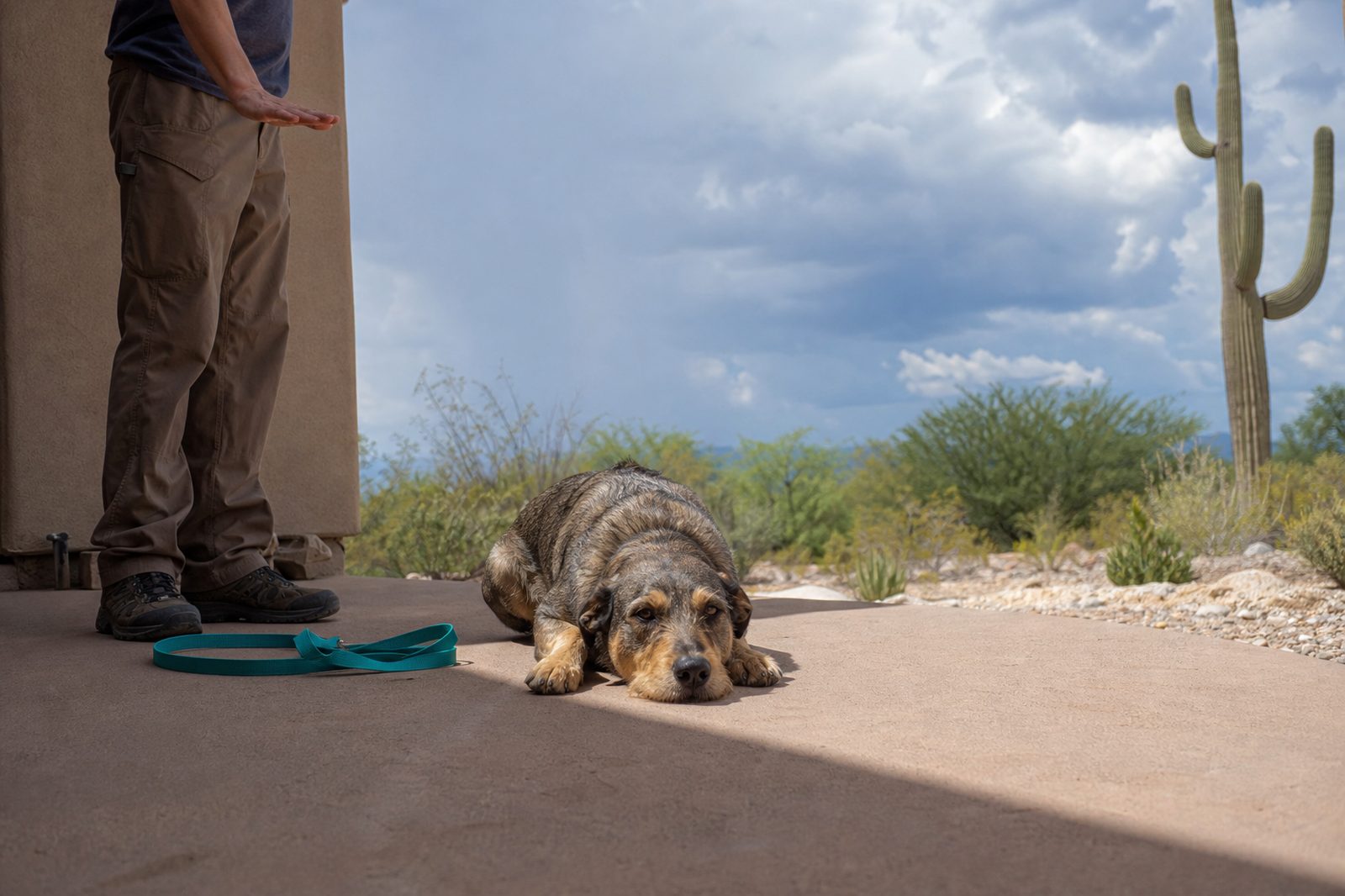
Heat shapes when and where training happens here. Snake country raises the stakes on recall and avoidance work: snake avoidance is one of the most requested training services in Scottsdale, alongside recall, leash walking under distraction, and socialization (PetWorks, retrieved 2026-09-16). Resort patios and busy trailheads test your dog's manners in real conditions. The trainer you hire should proof behaviors against the world your dog actually lives in.
Scottsdale has no shortage of options: storefront programs, independent trainers, in-home coaches, marketplaces. That is a choice problem, not an information problem. You do not need another list of names. You need a way to evaluate them.
What happens before any training starts?
The short version: a serious trainer reads the dog before prescribing the program.
This is the first and fastest filter. If the answer is an assessment of your dog, keep talking. If the answer is a package quote, walk away.
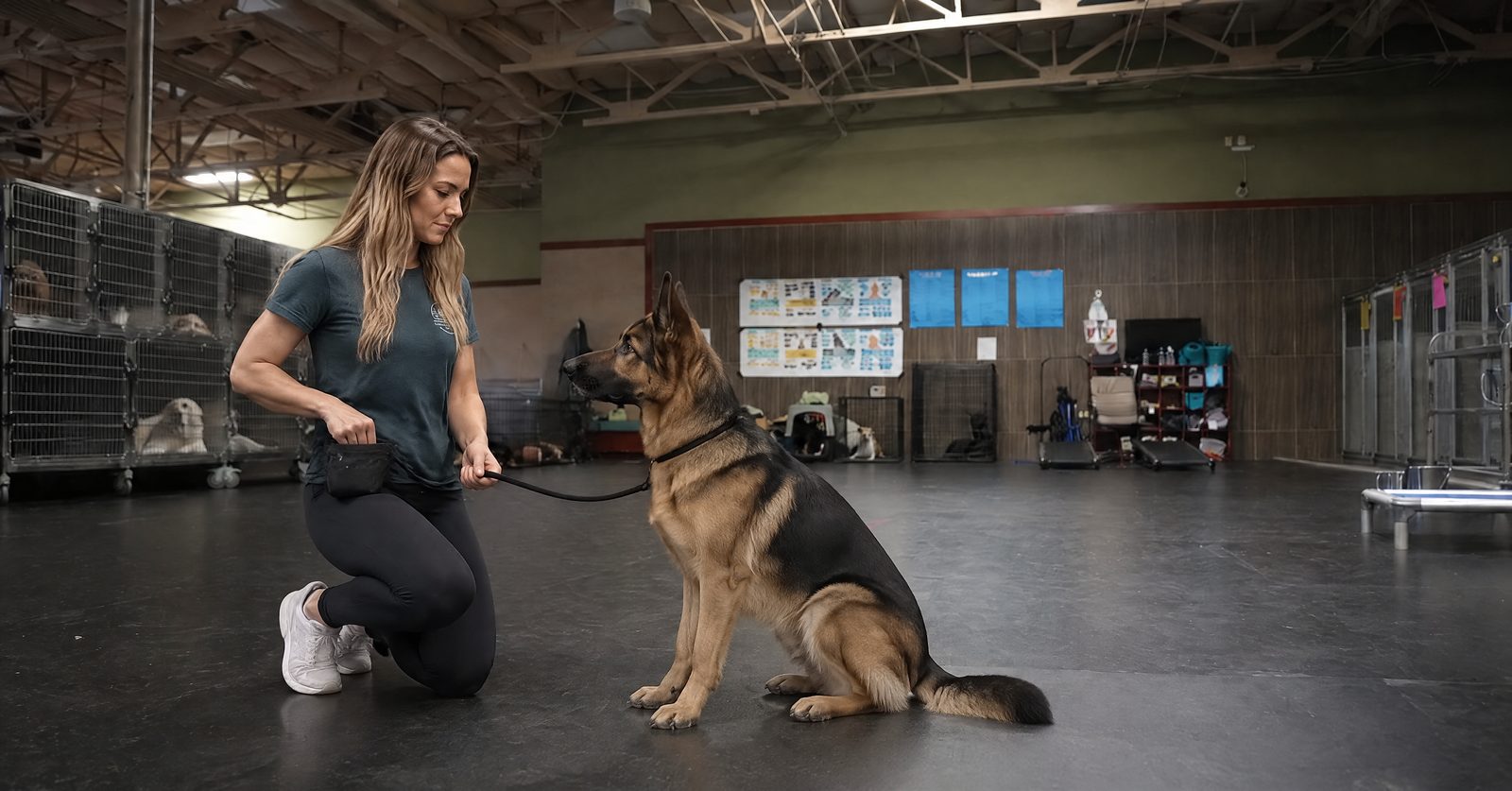
At Partners, the assessment is the PD360 Assessment: a senior trainer evaluates your dog across nine dimensions over a full day at the facility, then walks you through a written plan and timeline. No program is recommended before the dog is read.
The assessment-first rule protects you twice. It tells you what your dog actually needs, and it tells you whether the trainer works from evidence or from habit.
What a full assessment day actually surfaces: how your dog handles novelty, what arousal does to its manners, which rewards move it, how it recovers from a startle, and how you handle it. The plan has to fit the household that runs it. That is what "read the dog" means in practice: not a label, a baseline.
The 10 questions to ask before you hire
The short version: run the interview. One action per question, and listen for structure in the answers.
- Ask what happens before training starts. You want an assessment of your specific dog, with written findings.
- Ask them to walk through their full method. Not the sales version: the whole thing. We are balanced: positive reinforcement is the primary method and the base of every program, and fair, minimal, well-timed correction is legitimate and necessary, never the starting point. Any trainer should state their position on both rewards and corrections plainly, and should be able to name all four quadrants and where each one sits in their work. Evasion is the answer.
- Ask what they do when the first plan is not working. You want a trainer who changes the plan when the dog does: the omni-technical standard. One method for every dog is dogma.
- Ask how progress will be tracked and reported. Tracked beats asserted. Every targeted behavior in our programs is logged in the PD360 across the four phases, so progress is a number, not a feeling.
- Ask what your role is and what you take home. We teach the dog, then we teach you. Transfer training with written take-home protocols decides whether the behavior survives at home; our board and train guide makes the same point.
- Ask how they were trained to do this. You want supervised hours under a senior trainer. A weekend seminar is not the same thing. (Credentials, decoded below.)
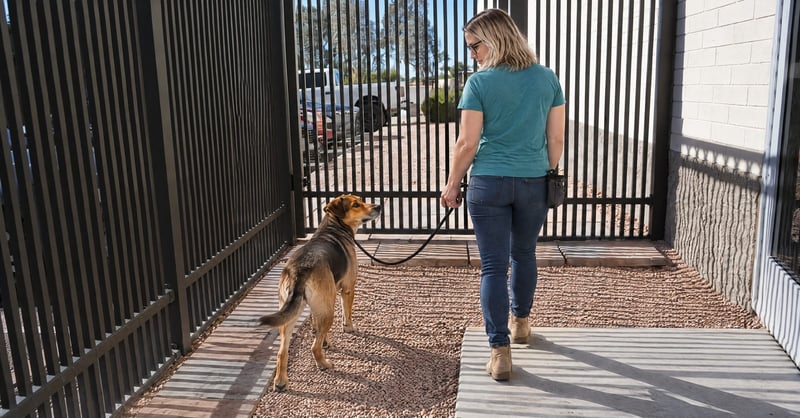
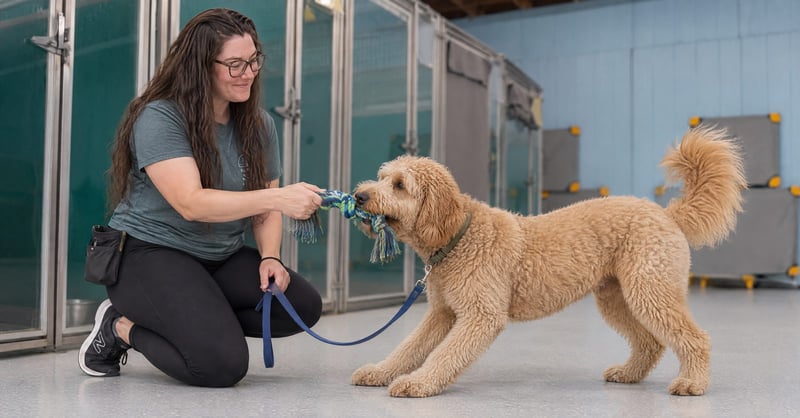
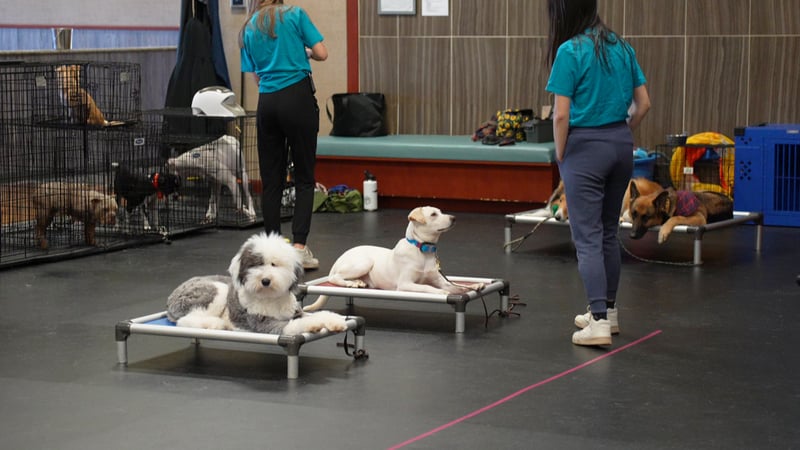
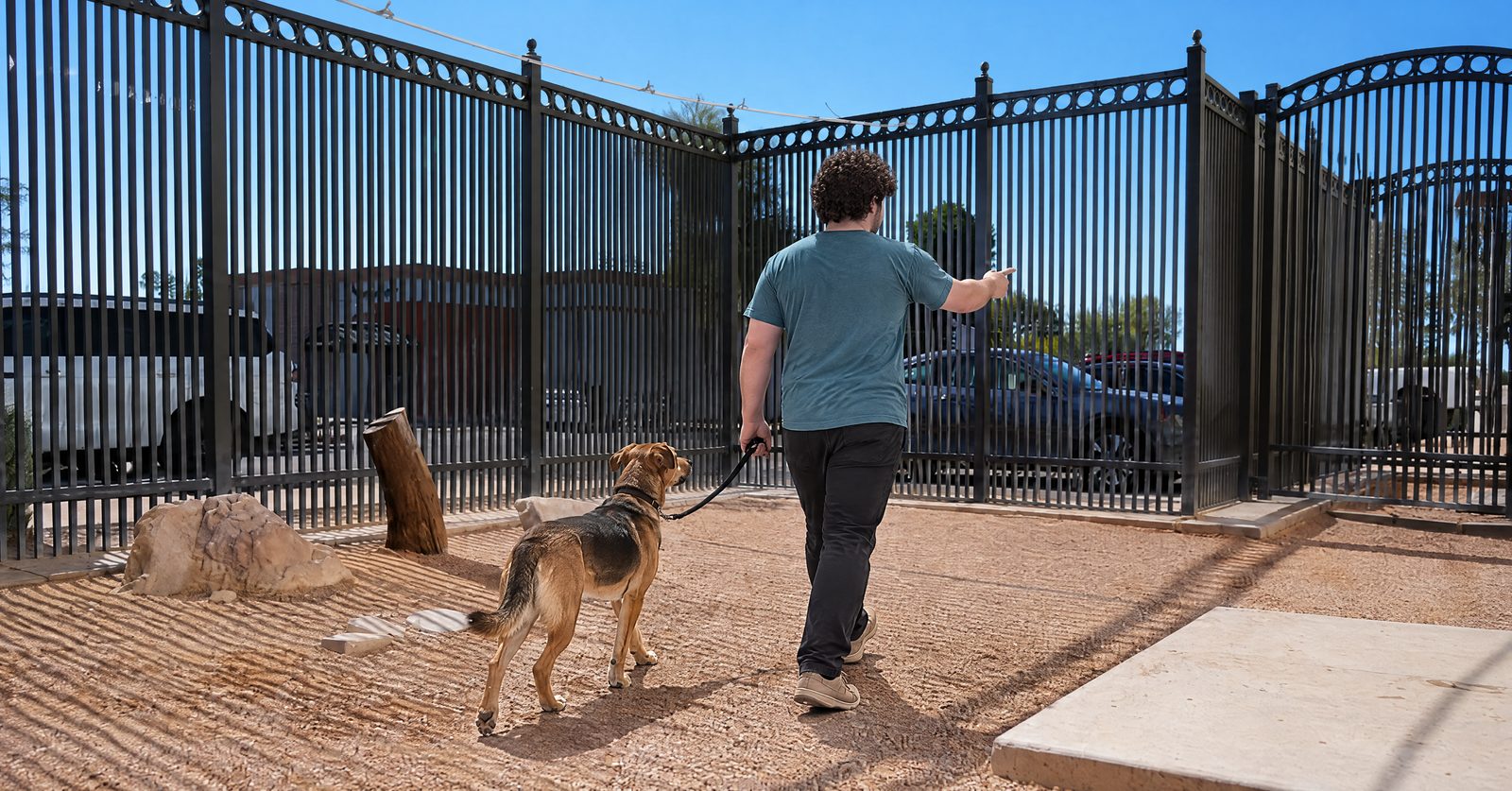
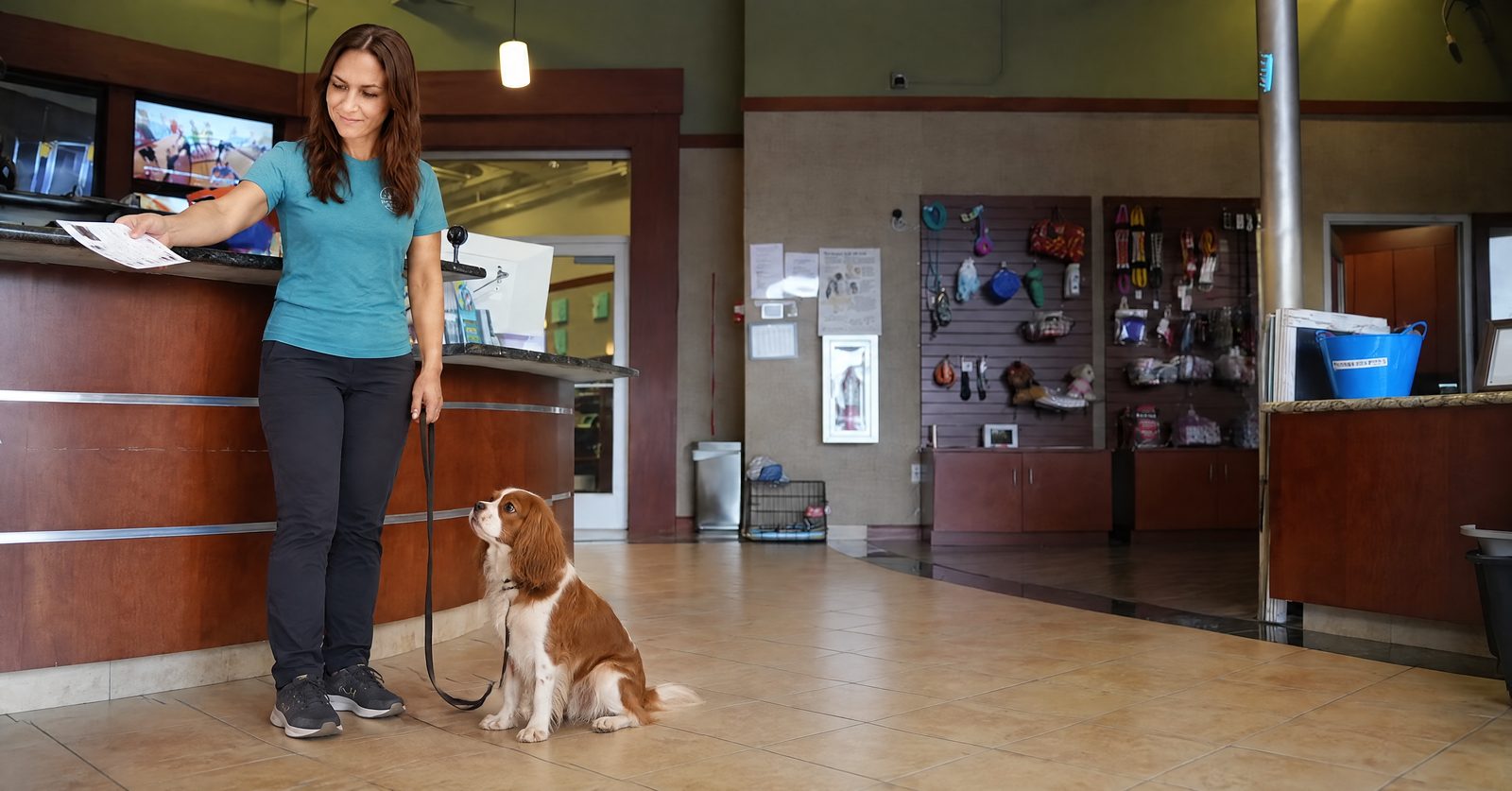
- Ask to watch a session and tour the facility. A competent trainer lets you see the work. The Royal Veterinary College says it plainly: interview trainers and see them in action before letting them loose on your dog (RVC, retrieved 2026-09-16). If access is refused, the interview is over.
- Ask what dogs they turn away. Honest trainers have limits. Serious reactivity, fear, and aggression cases need a longer behavior stay, not a standard obedience package: at Partners that means Behavior Camp (21 nights) or Transform Camp (28 nights), and our reactive dog guide walks through that framework. A trainer who claims no case is too hard has not met enough cases.
- Ask what it costs and what exactly is included. Get the written breakdown: sessions, duration, what happens between sessions, what aftercare costs. Get the quote in writing before you buy. A number without a breakdown is a guess.
- Ask what the aftercare looks like. Maintenance has no finish line. You want follow-up support, refresher options, and someone to call when a behavior resurfaces.
Hire the assessment, not the advertisement.
What do dog training credentials actually mean?
The short version: a credential means the trainer submitted to outside judgment. It does not prove they are good at the work.
Start with the uncomfortable fact: no state or federal license is required to call yourself a dog trainer in the U.S. Anyone can legally do it. Your questions are the only licensing board that exists.
The voluntary certifications worth knowing:
- CPDT-KA (Certification Council for Professional Dog Trainers): at least 300 hours of training experience within the last three years, a reference attestation, and a standardized exam (CCPDT candidate handbook, 2026, retrieved 2026-09-16). It tests knowledge. It does not observe the trainer work.
- KPA CTP (Karen Pryor Academy): about six months of workshops, online coursework, and written assignments, ending in hands-on teaching and training assessments plus a knowledge exam (Rover credentials guide, retrieved 2026-09-16).
- Partners Dogs University: our in-house certification. Thirty hours of coursework plus 1,000 supervised hours to make an instructor, 2,000 to make a senior instructor. It exists because a certificate alone does not make a trainer. The supervised reps do.
Read credentials as a floor, then watch the training. No certificate shows you what a trainer does with a dog that will not cooperate.
What are the red flags when choosing a dog trainer?
The short version: end the conversation at the first red flag.
- Guaranteed outcomes. No honest trainer guarantees behavior. Guarantees are a sales tool.
- A package quoted before the assessment. If the price comes before the dog is read, the recommendation is about revenue.
- No tour, no watching. A trainer who will not let you see the work is asking for unearned trust.
- No written plan and no take-home protocols. If nothing is written down, nothing is accountable.
- One method for every dog. "We do it this way with every dog" is dogma.
- Methods they will not explain. Vague talk about "energy" or "leadership" with no training plan underneath is a no.
- Punishment-first or tools-first handling. Correction has an honest place: after the alternative is taught, at the lowest level the dog notices, conditioned before use. Leading with pressure on a dog that was never taught the alternative is not training.
- No vet partnership on medical questions. Behavior can be pain, thyroid, GI trouble, or medication effects. A trainer who never asks about medical factors is guessing on some percentage of dogs. Training never replaces your vet.
- Pressure to sign today. Real assessments hold their value tomorrow. Urgency is a sales tactic.
How do you compare two trainers you like?
The short version: compare them on structure, not marketing. The table below is the scorecard.
| What to compare | Solid answer | Red-flag answer |
|---|---|---|
| Starting point | Assessment of your dog first, written plan after | Package and price quoted before meeting the dog |
| Method | Full position stated plainly: rewards primary, fair correction explained, all four quadrants named | Vague philosophy talk, or one method for every dog |
| Progress | Tracked and reported: named behaviors, logged phases, re-assessment | "Trust me, you'll see the difference" |
| Your role | Transfer sessions plus written take-home protocols; you are coached | Dog comes home "trained"; no owner coaching included |
| Trainer development | Named certification plus supervised hours under a senior trainer | Self-taught with no outside assessment of their skill |
| Aftercare | Follow-up support, refresher options, someone to call later | The relationship ends at the last paid session |
Notice what is not on the scorecard: brand names, follower counts, and review stars alone. Compare the structure behind the marketing, and the right choice gets obvious fast.
When both trainers pass the scorecard, trust the tour. Watch one live session at each place: the dogs tell you everything. A room of loose, offering dogs beats a wall of certificates. Ask to see a written take-home protocol from a real graduate, and read what the owner was told to do on day one back home.
By the numbers
Mistakes that make it worse
- Buying the package before the assessment. The most expensive mistake on this list. A program sold before your dog is read is a guess you pay for.
- Shopping on price alone. The cheapest quote usually cuts the expensive parts: the assessment, the transfer sessions, the aftercare. Those decide whether it works.
- Hiring a philosophy instead of a trainer. The label on the website matters less than the trainer holding your leash. Watch them work.
- Skipping the facility tour. Photos are marketing. Walk the building, watch a session, meet the staff who will handle your dog.
- Ignoring your own role. If you will not do the maintenance, no format works. Our DaySchool guide carries the daily reps for working families, but the owner still closes the loop at home.
Key takeaways
Key takeaways
- Interview every trainer with the ten questions above. The assessment-first question ends most bad fits fast.
- No license is required to train dogs in the U.S. Credentials are a floor: CPDT-KA means 300 hours plus an exam; Partners instructors add 30 coursework hours and 1,000 supervised hours.
- Compare trainers on structure, not marketing: assessment, stated method, tracked progress, owner coaching, aftercare.
- Red flags end the conversation: guarantees, package-before-assessment, no tours, no written plan, pressure to sign.
- Scottsdale dogs need desert-proof training: recall, leash skills under real distraction, and snake avoidance are the local stakes.
- Start with the assessment. Call 480-595-6700 to book a PD360 Assessment at Scottsdale or Cave Creek.
Frequently Asked Questions
What is the first step when hiring a dog trainer in Scottsdale?
Tour the facility and book an assessment before you buy any program. The PD360 Assessment is our full-day evaluation: a senior trainer reads your dog across nine dimensions, then builds a written plan. Call 480-595-6700.
How is dog training priced in Scottsdale?
Get the assessment first, then the quote. Any honest quote is a written breakdown of what is included.
Do dog trainers in Arizona need a license?
No. No state or federal license is required to call yourself a dog trainer anywhere in the U.S. That is why the interview matters: look for certifications like CPDT-KA (300 hours plus a standardized exam) or a structured in-house program like Partners Dogs University, then watch the trainer work.
Should my trainer work with my vet?
The good ones do, at least on whether the behavior is medical. Pain, thyroid, GI trouble, and medication effects can all drive behavior that looks like a training problem. A trainer who never asks about medical factors is guessing.
What if another trainer already turned my dog away?
That is the case an assessment-first trainer is built for. Serious behavior cases usually call for a longer behavior stay. A standard obedience program is the wrong tool for them: at Partners that means Behavior Camp (21 nights) or Transform Camp (28 nights), starting from a PD360 Assessment.
Where to go from here
You have the interview script. Use it on us first: tour the campus, watch a session, and put our trainers through the ten questions. If we are not the right fit, you will leave knowing exactly what to demand from whoever you hire. The trainer you choose decides what the next year of your dog's life looks like. Make it the year the dog finally learned to settle, not the year the problem got older. The interview is fifteen minutes. The training is months. Spend the fifteen.
First step
Start With the Assessment
The full-day evaluation where a senior trainer reads your dog across nine dimensions and builds the written plan. Start here before you buy any program, from us or anyone else. Call 480-595-6700 to book, or walk the Scottsdale campus first and watch a session before you decide.
Scottsdale: 8642 E Shea Blvd, 85260. Cave Creek: 4640 E Forest Pleasant Pl, 85331. Serving the Phoenix Valley. Call 480-595-6700.