In short
Training a rescue dog starts with structure, not a welcome party: a crate for the ride home, a quiet first two weeks, and a bathroom schedule you control instead of one your dog guesses at. Most rescue behavior problems we see in homes across the North Phoenix area are habits nobody addressed, not permanent traits, and they resolve faster with early management than with reassurance alone.
Dogs usually end up in rescue for a reason, and that reason often comes home with them. It is rarely anything dramatic. More often it is a set of habits nobody addressed and a dog who never learned what the rules were. Sorting that out becomes your job the day you sign the paperwork, and how you handle the first two weeks matters more than most people expect. Sleeping, feeding, introductions, and early training decide whether your rescue dog settles into the house or spends months braced for the next change.
Prepare for the Trip Home
The ride home is the first thing your new dog experiences outside the shelter, so keep your expectations realistic. You are putting an unfamiliar dog into an unfamiliar situation with no warning. Use a crate in the car. It keeps your dog secure, it keeps you safe while driving, and it gives your dog somewhere contained to be during a genuinely overwhelming hour, whether the drive is across Scottsdale or out to Cave Creek.
The First Days at Home
Keep the energy low. The instinct is to throw a welcome party, and it is the wrong instinct. Hold off on introducing kids, extended family, and other pets until your dog has some footing in the new environment.
Be careful around small children from the start, before you know what your dog finds stressful. Watch closely during early interactions, and if your dog starts showing stress or anxiety, back off and give more time rather than pushing through it.
Sleeping
Crating gives a new dog a quiet, secure place to decompress in a house full of unfamiliar sounds and smells. In the first weeks it is the single most useful piece of equipment you own.
Feeding
Feed when the house is calm. Put the food down and walk away, and let your dog eat without an audience. Do not panic if the first meal or two goes untouched, because a nervous dog in a new place often will not eat, and that usually resolves within a few days.
Build the connection that food follows doing something for you, even something as small as a sit. Avoid free feeding, which gives up your best training currency and tells you nothing about your dog's appetite or health.
Exploring the House
Let your dog sniff around and take in the new environment, with a leash on. The leash is not about restriction, it is about being able to guide your dog calmly if something goes wrong.
Hold off on introducing other pets until your dog is settled, and when you do, go slow. Watch for the signs that a dog is not comfortable with an introduction:
- Stiff posture or a frozen stance
- Whale eye, where the whites of the eyes show
- Raised hackles along the back
- Hard, fixed staring at the other animal
Never let dogs sort each other out on their own. Go one step at a time, and stay in a position to intervene. If your household already has a dog and the two are not settling around each other, that is worth treating as a real safety question rather than something that will smooth itself out, and it is exactly what a household dog aggression assessment is built to sort through.
Watch for Marking
This one is worth its own heading, because it is the mistake that costs owners the most time. Once a dog has marked inside your house, that behavior is established, and undoing it is significantly harder than preventing it.
Supervise closely, use the crate, and get outside on a schedule rather than waiting for your dog to ask. If it has already started, treat it as a full house training reset rather than an occasional accident to clean up.
When it's more than settling in
Rebuild a Rescue Whose Problems Run Deeper Than a Rough Start
House training and manners handle most of what a new rescue needs. If your dog's fear or aggression goes past that, a PD360 Assessment maps out whether Transform Camp's boarded reset and follow-up coaching is the right next step.
Obedience Is Manners
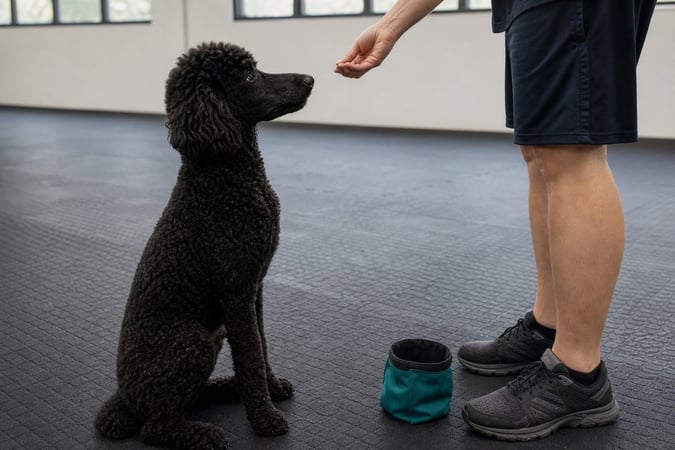
Basic obedience with a new dog is really just teaching them how to behave in your home and in public. Consider age and personality when deciding how to introduce training, because a shut down six year old and a bouncy two year old need different starting points. Foundation Camp is built around exactly that range, since it works foundational obedience one dog at a time rather than off a single script.
Leash work comes first, followed by sit, down, stay, and place. Those few behaviors cover most of the situations where a new dog would otherwise be guessing.
Give Them Something to Do
Exercise channels nervousness, drive, and raw energy into something useful, and redirects it away from the behaviors you do not want. A walk or a ball does more for an anxious dog than another hour of reassurance.
Interactive toys give your dog something to engage with independently, and teaching your dog to use them properly reduces separation anxiety and insecurity over time. Do not let toys become something to shred, since that is a different habit forming.
Be Ready to Adjust
House training is the most common adjustment, and it is normal to be starting from scratch with an adult dog. Baby gates and exercise pens keep your dog out of the rooms you cannot afford to have marked. Be cautious about outdoor access until you are confident the yard is secure and your dog is safe in it.
Not every behavior problem announces itself in week one. Some surface a month in, once your dog is comfortable enough to show you who they are. That is not a setback, it is progress, and it is a normal reason to bring in Private Lessons targeted at that one specific issue instead of restarting your whole plan from scratch.
The Bottom Line
Dogs are looking for consistency, structure, and someone who is clearly in charge of taking care of them. The more you manage and structure their time early on, the faster they relax. It is the same structure behind the 4.8 stars and 2,000+ reviews Partners Dogs families have left after training with us in Scottsdale and Cave Creek.
Be patient. The adjustment period is temporary, and the dog you have at six months will be a very different animal from the one who came out of the car. That is the whole point.
Frequently asked questions
How long does it take a rescue dog to adjust to a new home?
There is no fixed number. Most rescue dogs show real progress within the first few weeks once feeding, sleeping, and bathroom schedules are consistent, but full personality often does not show until several months in. The dog you have at six months is usually noticeably different from the one who came out of the car, and that is a good sign, not a setback.
Should I crate my new rescue dog right away?
Yes. A crate is the single most useful piece of equipment for a rescue dog's first weeks, starting with the ride home from the shelter. It gives your dog a quiet, secure place to decompress in a house full of unfamiliar sounds and smells, and it protects both of you while you are still learning each other.
Why does my rescue dog keep marking or having accidents inside?
Marking is often a stress response to a new environment, and once it becomes established indoors it is harder to undo than it would have been to prevent. Supervise closely, use the crate, and take your dog outside on a schedule instead of waiting for a signal. If accidents have already become a pattern, treat it as a full house training reset rather than a series of one-off cleanups.
How do I introduce a rescue dog to my other pets?
Slowly, and on leash, only after your new dog has some footing in the house. Watch for stiff posture, whale eye, raised hackles, or hard staring, all signs that a dog is not comfortable with the introduction. Never let dogs sort each other out on their own, and stay in a position to step in. If the tension does not ease after the first few controlled meetings, treat it as a real safety question and get an assessment rather than hoping it resolves on its own.
What if my rescue dog's behavior problems don't show up right away?
That is normal. Some issues only surface once a dog is comfortable enough to show you who they are, often a month or more in. It does not mean the earlier progress was fake. It usually just means one specific issue needs targeted attention, which is exactly what Private Lessons or a PD360 Assessment are built to identify.
Ready when you are
Find Out Exactly What Your Rescue Needs Next
A PD360 Assessment turns the guessing into a plan, whether that plan is a few more weeks of structure at home or a full program built around what your dog is actually carrying.
Keep reading