
What you need to know
Choose a dog trainer by competence, honesty, transparency, and outcomes, not by the tools in their kit.
- AVSAB's statement screens trainers by philosophy: reward-based language and credentials earn green flags; tools, "balanced," and "obey" earn red flags.
- A trainer's toolkit says nothing about their skill. Timing and honesty decide.
- Results come from four things: a real assessment, a plain-words method, a phased plan, and progress you can verify.
- We are balanced, tool-agnostic trainers: positive reinforcement is the base, and fair correction is legitimate once the alternative is taught.
If you are a Pet Parent in Scottsdale or Cave Creek learning how to choose a dog trainer, this post is for you. We already published a general guide to choosing a trainer. This one is different: our answer to AVSAB's new "How to Choose a Trainer" position statement.
What does AVSAB say about how to choose a dog trainer?
The key takeaway: AVSAB's newest statement screens trainers by philosophy. Reward-based language and credentials earn green flags; tools, correction, and the word "balanced" earn red flags.
Fairness first. Here is what the statement says (full PDF, retrieved 2026-09-16):
Step 1: name your goals. Puppy socialization, manners, sports, service work, behavior concerns. AVSAB advises finding a trainer who excludes punishment and understands your objectives. We agree.
Step 2: check the flags. Green flags: rewards, relationship language, "force free" and clicker labels, replacement behaviors, upbeat handling. Red flags: prong and shock collars, leash jerks, physical corrections, "alpha" and "pack leader" talk, the words "obey" and "command," balanced training itself, harsh handling.
Step 3: check credentials. AVSAB names the Karen Pryor Academy, Jean Donaldson's Academy for Dog Trainers, the Victoria Stilwell Academy, the Pet Professional Guild, IAABC, and Fear Free, while admitting "credentials alone do not guarantee quality."
Step 4: advocate. Training should be enjoyable for dogs and people. Watch for stressed body language and speak up. No argument here.
Context: AVSAB's 2025 board statement says it does not endorse trainers from any specific organization, yet every credential it recommends shares its reward-based position. We answer their other statements the same way, starting with the humane training position.
Should a trainer's tools be a red flag?
The key takeaway: no. A tool is inert. Real dog trainer red flags measure the trainer, not the toolkit.
A scalpel saves a life in a surgeon's hand and does damage in careless ones. Nobody judges surgeons by the steel in the tray. Dog training works the same way.
In our own words: "We are balanced trainers and we are tool-agnostic. We do not subscribe to any single ideology, we subscribe to outcomes for the dog and the family. Tools do not cause harm or pain, people do. The trainer's understanding, timing, and pairing are what make a tool safe and effective." (partnersdogs.com/about)
AVSAB lists "balanced training" as a red flag beside prong collars and leash jerks. The flag targets a word, not a behavior: ideology screening, not competence screening.
None of this defends sloppy correction. Correction-first training with no taught alternative is a real red flag. The failure is the plan, not the equipment. But positive-only pressure turns aversive when dog or owner grows frustrated, and claiming correction never belongs in training is marketing, not honesty.
Some AVSAB red flags do measure character: harsh tone, yelling, threatening body language, "alpha" talk. Our Hard Lines reject those too. But they sit beside tool names and philosophy labels. One predicts your results. The other predicts their reading list.
The first move
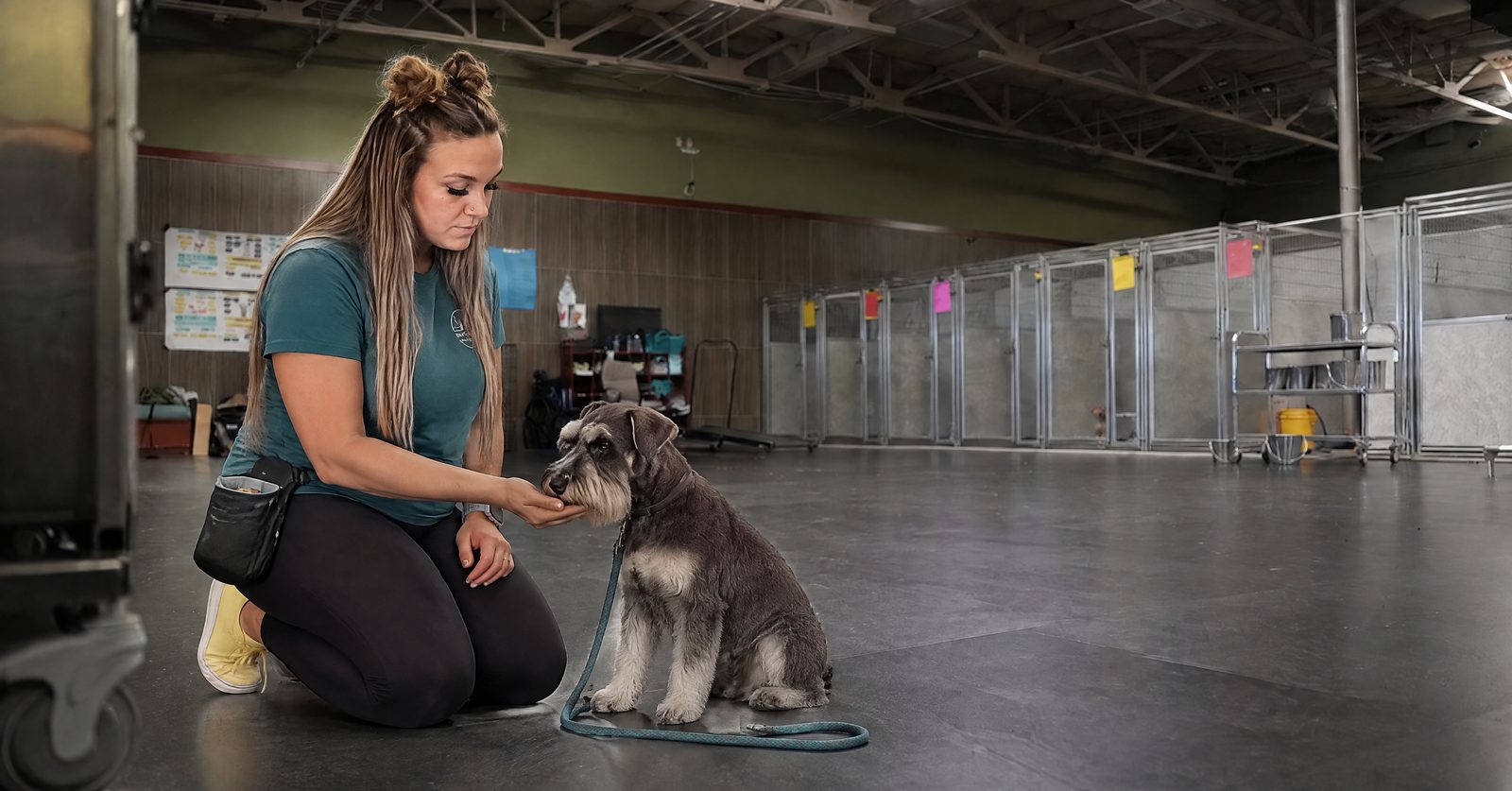
Start with the PD360 Assessment
At Scottsdale or Cave Creek: behaviors mapped across nine dimensions to a program for your dog.
What actually predicts training results?
The key takeaway: four things predict results: a real assessment, a plain-words method, a phased plan, and progress you can verify.
Forget the vocabulary test. When deciding what to look for in a dog trainer, screen for these four.
1. A real assessment of your individual dog. Breed is a hypothesis, not a verdict. A competent trainer studies your dog first.
Here is what that day actually buys you: your dog runs through a battery of scored observations, arousal around novelty, recovery after a startle, how the dog responds to pressure from a leash and from a stranger's hand, what the dog will work for and how hard. The trainer is not just watching the dog. The trainer is watching you handle the dog, because the plan has to fit the household that has to run it. You leave with a written baseline, not a brochure. See how it works.
2. A method they can explain in plain words. What gets rewarded, what gets corrected, when, why. Fog or defensiveness is an answer too.
3. A phased plan with milestones. Real training runs Teach, Reinforce, Proof, Maintain. Ask what your dog should reliably do at week four.
4. Progress you can verify. Ask for a scorecard or a before-and-after. Note the honesty signal: a trainer who refers you to your vet when training is not the answer.
| What AVSAB flags | What that actually tells you | Ask this instead |
|---|---|---|
| "Balanced training" | Uses all four quadrants. Says nothing about skill. | "Walk me through your method in plain words. When do you use food, and when correction?" |
| Prong collar or e-collar in the toolkit | Which tools they own. Says nothing about timing. | "How do you condition a tool before using it, and at what level?" |
| "Force free" or clicker labels as green flags | Their philosophy label. Says nothing about outcomes. | "Show me how you track progress. Can I see a scorecard?" |
| Credentials from reward-based programs | Where they studied. Credentials alone do not guarantee quality. | "How many supervised hours did your certification require?" |
| Harsh tone, yelling, threatening body language | This one is real. How they treat dogs predicts how yours gets treated. | "Can I observe a session before I commit?" |
| Myth | Fact |
|---|---|
| A skilled trainer never corrects a dog. | Skilled trainers use all four quadrants, with positive reinforcement as the base. Fair correction follows teaching, at the lowest perceptible level, never as the starting point. |
| You can judge a trainer by their website vocabulary. | Vocabulary signals philosophy. Assess the trainer instead: per-dog assessment, plain-words method, phased plan, tracked results. |
| A certificate proves competence. | Certificates help, but they are not proof. Ask for supervised hours and client references. Partners Dogs University: 30 hours of coursework, 1,000 supervised hours to Instructor, 2,000 to Senior Instructor. |
What should you ask before you hire anyone?
The key takeaway: interview the trainer like a contractor: past work, process, and what happens when things go wrong.
Dog training is unregulated: no license is required (Dogtopia). The interview is your license check. Listen for specifics, not slogans.
1. Ask what happens when your dog gets it right. Listen for real rewards with good timing: food, play, praise.
2. Ask what happens when your dog gets it wrong. The most revealing question. A straight trainer tells you exactly what a correction looks like, when it enters, and at what level. Evasion is disqualifying. (Both questions come from the SF SPCA's interview list.)
3. Ask how they assess your dog and what the plan's phases are. A five-question form is not an assessment. Listen for time on the dog, dimensions measured, a written baseline, and milestones: teach, reinforce, proof, maintain.
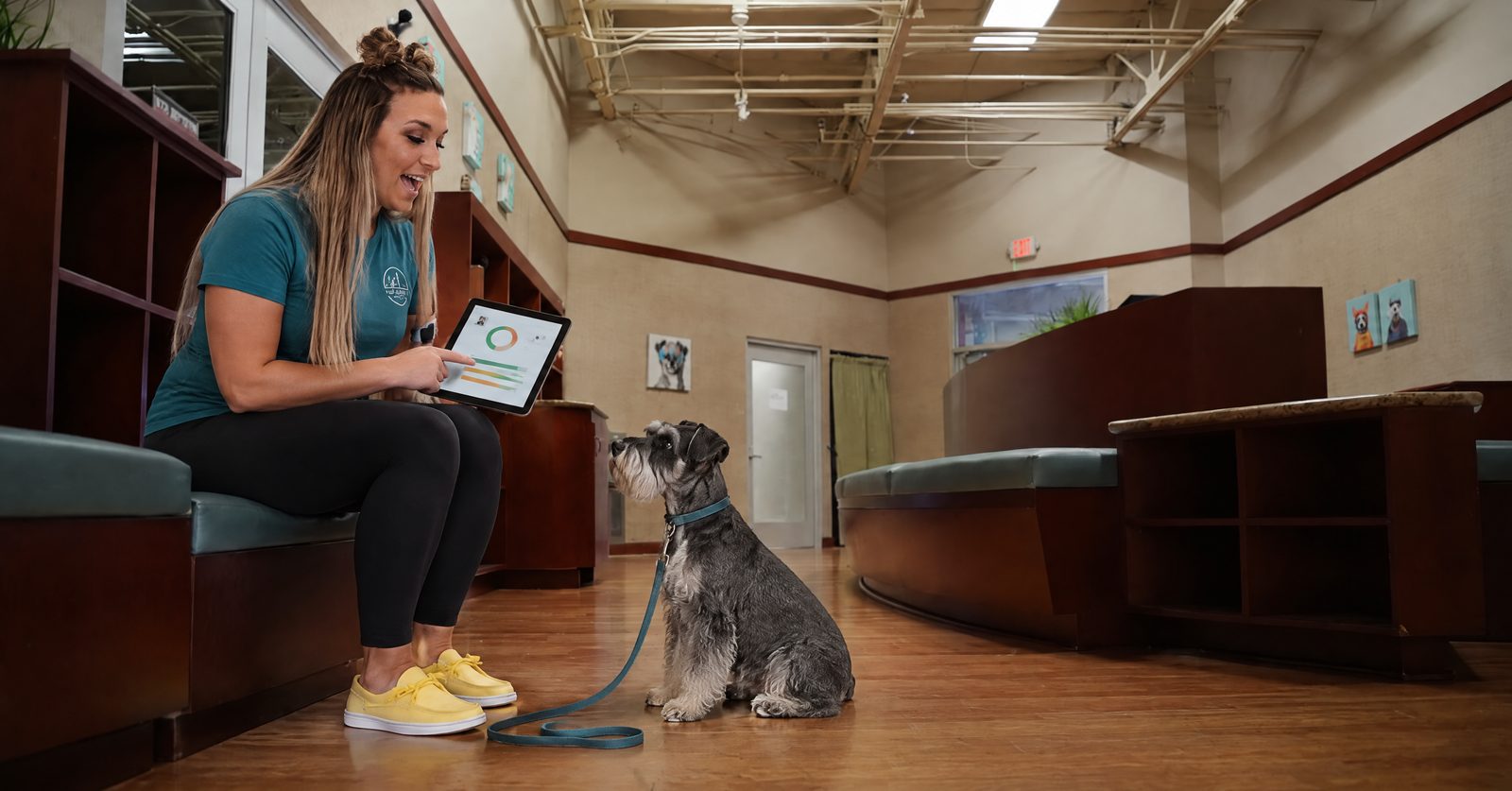
4. Ask how progress gets tracked. Scorecards, milestone check-ins, video, written take-home protocols. If it lives only in the trainer's head, it does not exist.
5. Ask what they do when something is not working. Good trainers adjust the plan. Bad ones blame the dog.
6. Tour the facility in person. Walk where your dog will sleep, train, and spend the day. Our general guide to choosing a trainer has the full tour checklist. If a trainer will not show you where your dog sleeps, you have your answer.
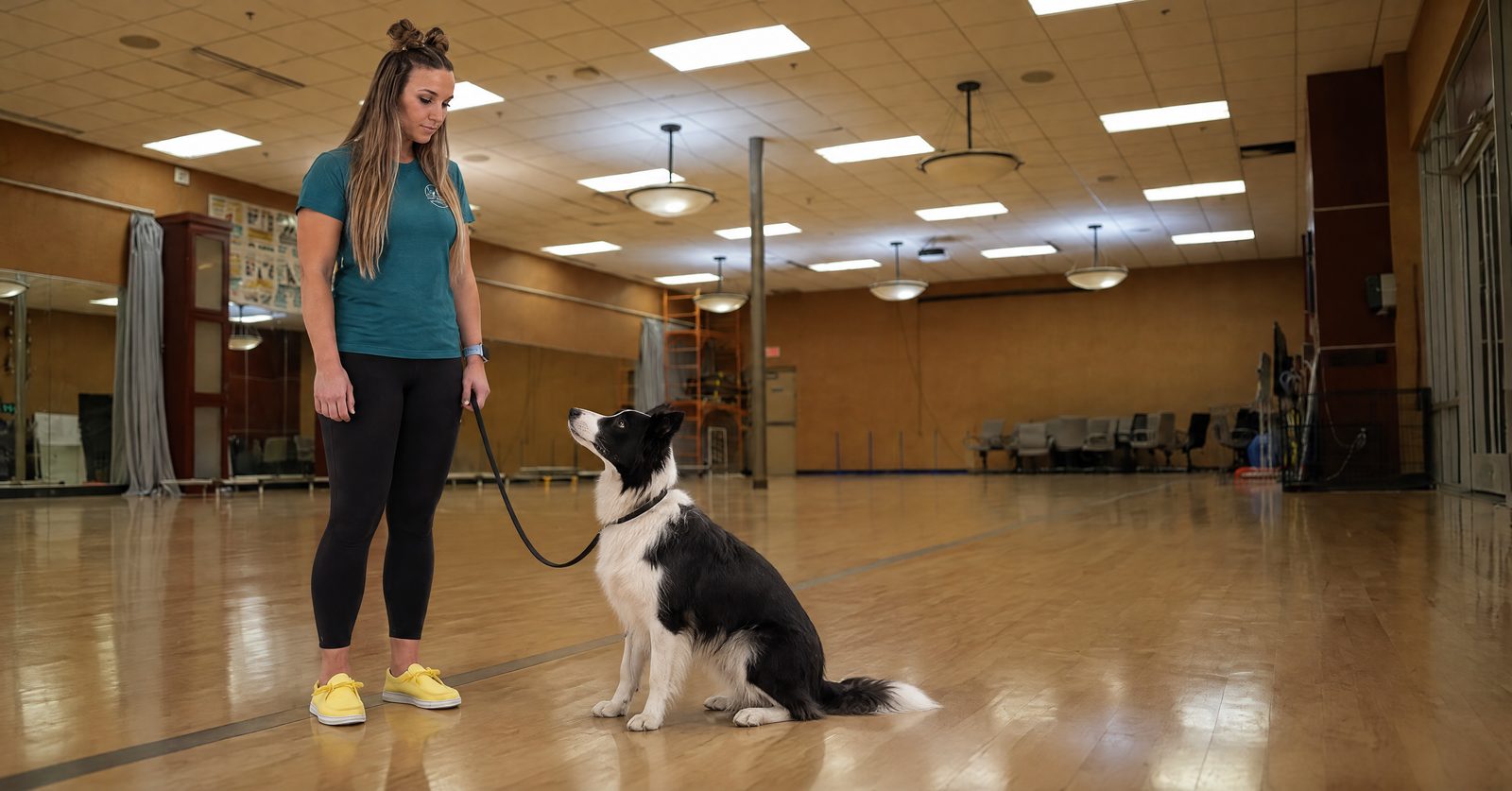
When you observe a session, watch the dog, not the trainer. A dog being taught is loose, offering, sometimes wrong and often right. A dog being suppressed is still, tense, waiting for the mistake. The difference is visible in sixty seconds, and it tells you more than any credential.
Mistakes Pet Parents make when hiring a trainer
- Filtering by ideology keywords instead of outcomes. Searching "force free" or "balanced" screens for marketing, not results.
- Believing a guarantee. "We guarantee results" is a sales line. Training a living animal carries no guarantees, only tracked progress and honest odds.
- Skipping the correction question. That is where vague trainers get vague. Ask it early.
- Treating a certificate as proof of skill. Without supervised hours behind it, a credential is a weekend course with a logo. Ask for the hours.
- Signing up with no written plan or progress tracking. No milestones, no scorecard, no accountability. Promises are cheap. Scorecards are not.
By the numbers
- 30 hours of coursework, 1,000 supervised hours to Instructor, 2,000 to Senior Instructor
- Nine dimensions in every PD360 Assessment
You are not hiring a toolkit. You are hiring judgment, timing, and honesty. Judge the hands, not the leash.
What fits your dog
Run the six-step interview on us
Bring the questions above to a PD360 Assessment: a full day with your dog across nine dimensions, a written baseline, and a plan with milestones you can verify.
Key takeaways
Key takeaways
- AVSAB's statement screens trainers by tools and vocabulary. Screen for competence, honesty, transparency, and outcomes instead.
- We are balanced, tool-agnostic trainers: positive reinforcement is the base, and fair correction follows teaching at the lowest perceptible level.
- Demand four things: a per-dog assessment, a plain-words method, a phased plan, and progress you can verify.
- Start with data, not promises. A PD360 Assessment scores behaviors across nine dimensions before anyone trains anything.
Frequently Asked Questions
Is a trainer who uses prong collars or e-collars automatically a bad trainer?
No. The tool does not train the dog; the trainer does. What matters is whether the tool is conditioned before use, applied at the lowest effective level, and paired with a reinforcement-first plan. Judge timing, transparency, and tracked results, not the equipment list.
What is the first step I should take before hiring a trainer?
Get an honest assessment first. The PD360 Assessment scores your dog across nine dimensions during a full day at our Scottsdale or Cave Creek facility, then maps a program to the actual dog in front of you.
What should I look for when touring a dog training facility in Arizona?
Tour in person and check climate control first: in Arizona heat it is non-negotiable. Ask where the dogs sleep, how the space stays clean, and what a dog's full day looks like hour by hour. If a trainer will not show you where your dog sleeps, you have your answer.
Should I only hire a trainer who uses positive reinforcement?
Positive reinforcement should be the primary method and the base of every program. Ours is. But "only" rules out fair correction, a legitimate quadrant of operant conditioning once the alternative is taught. Judge the trainer by the results they can show you.
How do I know if a trainer's certification actually means anything?
Ask what the credential required before you hire: coursework hours, supervised hands-on hours, an exam, continuing education. AVSAB itself notes credentials alone do not guarantee quality. At Partners: 30 hours of coursework, 1,000 supervised hours to Instructor, 2,000 to Senior Instructor.
Where to go from here
AVSAB's goal is right: owners deserve a way to sort good trainers from bad ones. It just aims the test at the wrong target. Tools and vocabulary tell you almost nothing; assessment, plain-words method, phased milestones, and verified progress tell you everything. A bad hire does not announce itself. It shows up months later as the same problem you started with, rehearsed a thousand more times. That is why the questions are printed above instead of locked in a sales folder. Run the six-step interview on us, too. We will answer straight.
Scottsdale: 8642 E Shea Blvd, 85260. Cave Creek: 4640 E Forest Pleasant Pl, 85331. Serving the Phoenix Valley.