First, the answer
Yes. Oleander is poisonous to dogs. Every part of the plant, fresh or dried, carries cardiac glycosides that can stop the heart. Sago palm is just as dangerous, attacking the liver. Both grow all over Valley yards. If your dog chews either one, get to an emergency vet now.
- Oleander is poisonous to dogs. Every part, fresh or dried, contains cardiac glycosides. The ASPCA lists drooling, abdominal pain, diarrhea, colic, depression, and death as clinical signs.
- Sago palm poisons through the liver. All parts are toxic; seeds carry the most cycasin. Stomach signs start in minutes to hours; liver failure can follow in 2 to 3 days. More than half of dogs die even with intensive treatment, per LSU veterinary clinicians.
- Five more Arizona landscaping plants carry dog-specific risks: lantana, Texas mountain laurel, desert rose, firestick, and Mexican bird of paradise.
- This article does not replace veterinary care. If your dog ate any of these plants, call your vet or a poison-control hotline immediately.
You can see the oleander from your driveway. It lines the block walls, the HOA entries, the medians. Pink and white flowers most of the year. It is also one of the most dangerous things your dog will ever walk past.
Most Valley yards were designed for looks, not dogs. The rule behind every program we run says to start with management: remove the trigger before you train around it. A sharper leave-it will not beat a plant that can stop a heart. The plant goes first, or it gets fenced off. Training comes after. Here are the seven plants to know, what each one does, and what to do if your dog gets into one.
Is oleander poisonous to dogs?
The short version: yes, and there is no safe amount. Every part of the plant is toxic, fresh or dried.
Oleander (Nerium oleander) is the classic Arizona privacy hedge: tall, fast-growing, and flowering for months. The ASPCA lists it as toxic to dogs, with cardiac glycosides as the toxic principle and clinical signs running from drooling, abdominal pain, diarrhea, and colic through depression to death (ASPCA).
The University of Arizona Extension puts it bluntly: flowers, leaves, stems, trunks, and roots, dried and green alike, cause severe gastric and cardiac distress when eaten. The sap irritates skin. October's dried leaves are as dangerous as May's fresh ones.
The catch: symptoms can be delayed, and vomiting, diarrhea, and pain often appear before the heart trouble does, per the ASPCA's experts. A dog that threw up once and seems fine can still be heading toward an arrhythmia. Do not wait. Call your vet or the ASPCA Poison Control hotline at (888) 426-4435 while you drive to the clinic. A consultation fee may apply, and it is worth it. Save both numbers in your phone tonight, the same way our trainers tell owners to save the emergency vet before the first desert hike.
Why is sago palm so dangerous to dogs?
The short version: it destroys the liver, and the worst of it arrives days after the dog ate it.
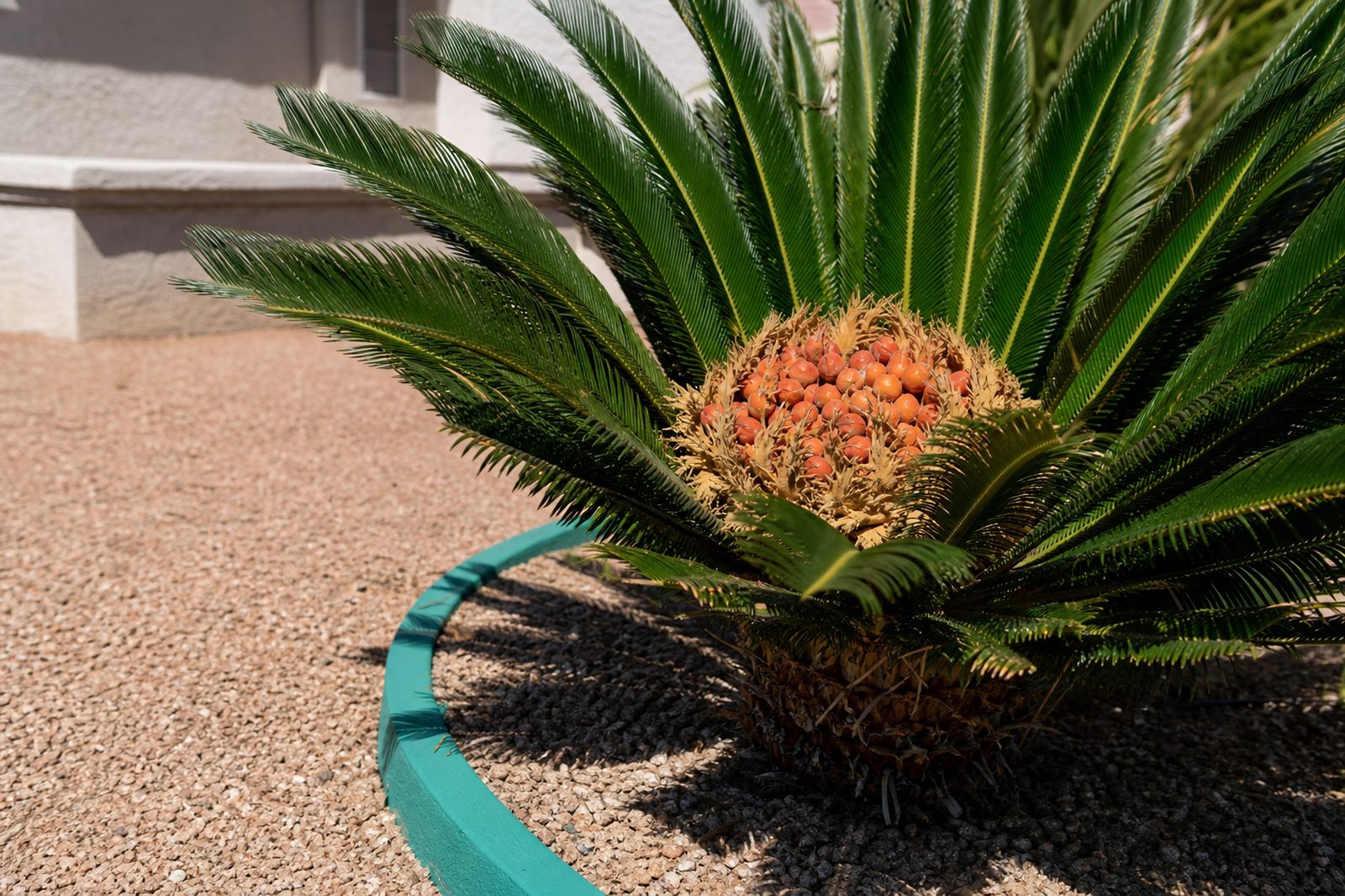
Sago palm (Cycas revoluta) is not a true palm, but it is planted like one all over the Valley: the stiff rosette of fronds by the front door, the low ones around the pool. The ASPCA lists it as toxic to dogs, with cycasin as the toxic principle and clinical signs running through vomiting, bloody stool, jaundice, bleeding problems, liver damage, liver failure, and death (ASPCA).
All parts are toxic. The seeds are the most concentrated and dangerous, and they look like exactly what a bored dog picks up and chews. The ASPCA's experts say even small exposures can bring severe stomach upset, liver damage, low blood sugar, and bleeding issues that progress to seizures and death.
The timeline is what makes sago palm cruel. VCA Animal Hospitals reports stomach upset and lethargy starting within 15 minutes to several hours, while liver failure can take 48 to 72 hours. LSU's veterinary clinicians add the number that should settle it: despite intensive treatment, more than half of dogs die.
Do not induce vomiting at home unless your veterinarian specifically tells you to. Get to an emergency vet immediately and call the Pet Poison Helpline at 1-800-213-6680 on the way.
Is lantana toxic to dogs?
The short version: yes, though dogs usually get the milder version of it.
Lantana (Lantana camara) is the color in every Phoenix flower bed: clusters of orange, yellow, red, and pink, butterflies all over it. The ASPCA lists it as toxic to dogs. The toxic principles are pentacyclic triterpenoids, and the clinical signs are vomiting, diarrhea, labored breathing, and weakness (ASPCA).
The honest nuance: the ASPCA notes liver failure is more common in livestock. Dogs tend to eat smaller amounts and develop vomiting and diarrhea within 24 hours. FirstVet's veterinary guidance says that when the signs resolve within 24 to 48 hours and the dog is eating, drinking, and acting normal, monitoring at home is a safe option. If the vomiting or diarrhea persist, or any other sign appears, get to the vet.
Lantana stays dangerous because people underestimate it. Puppies and small dogs eat more relative to their size, and when in doubt, call your vet.
Are Texas mountain laurel seeds poisonous to dogs?
The short version: the shrub and the red seeds are poisonous, and the seeds are the part dogs pick up.
Texas mountain laurel is a slow-growing evergreen Phoenix landscapers love: grape-scented purple flowers in spring, then brown pods that split to show hard, bright-red seeds. The University of Arizona Extension states it plainly: the shrub and seeds are poisonous, something to weigh if you have pets or kids.
The seeds contain cytisine, a highly poisonous alkaloid related to nicotine, per NC State Extension. Texas A&M's range scientists add that the toxic agents are quinolizidine alkaloids, and that chewed seeds are absorbed far more readily than whole ones. A dog that cracks those seeds is the worst case.
We could not find an authoritative veterinary source listing dog-specific symptoms for this plant, so we will not invent one. Treat any chewed-seed ingestion as an emergency: call your vet or poison control and go.
Is desert rose poisonous to dogs?
The short version: yes, and the honest picture is more specific than most articles give you.
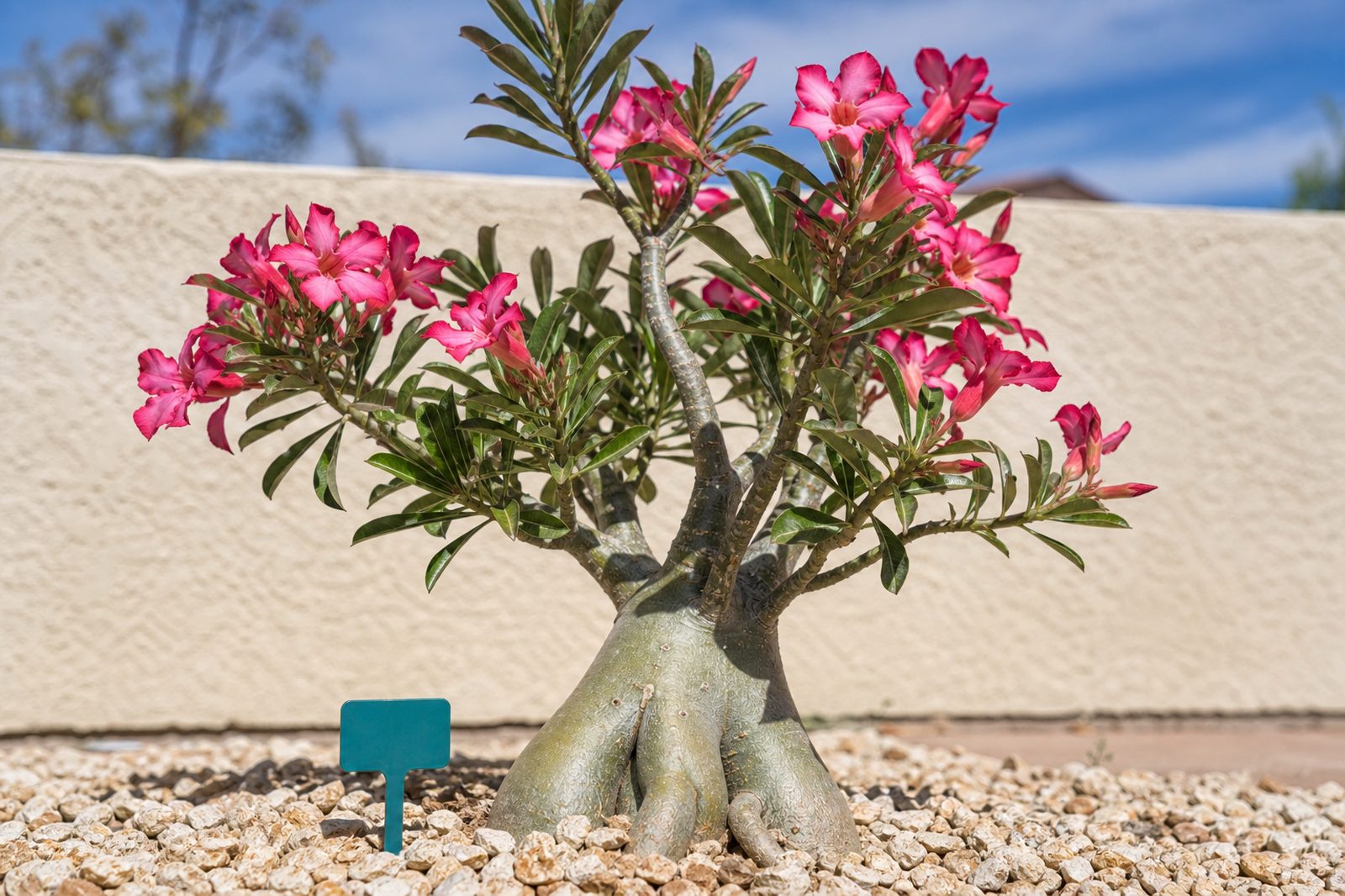
Desert rose (Adenium obesum) is the sculptural succulent with the swollen trunk and trumpet flowers, popular in Valley xeriscapes and pots. Like oleander, its poisons are cardiac glycosides, and the ASPCA lists the plant as toxic to dogs, cats, and horses.
The nuance: a 2025 paper in the Journal of Avian Medicine and Surgery reviewed ASPCA Poison Control data from 2010 to 2024 and found gastrointestinal signs common in dogs and cats that ingested desert rose, while cardiotoxicity was rare in dogs and cats. Birds got hit much harder, likely a dose-per-pound problem.
The plant stays dangerous all the same. The likely outcome of a chewed leaf is a bad stomach; the cardiac risk is real but rare in dogs, per the APCC data. Call the vet and let them decide how worried to be.
Are firesticks toxic to dogs?
The short version: the sap is the problem. It burns skin and eyes, and it is toxic to pets.
Firestick (Euphorbia tirucalli, also sold as pencil cactus or sticks on fire) is the coral-like succulent that turns orange-red in winter. UC Agriculture and Natural Resources warns the sap in any form, including dried sap, is irritating and can be toxic on skin or in eyes. The latex is corrosive enough to cause temporary blindness.
For dogs, the risk is a mouthful of broken stems: the sap is toxic to pets, and a chewed stem delivers irritant latex straight to the mouth. The secondary risk is yours. Prune without gloves, then handle your dog, and the sap moves to the dog's skin and eyes. Gloves on, glasses on, dog inside while you trim. And give the dog a job while the yard is a work zone: a stuffed Kong buys you a calm dog and keeps a bored chewer out of the sap.
Before the program
Book a PD360 Assessment
Get a clear picture of your dog's behavior and the exact steps to fix it.
Is Mexican bird of paradise poisonous to dogs?
The short version: the seedpods, seeds, and leaves carry toxins that hit the gut.
Mexican bird of paradise (Caesalpinia) is the feathery shrub with yellow-orange flowers in every commercial landscape in the Valley. UC Agriculture and Natural Resources reports the plants, seedpods, seeds, and leaves contain toxins that cause gastrointestinal irritation, nausea, and vomiting.
It is a lower-tier danger than oleander or sago palm. On the record we could verify, the damage stays in the gut. But the seedpods drop by the hundreds in summer, they rattle, and they are exactly what a puppy carries around in its mouth. If your dog chews the pods habitually, the shrub needs a fence or a new home.
What are the 7 toxic Arizona landscaping plants at a glance?
The short version: oleander and sago palm can kill. The other five range from a bad stomach to a real emergency.
| Plant | Toxic parts | Toxin | Main danger to dogs |
|---|---|---|---|
| Oleander | All parts, fresh or dried | Cardiac glycosides | Heart arrhythmia, low blood pressure; can be fatal |
| Sago palm | All parts; seeds most concentrated | Cycasin | Liver failure, bleeding problems; fatal in over half of cases |
| Lantana | All parts, berries included | Pentacyclic triterpenoids | Vomiting, diarrhea, weakness; liver failure mainly a livestock risk |
| Texas mountain laurel | Shrub and red seeds | Cytisine (quinolizidine alkaloids) | Poisonous; chewed seeds absorbed readily |
| Desert rose | All parts, sap included | Cardiac glycosides | GI signs common in dogs; cardiac signs rare per APCC data |
| Firestick | Milky sap, any form | Corrosive latex | Skin, eye, and mouth irritation; toxic to pets |
| Mexican bird of paradise | Seedpods, seeds, leaves | Unnamed GI toxins (UC ANR) | GI irritation, nausea, vomiting |
What should you do if your dog eats a toxic plant?
The short version: get the plant away from the dog, call for help, and drive. Do not freelance the treatment.
- Separate the dog from the plant. Get the dog out of the yard or pick up the dropped material. Do not turn it into a chase game. Trade up with something better if the dog is guarding it. That trade is a training rep in disguise: the dog learns dropping things pays, which is the same exchange our trainers rehearse with owners in Group Classes.
- Do not try home treatment. Pet Poison Helpline's guidance is plain: do not administer at-home treatment without first seeking veterinary advice. That includes inducing vomiting.
- Call your vet or an emergency clinic now. While you drive, call the ASPCA Poison Control hotline at (888) 426-4435 or the Pet Poison Helpline at 1-800-213-6680. Both are 24/7.
- Bring the plant with you. A piece of the plant, or a clear photo, lets the vet identify what they are treating.
- Know your dog's weight and medications. Save a note in your phone with both. The vet and the hotline will ask, and guessing wastes time.
Do not wait for symptoms with oleander or sago palm. The ASPCA's experts say oleander's cardiac effects can be delayed after exposure. Sago palm's liver failure can take 2 to 3 days. The dog that looks fine at noon can be crashing at midnight.
No leave-it is strong enough to beat a curious puppy and a hedge full of poison. The plant leaves first. Then we train.
How do you dog-proof an Arizona yard against toxic plants?
The short version: walk the yard with the ASPCA list, remove or fence what is dangerous, then train the behavior.
Management comes before training. That is the method: change the environment first, then build the dog's skills inside the safer space (our methodology). A yard full of oleander gets solved with pruning shears and fence panels before it gets solved with training reps. That order is the same logic behind the PD360 Assessment: fix what the environment is asking of the dog first, then the trainer and the owner rehearse the behavior the new yard asks for.
Walk your yard plant by plant against the ASPCA's toxic and non-toxic plant list. Anything on this article's list of seven gets a decision: remove it, or fence it off. Oleander hedges on a shared wall line get a fence on your side. Sago palms by the pool get pulled. Nothing about that plant is worth the risk.

Then replant, because a bare yard grows weeds and boredom, and a bored dog chews whatever is left. Pick replacements from the ASPCA's non-toxic list.
Then train the backup skill: a real leave-it. our desert leave-it protocol builds it in phases: taught first, reinforced, then proofed against harder distractions. Leave-it is the seatbelt. The fence is the car. You want both.
One more pass for the chewers. Some dogs do not sample plants; they demolish them. If that is your dog, our guide on how to stop a dog from chewing in Scottsdale covers the management and training together. And our rattlesnake-season yard-proofing guide walks the same ground for a different Arizona danger.
By the numbers
Key takeaways
Key takeaways
- Oleander is poisonous to dogs. Every part, fresh or dried, carries cardiac glycosides. The ASPCA lists drooling, abdominal pain, diarrhea, colic, depression, and death as clinical signs.
- Sago palm kills through the liver. Seeds carry the most cycasin. Stomach signs start in minutes to hours; liver failure follows in 2 to 3 days. More than half of dogs die even with treatment.
- Lantana usually means a bad stomach, but puppies and heavy grazers are the exception. Texas mountain laurel's red seeds are poisonous. Desert rose brings GI trouble. Firestick sap burns. Mexican bird of paradise seedpods upset the gut.
- Do not wait for symptoms with oleander or sago palm. Both can look fine for hours or days before the serious effects land.
- Management first: walk your yard against the ASPCA list, remove or fence the dangerous plants, then train a real leave-it as the backup.
- This article does not replace veterinary care. Suspected ingestion means an emergency vet visit, full stop.
Frequently Asked Questions
How much oleander is poisonous to a dog?
There is no safe amount. The ASPCA and ASPCA Pro both state that all parts of Nerium oleander are toxic, and the ASPCA's experts call oleander poisoning potentially life threatening. No authoritative source publishes a safe threshold for dogs. Call your vet or poison control immediately.
What are the first signs of sago palm poisoning in dogs?
Vomiting, diarrhea, drooling, loss of appetite, and lethargy within 15 minutes to several hours, per VCA Animal Hospitals. The liver signs come later: yellowing eyes or gums, dark urine, swollen belly, bleeding problems within 2 to 3 days. Go to an emergency vet at the first sign. Do not induce vomiting unless your vet tells you to.
My dog chewed some lantana and seems fine. Do I need the vet?
Watch closely. FirstVet's veterinary guidance says dogs usually develop vomiting and diarrhea within 24 hours, and home monitoring is a safe option when the signs resolve within 24 to 48 hours and the dog is eating, drinking, and acting normal. Call your vet if the vomiting or diarrhea persist, or if weakness, labored breathing, or any other sign appears. Puppies and small dogs deserve a lower threshold.
Can oleander kill a dog?
Yes. The ASPCA lists death among oleander's clinical signs, and its experts describe the cardiac effects as potentially life threatening. The trap is that stomach upset appears first and the heart trouble follows later, which tempts people to wait. Do not wait.
What is the first step to protect my dog from toxic plants?
Walk your yard with the ASPCA's toxic plant list and identify everything growing where your dog goes. Remove or fence off anything dangerous, starting with oleander and sago palm. Then train a real leave-it as the backup layer, using our desert leave-it protocol. Management removes the danger; training covers what management misses.
The right program
Match the program to the dog
From everyday manners to complex behavior cases, we have a camp that fits.
Where to go from here
Walk your yard this week. Phone in hand, ASPCA list open, every plant checked. Pull or fence what needs it. Then build the leave-it so the next landscaping surprise is a training rep, not an emergency vet bill.
Scottsdale: 8642 E Shea Blvd, 85260. Cave Creek: 4640 E Forest Pleasant Pl, 85331. Serving the Phoenix Valley.